The Ignorance Of Jonathan On Poverty And The World Economic Forum

By Adeola Aderounmu

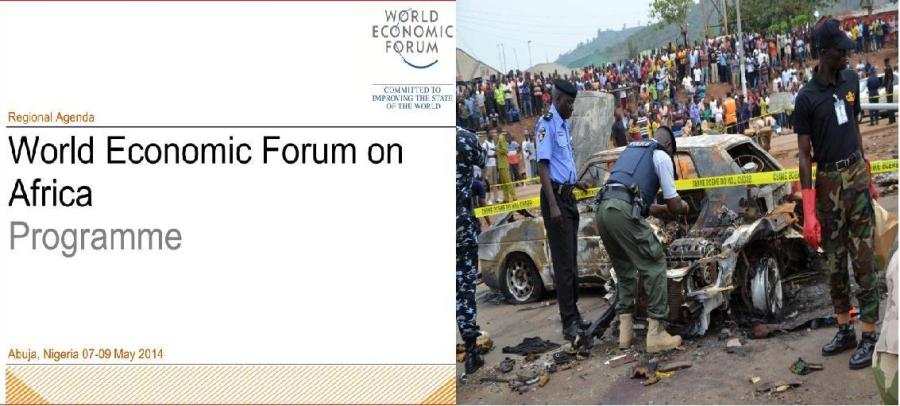
If the forum goes ahead as planned, there will be tight security all around Abuja while the conference last. The security will be heavy and water-tight at the Sheraton Abuja Hotel, Transcorp Hiton Abuja and the Abuja International Conference Centre.

Somehow this conference in Abuja will showcase the low cognitive mentalities of some African rulers. The government of Nigeria will ensure the security and safety of foreigners. It is the same government that has not been able to protect her own citizens and is yet to issue any official statement on the circumstances surrounding the missing school students in Northern Nigeria.

WEF_Adeola

Who abducted the girls? How many of them were abducted? Who are the gangsters responsible for this human trafficking? What efforts are being made to curtail or prevent a re-occurrence of mass kidnap of children, men and women? Why was it possible to carry our double terror attacks at the same spot at such a short interval of time? The answers to these questions lie with the commander-in-chief of the armed forces, men of the armed forces and the investigative arm of the security agencies, not with some “money-siphoning committee”. Silly!

The other angle to the economic forum came as a bang on the 1st of May 2014. The ruler of Nigeria revealed himself as one who has no sense of economics and growth measurements. What benefits is Nigeria getting from the WEF when poverty is measured by the number of people appearing on Forbes list of rich people or by the number of people who flew private jets to Kenya? Jonathan does not get it; his level of reasoning is so kindergarten and appalling. Now we know how Nigeria’s economic has overtaken that of South Africa-it is by private jets and Forbes report.

Poor Nigerians! They are in a permanent mess! With his line of reasoning, like a mad king, there is no way out. All those comments about Aliko Dangote, private jets and giving money to a Nigeria shows that Nigerians have thrown away their hope of a better future with the type of rulers they get at all levels of government. The relegation of intellectuals and the elevation of agberos and touts across all strata of governance in the affairs of Nigeria are revealing very devastating consequences.

When some people argue about not blaming the ruler of a country for the lack of security in the country then I don’t know who is going to accept the blame or responsibilities. Somebody must take responsibilities for the security breakdown in Nigeria and that person whom the bulk stops at his table is the ruler of the country.

It was not the South Korean PM who tilted the ship that capsized yet he took the blame and the responsibilities and stepped aside instead of finding blame or passing it around. So, I am sorry the security problem in Nigeria is for the government to solve irrespective of whether the government knows the sponsors or not. Innocent people are dying everyday! Children and women are kidnapped and used as slaves and sex objects.

Let me hasten my essay, Boko Haram successfully bombed a car park area in Abuja twice in a period of less than one month. The group vowed that it would remain in Abuja to unleash more terror attacks. Nigerians are asking for the arrest and prosecution of the sponsors of Boko Haram because Mr. Jonathan has mentioned several times that he knows the sponsors.

What investigations have been done by the police and the other security agencies? When will the arrest or interrogation of suspected Boko Haram terrorists begin? Is the judiciary independent enough to run these cases if this government gets the “liver” to start this show? Are the skeletons in Mr. Jonathan’s cupboard the hindrances to the end of terror in Nigeria? Who or what is he afraid of?

Who are those in his government that he said are “Boko Haram” members? Why is the Nigerian Army playing a double role in this whole deadly drama? People are asking the Nigerian army “if you can lead and win in Liberia and Sierra Leone, why is it impossible to lead in ordinary Northern Nigeria? Who controls the Nigerian Army today? What is in their way? Why are they being killed and slaughtered by Boko Haram so easily?

The WEF is ill-timed. Nigerians are asking about missing students and several murders and senseless killings by Boko Haram terrorists. Nigerians are asking for protection, they won’t get it! Nigerians do not have security for their lives and property. The luxury of security will be given to foreigners and coincidentally to Boko Haram terrorists who said they are already in Abuja. Are they lodged at the various expensive hotels in Abuja?

If this World Economic Forum conference is rolled away from Nigeria, the consequences and embarrassment (if this government ever get embarrassed) might help to start finding answers to the several unanswered questions that now include the global #bringbackourgirls campaign.

Who knows? The implications might be heavy enough to wedge stricter security measures to keep all Nigerians (and foreigners) safe while not ignoring the effects of the appropriate use of the rule of law as short term palliatives.

On the long term, it would be of historical and educational significances to look at the circumstances that led to the rise and success of Boko Haram in Northern Nigeria especially the role of underdevelopment, ignorance, poor education and outright failure of governance in the region notwithstanding the several years of hold on power by the selfish rulers from the Northern Nigeria. The lessons learnt can be useful for the future generations. Two post-independence generations of Nigerians are already wasted! Tragic!

aderounmu@gmail.com

[photo, world economic forum and AFP photo]

Don’t Endorse A Failed Government In Nigeria; Cancel the World Economic Summit Now!

This is the letter I wrote to WEF at the following email contacts explaining why they should not go to ABUJA.

Africa@weforum.org,
forumusa@weforum.org,
contact@weforum.org

By Adeola Aderounmu

The government of Nigeria will guarantee your safety. You are global executives and you run governments.

For your sake the lazy government in Abuja-Nigeria will close down the city and there will be no movement for people and animals. As you read this letter, Abuja is now shut down for you!

When you are there you will experience peace, tranquillity and safety for your lives. That is a guarantee.

You will be amazed by the high level of security that the Nigerian government can provide itself and the rest of you coming for the conference.

The Nigerian government will convince you why the conference or meeting must hold. The strongest argument is that if the conference is cancelled then the terrorists (Boko Haram) can claim victory and success.

When you have finished your conference, life will return to normal in Abuja and across Nigeria. Boko Haram will start to strike again, insecurity will return to normal and there will be fear and confusion in the air.

The lazy government headed by Goodluck Jonathan will withdraw all the security forces/agents from the streets and station them around Aso Rock and homes of government officials again. The security that you will get as attendees of the WEF event will not be retained or transferred to the ordinary citizens on the streets. Jonathan told Nigerians openly that he does “not give a damn”.

The crux of this letter is to engage you in a deep reasoning of why you need to cancel this Nigerian event.

You must not fall for the trap that cancelling the Abuja meeting is going to be a victory for Boko Haram.

Rather it can be the wake up call that the lazy Nigerian government need to understand that the roof is on fire and that innocent lives are wasted everyday due to non-performance and outright negligence of duty by the federal government of Nigeria.

If this meeting goes ahead, it is an endorsement or a support for a government that has done almost nothing to guarantee the safety of lives and property under its watch. If this conference goes ahead it is an endorsement for one of the most corrupt regimes on the surface of the earth. This conference or meeting going ahead will confirm our fears about the conspiracy of the International community to destroy Nigerians by aiding and glorifying corruption and corrupt governments.

Goodluck Jonathan has not performed. He is a man in support of corrupt practices that are widely known by all and sundry.

It is time for him to make a public statement about the real circumstances surrounding the story of the missing or stolen girls. It is time for him to explain what he meant when he said there are terrorists in his government.

Whatever message you want to take to Nigeria by your physical presence is something that can be done without your physical presence. Take your conference to another country and engage Mr. Jonathan and his crew via a video conference.

Don’t come to Nigeria because the government can guarantee your safety while the over 160m population can be decimated at any time, t, and moment, m.

If you ignore this letter, you will be endorsing the inaction of the lazy Jonathan government that has done nothing about the missing girls in Northern Nigeria. If you ignore this letter, that means it is alright with you that Boko Haram bomb Abuja before and after your conference, not while you are there.

If you come to Abuja, you have endorsed a failed government, you have endorsed corruption and you would have promoted the cause of Boko Haram-to avoid tight security while you are there and to unleash mayhem as soon you are gone.

History will judge all our actions and inactions.

Adeola Aderounmu
aderounmu@gmail.com
Stockholm-Sweden

Nigerians, You Lost A Paradise (A Photo Essay)

By Adeola Aderounmu

In several of my essays on Nigeria I have made references to what my parents told me about Nigeria. I remember one story about my mother walking about Lagos in the middle of the night. She told me there was nothing to be afraid of living in the old Western Nigeria. People lived like normal people and go about their businesses round the clock.

There was 24 hours a day form of existence, transportation was uninterrupted and life was full of hope and happiness. The future looked super bright. When she told me stories about Nigeria in general, she brought the good olden days in Western Nigeria to life in my imaginations.

Unfortunately for Nigerians the future is here now and it turned out super bleak-full of extreme hopelessness and frustrations.

Invariably Nigeria was once upon a time a paradise on earth until some people decided to reverse the gear of progress. Greed and outright madness took over the people-both civilians and military-entrusted to manage the affairs of Nigeria. Sometimes these people have not been chosen, selected or elected; they took over governance by force or through violence. Then they enforced their own rules and mode of governance.

Nigerians lost their paradise when they could not take back the control of their regional and geographical areas from the tropical gangsters who strangely are somehow still in control of the affairs of the land until today.

My mother told me that security especially took a turn for the worse after the civil war ended. In general, evil rose after the war as weapons remained in the hands of the people. Greed and selfishness set in at different points during pre and post-independent Nigeria.

In many ways too numerous to describe here, Nigerians lost a paradise

Cross River Conical Stone

Cross River Conical Stone

This conical stone is from Cross River State. It stands in front of the National Museum in Lagos. One of the things that went wrong in Nigeria was the drop in the standard and value of education. How many Nigerians visit the museums to learn about their history? Today the ignorant people who run Nigeria’s education have suggested that history should be removed from the curriculum. Nigerians will forget their history totally and the magnitude of historical distortions 100 years from now will be better imagined than experienced.

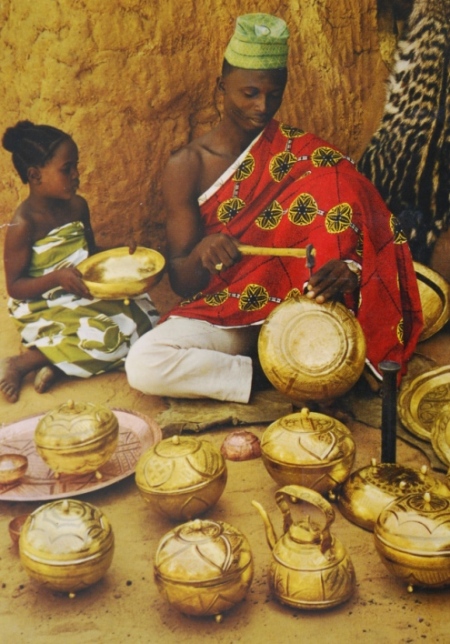
Brass smith in Bida

Brass smith in Bida

This is a man doing his work. That was Brass smith in Bida. We always say there is dignity in labour. Today that expression belongs to the dustbin in Nigeria. Several Nigerians just want to be part of politics so that they can steal and accumulate money and wealth for themselves, their families and unborn generation.

Those who are not stealing in politics are also looking for ways to cut the corners in whatever they do. In public and private enterprises the “make quick money syndrome” has taken over almost everybody. People now believe more in “if you cannot beat them, join them”. Such is the low mentality of an average Nigerian today.

Honesty is now a disease in Nigeria. People who are honest and trustworthy in Nigeria have joined the list of endangered species. One day somebody told me that I cannot be a politician in Nigeria. When I asked him why, he told me that people working with me will either kill me or poison me if I prevent them from stealing in politics.

He said they might even cut my head off. He was trying to emphasize that I cannot do politics in Nigeria if I am not ready to steal. From what we see and know about Nigeria today, that illustration is correct. It’s very sad, disheartening and a piece of the evidence that the paradise may be lost forever.

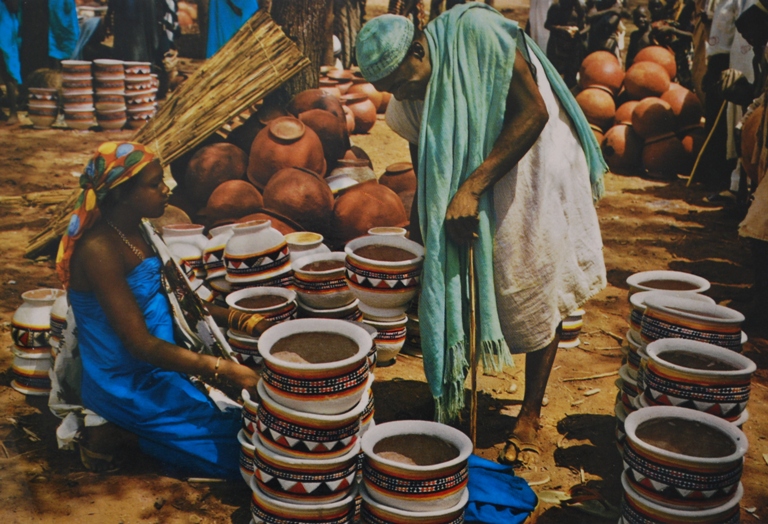
Decorated Pots, Sokoto

Decorated Pots, Sokoto

Here above is an image of a girl selling decorated pots in Sokoto, Northern Nigeria. This must have taken place at those times that my mother described to me and what I will call Nigeria’s golden years. At that time when there was still dignity in labour. Some of the pots are not decorated but they look so beautiful you want to have them for your next party or family cooking.

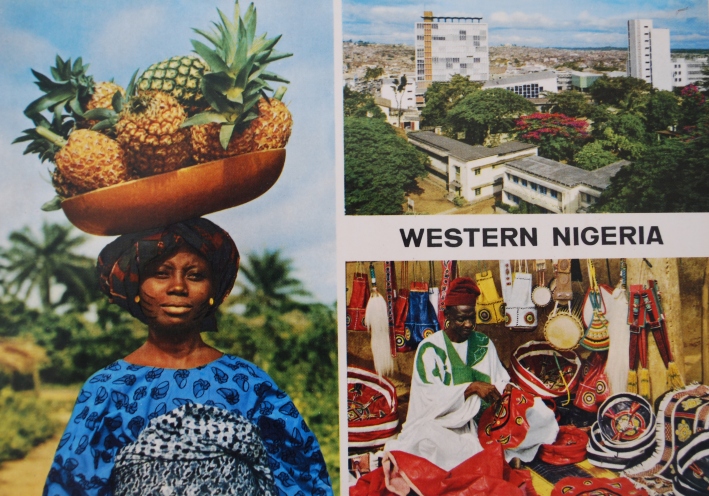
Old Western Nigeria

Old Western Nigeria

Western Nigeria was part of the regions that made up the Nigerian paradise of the olden days. It is hard to miss the blend of even development and environmental preservation. Look at the beautiful trees among the industrial revolution of old western Nigeria.

One cannot miss the hard work and the quality of the products that this craftsman is making. The image did not say where the man comes from but he was well dressed in native agbada. Interesting I have at least 4 of the items in his production line in my possession.He was not only selling cultural products, he promoted his culture as well by representation.

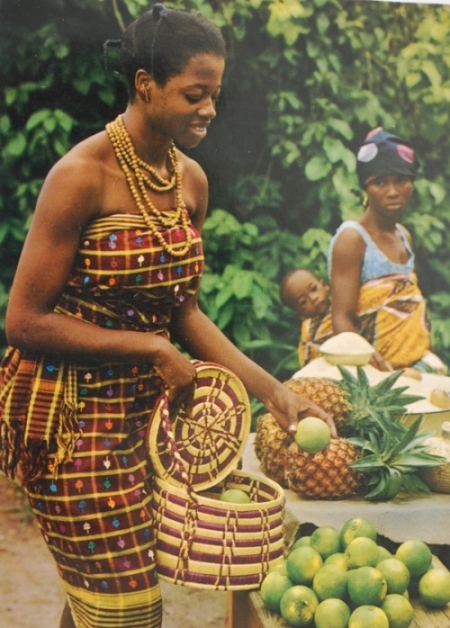
The woman carried healthy fruits. She was also well dressed in Iro and Buba. She looked healthy and happy. She was probably selling the pineapples or just on her way from the farm. Agriculture was the backbone of the Nigerian paradise. Crude oil later became a curse.

A Market Place in "old" Nigeria

A Market Place in “old” Nigeria

This is another beautiful image from the time when Nigeria was a paradise on earth. It was at that time that it would have been proper to describe Nigerians as the happiest people on earth. Some recent global reports describing Nigerians as the happiest people in recent years when the security is low, the roads, schools and hospitals resemble monuments of catastrophe, the economy is good enough on paper only and at a time when majority of the people are living dangerously from hand to mouth, are not only misleading but also irony of the highest order.

The Famous Kano Mosque

The Famous Kano Mosque

In my recent but last essay I described religion as one of the greatest problems in Nigeria. Religion is one of the reasons why Nigeria went from paradise to hell on earth. These are people worshipping peacefully at the famous mosque in Kano. People worshipped peacefully across Nigeria in the olden days. But the agents of prosperity in the face of dwindling economic fortunes changed the mode of worship in Nigeria forever.

Rather than guide the people to demand good governance and accountability, the foreign religious institutions in Nigeria headed by the new-age Nigerian overseers told people to pray. At the same time the people whose actions and activities contributed to converting Nigeria from paradise to hell were active members of various religious organisations.

The situation remains the same today as looters parade churches and mosques every Friday and Sunday. Nigerian looters are popular faces at religious crusades. Religion became a means to wealth for the religious rulers and many young people today are religious fanatics especially after years of joblessness. Politics in Nigeria got contaminated with religion and the outcomes including terrorism and mistrust in the society remain devastating to this day.

Nigerians love to chase shadows. Oh! How they enjoy denying the knowledge of basic truth! Apart from the resurrection of regional governance (the possibility of which is already being thrown away at the “organised” national conference) another hope for the restoration of the Nigerian paradise will be the total eradication of religion(s) from public service.

Issues like pilgrimages for example need to be taken away from government functions. Churches and mosque in/around government establishments need to be demolished. People need to just do the right thing rather than hide under the umbrella of religion while they ruin the state or country.

People don’t need to pray for good roads, good schools, and good hospitals and so on. What Nigeria need across all her geographical regions are the good and honest people who will use the budgetary allocations to do these things. Prayers don’t build roads or schools when the funds have been stolen or embezzled. That is common sense and application of the knowledge of the truth – that which always set people free.

Meeting of the "WAYs" Water, Rail. Road , Old Lagos.

Meeting of the “WAYs” Water, Rail. Road , Old Lagos.

In this picture we see some of the things that millions of Nigerians today have no experiences of. There was a functional train in service. The roads are clean and motor-able. The cars were in the correct lanes-2 lanes and no mad driver on an artificial third lane. There are no LASTMA people on the road; people had a sense of belonging and responsibilities.

On the right side the area is enough for pedestrians and cyclists and on the left side, there is a bicycle track along the major road and also there is a pedestrian path with adequate distance to the train tracks. Life was good, normal just like in a paradise. The street lights are standing upright and there is a stretch of beautiful garden in the middle adding glamour, peace and tranquillity to the streets of Lagos in the old western Nigeria.

Apart from air travel, all the other modes of transportation are depicted in this image. There are no ferries in the image but the idea was to state that they were all available in the old Lagos.

This is the type of image of Nigeria from the past that some people will never know about. Millions of Nigerians have lived and died within the period that the paradise was lost. This means that they actually, sadly enough, passed through life without the experience of a good life or the taste of the real meaning of life. If nobody talks about these things and if nobody makes reference to the things that existed under regional governments millions of Nigeria will live and probably die not knowing that there entire future and happiness were stolen from them even before they were born.

All of my life time in Nigeria, I do not recall the privilege of taking a ride on the train. One day however I took the “Baba Kekere” ferry service from Mile 2 to CMS. It must have been some time in the mid 80s. But as a young boy I remembered the many rides on the LSTC buses in the late 70s and early 80s. I know the number on the buses and their destinations from Festac Town. Those were the end of the good old days.

In today’s Nigeria the paradise is lost. This lose will be permanent for several millions of Nigerians living in Nigeria unless radical political changes and turnarounds occur today.

The paradise will remain lost if one man or a group of people can steal 20 billion dollars and walk free. In the 1970s we saw a man making brass in Bida, in the 80s we saw a man from Minna who stole more than 12 billion dollars of Nigeria’s oil money. He walked free! How did Nigeria go from promoting dignity to embracing criminals? The answers will shed light on how to lose a paradise in 20 years or less!

Nigeria lost their paradise because they allow military juntas and politicians to handle public services and politics like profitable businesses that is devoid of probity and accountability. The paradise will remain lost in the face of non-sensitive rulers and non-functional political structures.

The negative outcomes that follow a lost paradise are too numerous to elaborate but they are largely visible on a day out in various parts of Nigeria. Nigerians need orientation in almost all aspects of their lives. Social studies, moral instructions and history were part of the foundations and orientation in primary education. They still cannot be overemphasized in a society with solid foundation in education.

In a lost paradise, pensioners are crying, students are not getting the correct education, graduates are jobless and the society is on a free fall. In Nigeria, a country heavily polluted from all angles, good health is a luxury. There are almost no consequences for political and economic crimes. There is no sense of belonging and the first and the last law is the same: the law of self-preservation.

When I think about the issue of electricity in a lost paradise, I can’t recollect much from Obele Odan in Surulere but it has always been a pain to recount what we went through in Festac Town. We got a beautiful town with our own transformers and local power system.

Everything went down the drain right in front of our eyes. Growing up in Nigeria for my generation was a traumatic experience. Yet we were not given any social or psychological help by the state or the federal system. We fend for ourselves.

At that time (when I was growing up) the system was under the management of the wasted generation. These are the words of Wole Soyinka, as he aptly described his generation, my parents generation unfortunately. Until this day in Nigeria, the mis-management of Nigeria remains largely in the hands of mostly crooks, criminals and idiotic people who cannot manage their homes. How they got to the positions where they have to manage public services and government institutions summarises the story of Nigeria as a lost paradise.

A paradise can be reclaimed. Nigerians, you lost your paradise when you gave up your sense of belonging in the various regions and allowed a powerful center to destroy the entire system. You cave-in and followed a “rotten head” all the time. The paradise lost is actually the sum of all your negligence and attitude to work, environment and life.

It’s going to be a hard fought battle, but you need to bring back the paradise for the sake of your children and children’s children. Take another look at the images in this essay; you’ll see there’s a need to do away with the rotten head or any rotten head for that matter.

Do away with the center altogether. Claim back your regions, do the right thing all the time when it comes to public service and dedication to local and regional development. Be selfless and content. Start your charity (in this case your love of humanity) again, from home. It will spread. It will bring the paradise your children deserved.

aderounmu@gmail.com

PHOTO CREDITS

Akwashi Conical Stone (from Cross River Area)

(By Elisabeth Seriki)

Brass Simth Bida

By John Hinde F.R.P.S

Decorated Pots, Sokoto

John Hinde

Western Nigeria

John Hinde

Famous Kano Mosque

John Hinde

Market

Photo by E, Ludwig, John Hinde Studios

Lagos, Meeting of the Ways: Water, Rail, Road

By The Railway Printer, Ebute Metta

Terror And The Volatile Mix Of Blind Faiths

By Adeola Aderounmu

One of the saddest things to occur in Nigeria in the last 4 years is the ascension and domination of religious politics. Unfortunately, it has also been the time of putting Nigeria on the map permanently as one of the major terrorists’ countries in the world.

Nigerian politicians have lost the plot a long time ago in the areas of ideologies and functional manifestos. It will amount to overstating the obvious that Nigerian politics runs on faulty foundations and that the essential purpose of politics in Nigeria is nothing close to service. The politics is rather self-serving, self-rewarding, dominated largely by criminal minds and stinking of massive corruption from the head to the toes.

Religion is destroying Nigeria

Religion is destroying Nigeria

As Nigeria and Nigerians now approach the 2015 elections, the stage is now set for a religion-influenced electioneering. How did Nigeria get to this point? The question is relevant judging from the background and outcomes of the 1993 general and presidential elections. That election was adjudged to be the best election (ever) conducted in Nigeria.

Sadly for the Nigerian nation the presidential election results were annulled by the tropical military gangsters headed by one dictator called Ibrahim Babangida. That election would have ushered in MKO Abiola and Baba Gana Kingibe of the SDP, two Muslims from two different geopolitical zones in Nigeria.

When Mr. Goodluck Jonathan started his reign as the ruler of Nigeria in 2011, it was not pleasing to the Nigerian opposition party and a lot of statements were made by the opposition politicians especially those from the Northern parts of the country. Gen. Buhari and Mr. Atiku were alleged to have made statements that ordinarily would have earned them interrogations by the Nigerian special security forces. But they were not invited for any interrogation or explanations.

There had always been elements of terror and its tendencies in Northern Nigeria. There was of course serious problems with the terrors in the Niger Delta that curiously to this day continue to gulp more money than the federal defence budget of Nigeria. However for some reasons that have now kept the blame game in a roller coaster mode the terrorist group popularly known as Boko Haram have flourished in the northern parts of Nigeria and Abuja under the reign of Goodluck Jonathan.

This period of rise of terror curiously also coincided with the era when Mr. Jonathan embraced the Christian community in Nigeria with more enthusiasm. He even went on the so called “holy” pilgrimage with a large entourage, all on Nigeria’s tax payers’ money.

By the way the annual holy pilgrimages to Mecca and Jerusalem are embodiments of the nonsensical waste in Nigeria’s government since time immemorial. Nigeria is a very corrupt country (we don’t need corrupt Mugabe’s opinion to confirm this fact) and the wastage or looting of money through religious tourism to other countries is regrettable. These pilgrimages are parts of the inferior complexity of Africans, also regrettable, made famous by the government and people of Nigeria.

The APC is yet to state with audacity the two persons who will be flying the flag or the brooms of the part in the 2015 elections. An attempt to draw a ticket on 2 individuals with the same religion like the SDP did in 1993 is becoming unlikely and like their party members and critics would make everybody believe-suicidal.

The disorganised polity has been heated and whether the Muslim community or the APC in Nigeria find it desirable or not, there is no longer a general acceptance for the type of scenario that Nigeria had with the Abiola-Kingibe ticket. Since the political scene is devoid of common sense and ideologies, the rise of Boko Haram has given many religious people within and outside APC the platform for hatred. Offshoots of the hatred are the emergence of the political suicide syndrome and the probable intense Christianisation of the Nigerian presidency under Jonathan.

The alleged statements made by the likes of Buhari and Atiku at a time when they needed to control their emotions but lost it completely, and the silence/lack of condemnation from the Northern region in general following the “successful” campaign of Boko Haram continue to send shocking and conflicting signals across Nigeria. It will be hard to erase the meaning and aftermath of what it takes to make Nigeria ungovernable. Such expressions now run parallel with terror occurrences.

The government of the day in Nigeria has made many remarks in the past and even recently linking the deadly terrorist group to the main opposition party-the APC. Nigerians are surprised because such allegations are supposed to be supported by investigation and arrest. Nothing has happened in that line. Before he was killed General Azazi linked the problem to religion, poverty, the desire to rule Nigeria and a combination of everything that is wrong with Nigeria. He especially laid the blame at what he called politics of exclusion of the PDP in the region.

When the true story of Boko Haram is finally told, it would be instructional, not least sensational to know the sponsors (national or international) and the roles of the Nigerian military that is alleged to be harbouring snitches who have made the bloody operations of Boko Haram successful. What will also be useful if Nigeria or the nations within Nigeria will ever learn anything from history is the magnitude of the alleged involvement of the Northern rulers.

I doubt if I know what to believe going by the nature of the roller coaster blame game. The Yorubas have said it all “if falsehood persist for 20 years (or even 100 years as Nigeria marks centenary of a painful marriage), one day the truth will emerge.

terror

Meanwhile in the faces of the multitudes of speculations, allegations and counter allegations and irrespective of where the actual truth lies, it is extremely sad that those who have suffered the most are the innocent masses going about their occupations or daily activities. Women and children have suffered in this evil campaign and crimes have been committed against humanity.

It appears that the government of Nigeria enjoys playing or toying with the lives of the citizens. This whole pandemonium is like a chess game where the opponents are seeking checkmate. In this case, the 2015 election is the end result. The “I don’t give a damn attitude”, the lies of keeping government “working” and the campaign dance that took place in Kano barely 24 hours after the deadly car park blast in Abuja that claimed, depending on sources, between 150 and 250 lives are all indications of a failed government.

Religion in its ordinary form mixed with politics is poisonous. The effect of contaminations with radical views either from the presidency or any other place in Nigeria will be more potent than a poison. Nigeria appears to be in a labyrinth, more likely at the crossroad of self-destruction.

In January 2011 I wrote an article titled: My Message To Nigerians In 2011, Stop Saying It’s God. I condemned the influence of religion in Nigeria’s politics and social life.

Nigerians have been fooled, deceived and slaughtered at the altar of ordinary and radical religions. It does not seem there is an end in sight if one judges by the religiosity of Nigerians on the social media and in reality while the country burns.

Is it hard to see that Nigerian politicians (both Christians and Muslins) are looting the treasuries across Nigeria? Is it hard to see that they call on God and Allah to solve the problems that are related to common sense and simple political ideologies?

Nigerians and their politicians attribute events (good and evil) to acts of God and they merged together to pray for things that can be solved by simple action and will.

In the area of religion and prayers, I have not understood the Nigerian mentality. They pray for the things that they and the government are supposed to do. So after creating a corrupt political system where corruption and crimes are tolerated and rewarded, Nigerians will then commit everything into the hands of their various Gods. Nonsense and ingredients!

For Nigeria, religion has created more problems than solutions. It remains a deadly veil for both Christians and Muslims. It’s worse for radicals anywhere because the effects of brainswashing are profound on them and their narrow minds. It’s going to be mission impossible to forbid religions in public positions, in politics especially. Ironically the elimination of religion in our doings is supposed to be the best way to free our minds and promote coexistence.

It’s hard to “converge” my views but I’m trying to get to a point where I need to condemn the role of politics and religion in the rise of terrorism in Nigeria. I am of the opinion that religious differences have aggravated the political differences in Nigeria. I think that the corrupt rulers and politicians have through their actions, alignments, attitudes and utterances contributed to the hopeless situation in Nigeria.

I have a problem in understanding the rise of Boko Haram acting on the radical angle of one of Nigeria’s dominating religion, that is Islam. A few years ago, Nigerians boasted of their “fear” of dying. Today we are told there are suicide bombers in Nigeria. It’s very painful to watch terror achieve successes on the back of religious platforms. I’ve been blown away many times in my life seeing atrocities committed in the name of Christ, God and Allah.

I also want to emphasise that as long as religion remains a factor in Nigeria’s politics and socio-economic life, then the country is going no where. In the society, people need to start doing things independent of religion. Just be good, do the right thing and play your role in nation building!

The Nigerian political class does not build or propagate sane and sound ideologies; they are instead wiggling from one political party to another based on the religion of the political candidates, based on fairweatherism and opportunism. That is the height of stupidity, having no principles.

The call for true federalism or the emergence of regional governments cannot be swept under the rugs. For, right now, Nigeria is in a serious dilemma and the center is too weak to hold things together. The center is marrying, making merry and dancing around as the country burns and people perish daily.

The weakness of the center is the strength of Boko Haram, it is the strength of militancy or terrorism anywhere in Nigeria. The weakness of the center is the sustenance of a corrupt political system. The self-serving nature of Nigerian politics means that the non-thinking politicians and rulers are ready to take everything down with them. It is up to Nigerians to rise up above religion, above sentiments, above hypocrisy and above political and ethnic differences.

Great countries were not built on religions, corruption, selfishness, greed, prayers or miracles. They were built by dedicated people, on sound political structures, on performances, on ideologies that stood the test of time, on positive actions and on the collective will to succeed.

aderounmu@gmail.com

The Boys From Festac

By Adeola Aderounmu

When Bimbo Fatokun came to Sweden in 2002 for a football trial at Djurgården the first question he asked me when we met was “Omotayo, which club are you playing for”? I told him I came to Sweden to continue my academic studies. It was not all of my dreams that came true.

Over the years I’d pondered on what happened to some of us, the boys from Festac.

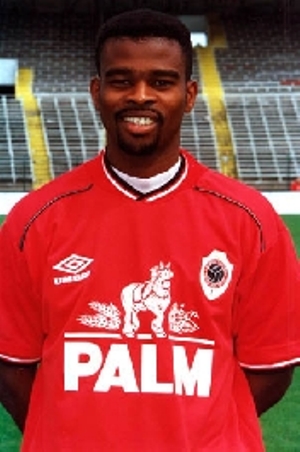
Bimbo left Nigeria back in the 90s to ply his trade abroad. He is very talented, athletic, quick and skilful. He is one of the best strikers/forward I’d ever known in my life. He played for Antwerp for several years and remained settled in Belgium with his wife and children. He didn’t reach the fullest of his potentials but he did his best. We had hoped that Bimbo would play for Nigeria one day but it did not happen. I had a short discussion with him about this in 2002 and I respect his views and will keep them off the web.
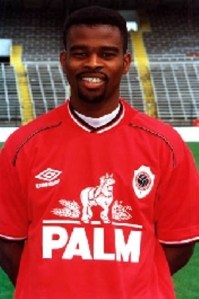
Bimbo Fatokun

Bimbo Fatokun

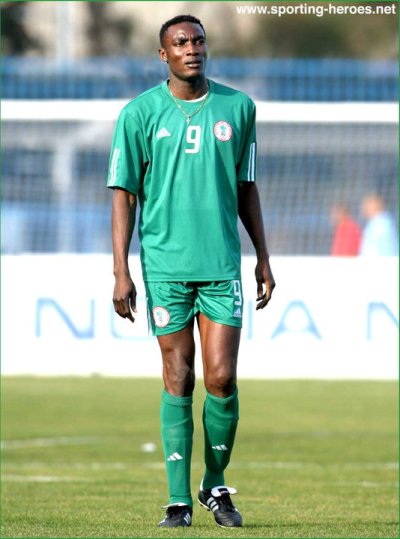
There are quite a number of boys from Festac who reached the national teams of Nigeria (at various levels). Sunday Oliseh, Samuel Ayorinde and Victor Agali are notable examples. I think the Ipayes also have links to Festac Town. Wasiu Ipaye on 401 Road was one of my closest pals before I left Festac Town. A very humble guy, he is. I heard that some younger generation of footballers from Festac Town have represented Nigeria too in recent years. I wouldn’t know them personally.
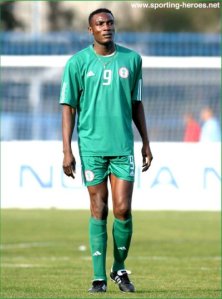
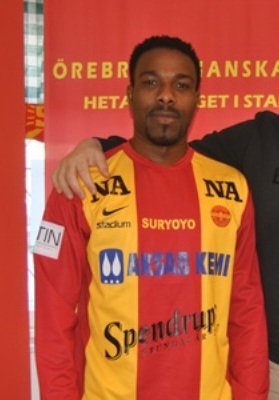
Agali

Agali

You won’t read about all the boys from Festac in a single essay and some people will probably get upset with me when they find out that their names are missing in this short story about the boys from Festac Town. Yes, it is a bias history. I write only about some of the boys who played with me and a bit after me.
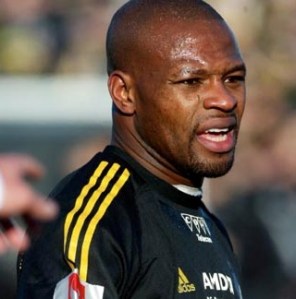
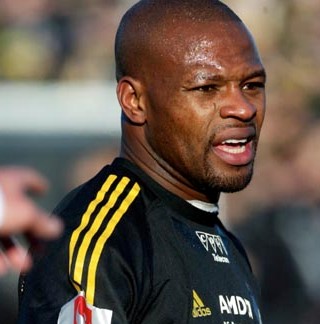
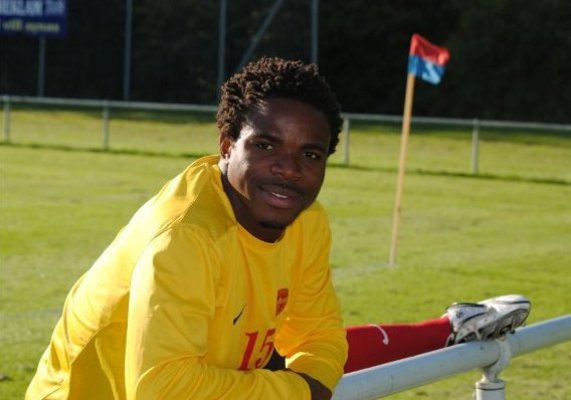
Samuel Ayorinde

Samuel Ayorinde

George Ekeh is the eldest of 3 brothers from Festac Town who are football talents. I remembered the first time I saw George playing football as a boy. He was under the age of 10 at that time. I marvelled at how such a small boy could have so much skills and confidence on the ball.
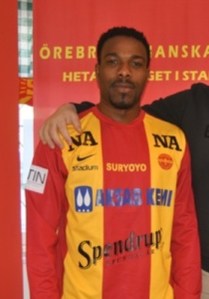
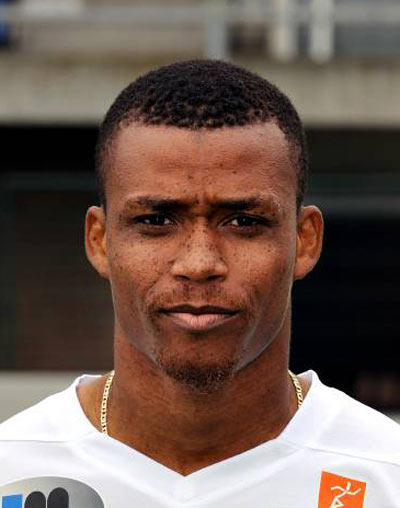
George Ekeh

George Ekeh

As a young teenage striker, George can hold and guide the ball with extreme mastery. I admire his skills. George probably did not hit the apex of his talents on the big scene but he went on to play in many countries around the world. I like him very much. He’s settled in Sweden.

Emmanuel Ekeh followed in his brother’s steps and he’s the one that still has more time on his hand to proof what he can do with his boots and skills. I watched a few of his clips on YouTube. He has such a pace and he’s got good vision to make precise passes.
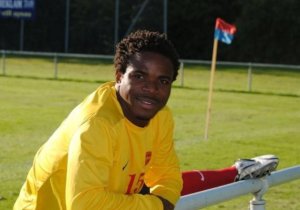
Emmanuel Ekeh

Emmanuel Ekeh

Kingsley Ekeh is a well known player in both Portugal and Cyprus. Famously called King he shone like a millions stars during his playing career. He quit in 2012 and became a scout for his former team.

Life can bring many twists. When I watched or played together with George sometimes, I never saw Kingsley on the football field. In fact, all my years in Festac Town, I didn’t see Kingsley kick a ball. He was always talking on the sidelines. To be honest, Kingsley can provoke anybody back in the days and you can’t win over him in an argument. I actually thought it was a joke when I heard that he was a professional footballer. I do hope to see Kingsley soon. When I do, my first question to him will be “come, which time you start to play ball sef”?

Kingsley Ekeh

Kingsley Ekeh

Azubuike Oliseh probably enjoyed the influence of his brother Sunday Oliseh in gaining international prominence. I have to be honest. This guy trained hard to ensure that he carved a name for himself. However, not everybody will agree with my last submission because despite playing for big teams in Europe, it was obvious he didn’t have the skills and fluidity of Sunny his brother.
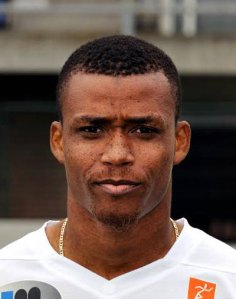
Azubuike Oliseh

Azubuike Oliseh

The youngest Oliseh that I know, Egutu Oliseh still plies his trade as well. We never played together. I saw him grow up and I saw him at the Sunday services many times along with the rest of the family.

Egutu Oliseh

Egutu Oliseh

To complete this short story about the boys from Festac, I called up Femi Oladele in the middle of it. Femi is an encyclopaedia of Nigerian football. He grew up in Festac and studied Veterinary Medicine at ABU. But today he holds a Phd in sport administration from a German university.

As a result of his passion for football, he abandoned a PhD program along medical line in Sweden. I have convinced Femi to join me in writing the second part of this story. I have to forgive Femi though, he still doesn’t acknowledge my skills and I’m shocked he didn’t see any of my big games in Festac, Ebute Metta, Yaba Tech, Unilag, Mile 2 and in Ibadan.

Bassey of 23 Road did not turn professional. The story of Bassey will be told differently depending on the speaker and how well they know Bassey. In Festac in those days you cannot separate Bassey and George Ekeh. I always find them near mama Ibeji’s shop, chilling and talking for long hours. They are always together in the evening to discuss how they played/trained during the day and they talk a lot about the future. They had the same dream. There was definitely a link between Bassey, George and the Olisehs. I am not in the position to elaborate. I was at the University of Lagos when many water passed under the bridge.

In any case, historically, I was probably one of the first groups of people who played football with Bassey in Festac Town. His family moved into an apartment behind ours. Hardly had they put their belongings in place than Bassey came down to find me and 2 boys playing football. Bassey joined me and we played against the other 2 brothers Dada and Oyinye.

I could say we played for about 1 hour and I almost did not touch the ball again. At that time, we didn’t know his name was Bassey. He was simply called “Ba”. Ba was running round the field with the ball practically fastened to his feet. He was short and very quick. I said to myself, “another footballer has arrived”. Bassey went on to be a household name in Festac football. I learnt he played for some clubs in Nigeria. From afar, I could see that he did not reach his full potentials.

Ubaka is a very close pal of Nigerian International Victor Agali, as I learnt. Obviously, I don’t have my eyes on all our potentials. I missed Agali to the extent that when people talked about him, I’m like….how come I didn’t know him? Well, I don’t think he knows me either!

I remembered playing against Ubaka’s team in one tournament on 71 Road/24 Road. He was a disciplined defender and very well respected as a young player. But when I’d played against him, it had been easy to beat his team silly. With all due respect, I was a fine striker and for being such a quiet striker, I had extremely good qualities and a ball sense that is extraordinary. I did my share of damage to many lines of defence and teams.

Another boy who’s really very close to George and Bassey is Emeka Okpor Anthony. I think he’s career was punctuated by a series of injuries right there in Nigeria. I learnt in particular that he had a recurrent shoulder problem. A great talent and a clever defender, Okpor is a graduate and he also has a coaching qualification from NIS. He is nurturing young talents and looking ahead to becoming a great coach and motivator.
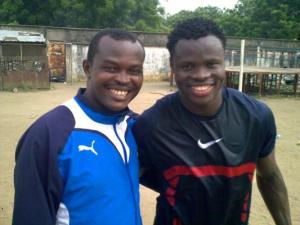
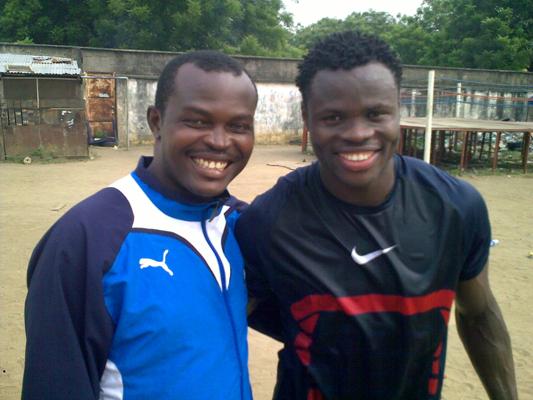
Emeka Okpor and his friend Taiye Taiwo

Emeka Okpor and his friend Taiye Taiwo

There’s abundant joy when you help other people to reach their dreams even if yours suffered a setback. Setbacks are not meant to be permanent hindrances to happiness and contentment in life.

In Festac Town when I was growing up, Ebere was the most composed player on any football field. Ebere continued to tell us that his father preferred his education to his football career. He had dribbling skills that reminds you of a combination of both Maradona and Okocha. He topped those qualities with his eyes for goals. Whilst Bimbo was quick- actually one of the best sprinters in 100m in Lagos State in those days, Ebere was calm but they were both strong and they find the back of the nets in different ways. We have talents in Festac Town.

We had Dapo of 5th Avenue D1 close. He was a player in a world of his own. He combined well with Ebere during their school days at Mile 2 Boys. At that time, Amuwo Odofin Boys Secondary School was a force to reckon with in the Junior Principal Cup. It was Ebere and Dapo who wrecked the defence line-ups across Lagos State.

I remembered playing one-on-one against Dapo one day on my way from school. They had a small park in front of their block of flats then. Today the park is no more. FHA stupidly sold the park and people built houses on them. Anyway, it was like “he tortured me when he had the ball, and I tortured him when I had the ball”. The rule was clear, “don’t lose the ball”. When I read Eden Hazard’s interview and how he became clever at dribbling by playing in the garden with his brother, I remembered what I went through playing alone with Dapo.

One of my best friends through the years Modestus Okechukwu Okafor played for many years in the German Amateur league. He finally settled there and we even spoke over the telephone less than one week ago. Oke as he’s fondly called was the one who tried to tell me more about Victor Agali. He’s still not able to understand how I missed the Agali’s story. Apparently, Oke lived on 22 Road when he was a little boy.
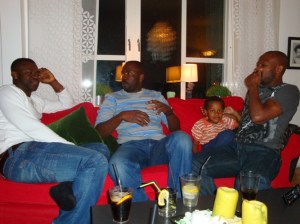
Okechukwu Okafor, Adeola Aderounmu and Samuel Ayorinde

Okechukwu Okafor, Adeola Aderounmu and Samuel Ayorinde

By the way I first met Oke by accident. I was on my way home from school one day. I stopped at a park near CCC, X Close on 5th avenue. I started to play football with the boys whom I met there. Then Okechukwu who went to a primary school on another side of town was also on his way home. He stopped too and joined us. Those days after school, our other occupation was football.

Later on by some stroke of fate Oke and I attended the same secondary school. Then I remembered him immediately. He has a built that is hard to miss. Still, Oke moved from 22 Road to 5th Avenue end that is near to 23 Raod. Since then, we remained very close friends and played on our “stone filed” everyday!

Chinneye Okolo, I almost forgot. What a left footer! He played with sense. Many of us back then didn’t just kick the ball. We were intelligent boys. We did well at school and we transferred that cleverness to the football field. I remembered my school mates like Wasiu Ikharia (a biochemist), Sanya Okanrende (a cardiologist). I mean these are finest amongst footballers!
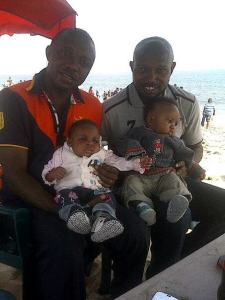
Afam and Nenye Okolo

Afam and Nenye Okolo

We had Kingsley Nzete who suffered a broken leg and we knew at that time that he’s not going further as a footballer. He got back on his feet again and started playing in between the goal posts. I salute his courage. We have another Bassey on 5th Avenue. I know his eldest brother lived and played in a foreign country but I never followed up on Bassey himself. Another fine player we still have in Asia is Gabriel Obadin.

We had Michael Fatokun, Solomon and Felix Uboh. Afam Okolo, and the Osuji’s of 401 road. If you want to write about the talents in the Osuji Family, you’ll need a whole edition of a sport magazine. The elder Uboh is Kennedy Uboh. He also went to the higher institutions. If he had been discovered, his football career could have earned him a place in Real Madrid’s line up. He was that good.

What about my friend Abideen, my cousin Tilewa Majekodunmi. There is Abega, a boy who loves football with all of his heart. I know Bauna on 721 Road and I remember many boys from the 402 end. We were players on the field!

This story will be incomplete without an analysis of how some of the boys from Festac failed to reach their fullest potentials and how many dreams were punctuated. We lost many boys along the way under different circumstances, many of them relating to health issues. Emotions have been high many times of how we grew up and the dreams we had.
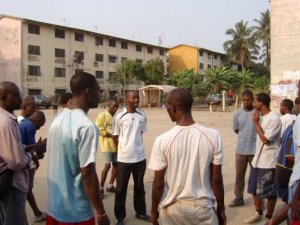
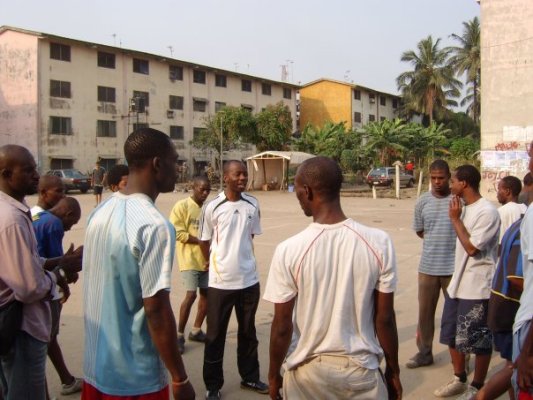
me and some boys on our stone field in 2006

me and some boys on our stone field in 2006

In the meantime as we continue to ponder on what could have happened to the boys who did not reach their full potentials or whose dreams were punctuated, we should be glad for the representations at the national and international levels.

We should be glad for the Olisehs, the Ipayes, the Ayorindes, the Agalis, and the Kingsley Ekehs, they did their best to put Festac Town on the map in the most positive ways. The Amunekes have very strong links to Festac Town and also to many of the boys mentioned in this essay. At some point Emmanuel Amuneke was living on 5th Avenue.

I am glad for Kinglsley Ekeh who reached his full potentials playing in Portugal and Cyprus. I am happy for Bimbo Fatokun, that he found the reasons to continue with his life in Belgium after a playing career punctuated by a few disappointments and unfulfilled promises.

I remembered how my team mates in the Oyo State NYSC in 1995/96 urged me to pursue that line. Niyi-our oyinbo from UI, Jato, Uche and the rest of the pack trusted me on the right flank and in the 6 yard box of our opponents. I hope they are glad for me that I decided to keep my pen and papers.

Today in Festac Town, there is scarcity of football talents. This is relative depending on who the observer is. When we moved to Festac in those days, there were football fields, playgrounds and parks in every corner. I wrote extensively about this here in the Village square (The Rise and Fall Of Festac Town, parts 1 and 2).

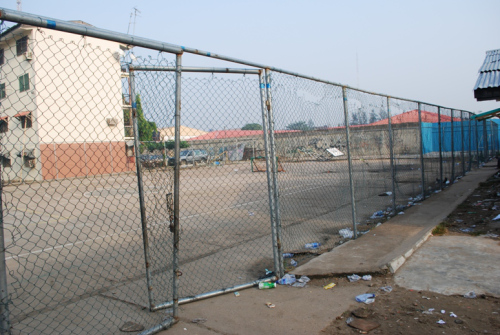
All the playgrounds are gone. There are no more football fields. I think only one major field was spared. FHA sold all our playgrounds. They sold all our parks. These are unforgivable acts.

In place of sports, football in particular, our youths have turned to crime and drugs. Festac became notorious globally as the town of 419ers. I also wrote about that in my story titled Festac Town and Its 419 reputation. There were many reasons why things took a turn for the worse in Festac and in Nigeria as a whole.

There is a need for Nigeria to return football to its glorious days. Today we all hail the EPL and in fact we worship the EPL and other European leagues in what appears like a permanent colonial mentality. Nigerian league can be made attractive again through good planning and administration.

The aim should be, “if our talents don’t go abroad, they should be able to live successfully playing football in Nigeria”. One way or the other the Nigerian intelligence needs to surface on the football scene. The market is huge. What are the problems?

Nigeria is very rich as a country and sport facilities should be at every corner of town. Our football stadia should be many, different sizes and world class standard. The training pitches should litter every community.

There are so many things wrong with Nigeria. It is sad that despite their love for the game of football, Nigerians allowed the sport to suffer as well.

I know that for many young talents, the dreams died. I think about many of my friends on the stone field: Suraju, Abbey and many more. How did I forget about Medo Obanya until now? Medo is one of the greatest talents to have emerged from Festac Town. His dribbling and goal scoring skills are extraordinary. His football career simply melted away right in front of our eyes. Who do we blame?

Even Nwike, Medo’s younger brother was a wonder boy on the ball. I didn’t forget Osaze and Richard Omoregie. It’s going to be an unending essay if I write about everybody that I know. Kelechi, all the best in the south of Sweden!
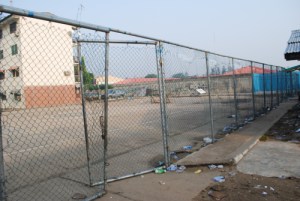
stone field in 2010

stone field in 2010

I’ve spoken to Femi Oladele and he should be the main contributor to write about the implications of what happened to the boys from Festac. I hope he will use his expertise in sport administration and his life experiences to write about how Nigeria can discover, develop and invest in her talents in football. There are many “boys from Festac” scattered around Nigeria. In this country, many talents have been wasted and dreams have been dumped. Some lives were actually shattered due to unfulfilled dreams.

What happened to the boys from Festac Town can be likened to a sliding door. There are many implications to this expression. When the door slides, it separated us. The sliding door also meant that while some hinged their hopes only on football, some of us looked at our options.

I can say a word for the young people coming up. Keep your heads up, live healthy and keep all of your dreams alive. Don’€™t put your eggs in the same basket and don’t count them before they are hatched..!

aderounmu@gmail.com