Dark November Blues

The story of Nigeria is a sad story of cyclic idiocy.

Dark November Blues

By Adeola Aderounmu
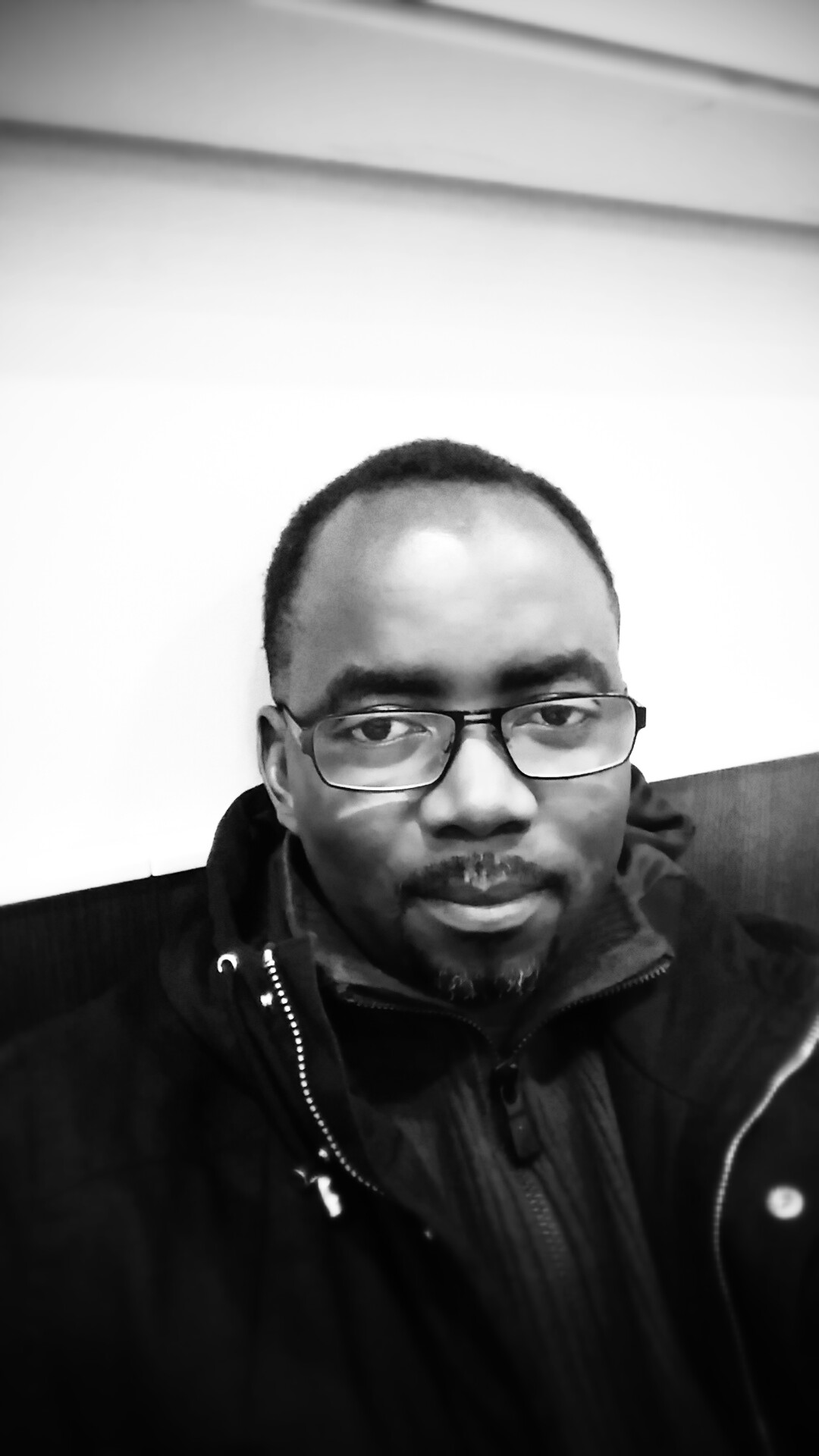
20151101_155430-3

This weekend l looked at the headlines as l have always done. In fact l usually look at the headlines during the week as well. This way l am in touch with happenings and events not only in Nigeria but also around the world.

If you are a columnist or a blogger there is never a deficiency in what can trigger your opinion for your weekly essay or regular write-ups.

For sometime now l have also been thinking about the possibility of travelling to Nigeria for the first time since 2010. This has affected my mood, my disposition and my thoughts in no small way.

When l’d travel to Nigeria as l have done from time to time since 2002 when l first left Nigeria straight to Sweden, it had always been with mixed feelings. Partly, l am happy to see my families and friends again. On the other hand l am sad because l am reminded of the life of poverty that l always return to.

As far as Nigeria is concern, l am still a man living in poverty. I have written many times that becoming a member of the Nigerian family in diapora is not an escape from the poverty that stare at you in the face in Nigeria.

If one lives well abroad or even in Nigeria and pretends to be immune to the intensity and spread of social, infrastructure and material poverty in Nigeria, then one is heartless.

Personally I have never seen living in Sweden as an escape from the life of poverty that l know in Nigeria. It will not matter how long l live in Sweden. l have come to realise that l cannot dissociate myself easily from the several millions of Nigerians still struggling to live on less than 25 dollars a month or nothing at all.

Today l just need to purge my random thoughts, my november blues out of my mind. That way, l become free and my soul is set free.

This happens because there are so many things running through my mind at the same time to the extent that l doubt if l could say l slept well this outgoing week.

When l’d thought about my future trip to Nigeria l am so sad that the people that l know have become fewer in number. One of the laws of nature catches up with us as we grow older-the old and sick dying and newborns emerging.

My mother will not be there amongst those who l want to fondly remember. There are so many others that will be missing and l will not indulge myself in writing about those who went too soon. In almost all the situations where death has cheated me, l realized that the causes are either related to poverty or direct failure of governance.

But l refuse to elaborate further on those who have been taken away from me because of the rat race existence in Nigeria. I will let the tears l’ve shed wash my sorrows away.

There are so many reasons l write regularly, mostly about Nigeria.

One day someone who had been close to me during my adolescence commented on one of my essays: Adeola may you live to see the Nigeria of your dreams.

I think she aptly captured the essence of my essays. She is probably one of those who realised that l could have gone on to live a quiet life like millions of Nigeria living abroad. Those who write genuinely about the socio-political problems in Nigeria have no obligations to do so. It must be the love in their hearts.

My friend’s comment meant that she has been reading a substantial part of my essays where l refused to give up on living a good life in Nigeria. True, that Nigeria where things are normal and work as they should remains in my dreams.

To some people writing about Nigeria and your frustrations about the criminals ruling Nigeria means that you have an agenda, most likely that you have a political ambition that will make you become one of the criminals in government.

Must everyone steal/loot in government? Most people answered: YES.

That aspect saddens me.

In any case, for a country with more than 150 m people having unlimited natural resources and extreme diversity of languages, culture and heritage, there is a need for more voices and opinions from reasonable and selfless people.

This is urgent because a critical analysis of the Nigerian mindset based on the evolution of the social media and in fact conversations with ordinary people one meets leave a lot to be desired. Usually l am easily devastated by the urge of many more Nigerians to participate in politics because they want to become criminals like their fathers, mothers, uncles, friends and neighbours.

Who is going to bring about the Nigeria of my dreams?

Who is happy that several millions of Nigerians remain in absolute poverty living from hand to mouth? Who is happy that their brothers and sisters, mothers and fathers are placed on minimum poverty wage of N18k per month? Who is happy that unemployed people may receive N5k per month as poverty unemployment allowance?

Is it not in the same country where some people stole several billions of dollars and remain free men and women? Is it not in the same country where a few men and women called politicians and their counterparts in the military have access to unlimited funds that they can loot, steal and divert for personal uses?

What is security vote? Nobody is even looking at that anymore. I heard it is several billions of naira given to a governor to provide security for the state he/she governs. I heard the governor does not have to give an account of the state’s security votes. Really?

So a governor can divert security vote to his personal account  for 8 years and get away with it just like that. Is this why insecurity is one of the biggest problems in Nigeria?

This country Nigeria is a country built on destructive tendencies in all ramifications!

So the story of a failed country goes on.

The senators are still earning as much as possible doing almost nothing. Sometimes they shout YA or NAY and millions of naira get wired to their accounts. Just like that! Then, they will decide one day to give 5 thousand naira to unemployed graduates. What a fantastic mess? Absolute rubbish and senselessness!

Ministers will finally emerge in the mid-November blues and they are mainly the same old suspects of corruption from the APC or the old PDP converts.

Then the judiciary and the presidency will play the probe game back and forth. They will decide who can be probed or not. Listen! Probe Jonathan! We can’t probe Obasanjo..! We can’t probe Babangida..! Abacha was not corrupt..!

Each government continues to blame the previous administration instead of hitting the ground appropriately to work. The story of Nigeria is a sad story of cyclic idiocy.

I am just wondering.

What can be the worst outcome if Nigerians storm the streets across the country and ask for the sack of all the federal and state senators and legislators and then place them on N5 000 a month until they find new jobs?

On the proposed N5k for unemployed people, my take is that rather embarking on such a disgraceful and dehumaninzing gesture, the government of Nigeria (at all levels) should double their efforts and committments to alleviating the suffering in the land.

There are what we call short-term plans and long-term plans.

Some short-term plans are achievable within 12 calender months when sense is applied. But when you spent more than 6 months to form a common cabinet or executive at state and federal levels, then it doesn’t make sense anymore. It means you are happy with your election or emergence and the people can go to hell!

I think 100% of the unemployed people will be happy to donate their proposed poverty stipends of N5 000 to the motherless babies home if for example electricity is constant in Nigeria say from January 2016 and for ever more.

With a common infrastrucure as electricity many of the unemployed people will become gainfully employed by either engaging in private businesses or becoming  absorbed by organisations and enterprises whose monthy profits are mainly used to provide power and other avoidable costs of running businesses.

Even the olden days agricultural development and settlement schemes of western Nigeria availed much. The blueprints must still be somewhere!

There are endless suggestions on either side of the take.

Long-term plan means tacking the fundamental issues that not only affect the political instability in Nigeria but also addressing the economic and development implications at the same time.

The Boko Haram war, the new face of Biafran uprising and the endless agitations in the South-West and in the Niger-Delta will not go away simply because President Buhari has a military background. You can’t purge away these uprisings and wars by a wave of the hand. Agidi o ran!

Boko Haram was underestimated, see where it is heading. Now people are wishing Biafra a sudden death..! what a pity!

That is why referendum exists.

Nigeria needs one now before the country explodes fully.

At this moment, the most reasonable way will be for Nigerian politicians to eschew their selfishness and adopt regional government as quickly as possible. It will not solve all the problems but it will a bold step in the right direction.

aderounmu@gmail.com

108 Modern Public Hospitals Now

What about the infectious diseases unit? What about children’s wards across the country? What about the maternity wards? What about us?

108 Modern Public Hospitals Now

Adeola Aderounmu

Södersjukhus in Stockholm. Nigeria must upgrade to International standard  pix: Acrona

Södersjukhus in Stockholm. Nigeria must upgrade to International standard
pix: Acrona

The governor of Bayelsa State, Mr. Henry Seriake Dickson is one of those people disgracing Nigeria and giving the country a bad name. Recently he spoke out of sense as he tried to rationalise the demise of a criminal politician who died recently in Nigeria.

Mr. Dickson blamed the death of Diepreye Alamieyeseigha on the federal government of Nigeria. He has been part of the federal government and now a state governor, so by his own submission that makes him a murderer too.

News had it that Diepreye Alamieyeseigha may have remained abroad or even flown back abroad (depending on which account of his death is true). We are told that his final journey was influenced by the issuance of the threat of repatriation by the British. Diepreye escaped from the UK without facing justice for his crimes.

Why was Diepreye receiving treatment abroad? Why was his life expectancy dependent on the hospitals that are in foreign countries? While he was the governor of Bayelsa State, what effort did he make to build or upgrade the health institutions in Bayelsa so that if he and his family members living in Nigeria got sick, they could go to the hospital for treatment?

This is what politicians and policy makers in foreign countries do. They make sure that while managing their corruption at the barest minimum, that the institutions that will serve them and their people are in place. The hospitals are one of those institutions. Functional public schools, good roads and water are fewer examples of an endless list of the basic things of life that give humans the dignity they deserved.

Nigerian politicians have no respect for the citizens of the country. They don’t think the people deserve the things that make life worth living. They are so myopic and wicked that they do not know that they need to provide amenities that will serve them and the rest of the population when the need arises.

Recently l wrote an essay titled: Let’s Go Die, Abroad..!

It was a reaction to the growing number of shameless Nigerian politicians and the so called statesmen travelling abroad to end their lives in several hospitals across the world. Some of them are lucky, they return to Nigeria alive.

A former Nigerian president Umaru Yar Adua was bundled, packaged and repackaged in several countries around the world when he was sick. For 8 years he was the governor of Katsina State before he became the president of Nigeria and no hospital was built or upgraded to care for, or manage his specific chronic ailment. The rest is history.

If not stupidity, how else can one describe such a situation when people who loot public funds cannot even think of providing something that could prolong their lives in their nearest vicinities.

We are all humans and we will always be prone to diseases, ill-health and other forms of frailties especially as we age. It will not matter how much money we have legitimately or how much some people have looted. Is there a way to let Nigerian politicians know that looting is not an antidote to diseases?

I am sure many of us have written about the shame of Nigerian politicians dying in hospitals in foreign countries and returned as packages to Nigeria for burial.

Still, it is worth writing about again especially as it appears that the shameful act remains unabated. The death of the Ooni of Ife in the UK is regrettable.

We argue and we try to prove it that civilisation started on the African continent. We argue and we try to prove it that intelligence in the group Homo Sapiens is independent of race.

But the rulers of Nigeria are weakening our lines of arguments in many ways. For example when they steal and loot money meant for public uses and when they travel abroad instead of providing for their health needs in Nigeria. Why must Nigerian rulers travel abroad for treatment and admission at hospitals and clinics?

As a way of elaboration, Diepreye Alamieyeseigha  was one of the several corrupt Nigerian politicians who looted the treasuries in one of the states in the Niger Delta area. Since the Nigerian form of fighting corruption is dependent on who is in power in Abuja, Diepreye Alamieyeseigha was granted state pardon after he escaped from the UK dressed as a woman.

If not for the fact that fighting corruption in Nigeria is selective and heavily biased, the likes of Diepreye Alamieyeseigha, and in principle 99% of those in present day PDP and APC should have been arrested and their cases dealt with in Nigeria. Why must it take the British or the American government to arrest Nigerian political crooks? How much money is Nigerian forfeiting in the process?

Nigerians have come to terms that their politicians can or must be corrupt. The new wave is that many Nigerians are seeking indictments in order to be convinced that a politician is corrupt. When a man serves as a state governor for 8 years and still travel abroad for treatment or medical check up, what kind of indictment are you looking for?

When a national assembly loaded with corrupt people give passages to corrupt ministers-to-be, where do you go for the indictment?

When a man cannot be probed because he sponsored the presidential campaign with security votes among other looted funds, then we say he is not corrupt. Today it is the PDP that is under the spotlight, well no problem. Every dog will always have its own day.

But Nigeria is in a constant mess. The way we live separates us and we see the demarcation between them and us. Death either abroad or at home appears to be only leveler between the corrupt and the saints, the rich and the poor. Life will remain a passage, and only fools don’t see the vanity of primitive accumulation.

Let me repeat, Diepreye Alamieyeseigha  could have built a modern hospital in Nigeria where people like him and the citizens of Bayelsa can be diagnos and treated with dignity.

Nigerian doctors are ranked amongst the best in the world but they work in several countries around the world helping to maintain the health care system globally.

How many times are we going to write about the need to ensure that our doctors, scientists and other professionals are provided with conducive environment and structures to work with in Nigeria?

Death is one of the few certain things in life. So what is the use of looting, stealing and stupidly accumulating wealth and then refusing to build hospitals in Nigeria or refusing to equip the ones that have been built?

Now this is my challenge to the Buhari-APC mandate before the end of May 2019.

Look around the various states in Nigeria. Give yourselves the marching order to equip and upgrade the existing hospitals to the standards of the hospitals you usually visit abroad. If anyone suggest that this is not possible, that person is probably an enemy of progress.

In additon to the first mandate, a second one is that every state in Nigeria must have at least 3 big modern public hospitals.

Some states like Lagos may have may even need more than 5 big public hospitals because of the extreme high population of the state and also as a result of the frequency of accidents and number of sick people.

The Buhari-APC mandate may want to forbid any serving politician from seeking medical abroad say from 2017 when some serious work and upliftment should have been possible.

At the existing hospitals, an evaulation of the situation needs to be done. All the units including the Accidents and Emergency should be upgraded. If this happens before the next senator is invloved in an accident, then he/ she can be treated anywhere in Nigeria.

The recent sojourn of Akapbio in a foreign hospital is absolute stupidity coming from a man who boasted that he built a world class hospital in Akwa Ibom. I am yet to get a report on why he was not treated at the world class hospital in Akwa Ibom.

What about the surgery units? For how long will hard earned income and donations be packaged to India for correctional surgeries? How many Nigerians have died because of manageable diseases that they could have lived with until old age?

What about the infectious diseases unit? What about children’s wards across the country? What about maternity wards? What about us? Where should we go when we face life-threatening diseases? Is there anyone reading this who has not lost a mother, a father, a brother or a sister due to preventable health situations?

What about making sure that the upliftments are taken as priorities? What about developing a health care system that will not put the cost above the importance of life in Nigeria? Does living long have to depend on how much money one has and which hospitals one can attend?

When the lives of the people can be prolonged by how much money they have, then the essence of living in such a country is lost. It is a disaster by all standard!

Nigeria needs to improve the health care insurance process and health care delivery system.

This demand for 108 modern public hospitals is not an exaggeration and it may even not be enough to meet the needs of 170m people. But the 108 hospitals in questions are the publicly available hospitals to stop the sojourn of Nigerian politicians abroad. They will also meet the needs of the citizens at large. And don’t forget to bring back our doctors from abroad. Bring them home..!

In the meantime, don’t also forget that our return to regional government is a must because it is the only way to purge the major unrests across Nigeria including the Boko Haram war for which the APC-Buhari mandate has shown it may not win.

The 108 hospitals challenge is on. Now I start to count…

aderounmu@gmail.com

Nigeria’s Independence, The Military Coups And the Origin of Corruption Nigeria

Since becoming millionaires in Nigeria do not correlate to owning factories but nearness to the centre of federal, state or local government where national patrimonies are looted, it means that Nigerian millionaires are manufacturers of massive poverty and miseries for Nigerians.

Nigeria’s Independence, The Civil War And The Origin Of Corruption In Nigeria

By Salimonu Kadiri (Guest Writer On Thy Glory O’ Nigeria..!)

Mr Salimonu Kadiri

Mr Salimonu Kadiri

Fifty-five years ago, Nigeria obtained sovereignty from Britain. Consequently, Chinua Achebe recorded thus, literally all government ministries, public and privately held firms, corporations, organizations, and schools saw the majority of their expatriate staff (mostly British) leave.

While this quiet transition was happening a number of internal jobs, especially the senior management positions, began to open up for Nigerians, particularly for those with a university education.

It was into these positions vacated by the British that a number of people like myself were placed …. This ‘bequest’ was much greater than just stepping into jobs left behind by the British. Members of my generation also moved into homes in the former British quarters previously occupied by members of the European senior civil service.

These homes often came with servants – chauffeurs, maids, cooks, gardeners, stewards – whom the British had organized meticulously to ‘ease their colonial sojourn.’

Now following the departure of the Europeans, many domestic staff (Nigerians or black Africans) stayed in the same positions and were only too grateful to continue their designated salaried roles in post-independence Nigeria. Their masters were no longer Europeans but their own brothers and sisters.

This bequest continued in the form of new club memberships and access to previously all-white areas of town, restaurants, and theatres (see p. 48 – 49, There Was a Country by Chinua Achebe).”

It is very important to note that Nigerians who stepped in to fill the jobs left by Europeans and inherited their rates of pay and privileges also played the role of the colonialists. The offices occupied by Nigerians after Independence were designed and meant to serve the interest of Great Britain and they remain so till date.

However, within six years of independence Chinua Achebe asserted that, Nigeria was a cesspool of corruption and misrule” where public servants helped themselves freely to the nation’s wealth (p.51, There Was a Country).”

As Nigerian public servants and politicians preened themselves in the perfection of the white man’s life, they became extravagant and flamboyant while being conspicuous and spectacular in consumption of imported materials. At that stage, the inherited rates of pay and privileges were no longer enough for Nigerian public servants, employed or politically appointed. That was the origin of corruption in Nigeria.

Exactly five years, three months and fourteen days after Nigeria had obtained sovereignty from Britain and at 12:30 P.M., on January 15, 1966, Major Patrick Chukwuma Nzeogwu, announced in a broadcast from Radio Kaduna that the Supreme Council of the Revolution of the Nigerian Armed Forces had taken over power in the North.

Our enemies, Nzeogwu said, are the political profiteers, the swindlers, men in high and low places that seek bribes and demand ten per cent. Declaring a martial law, he listed embezzlement, bribery and corruption among offences that carried death sentences.

Unfortunately for Nigeria and Major Nzeogwu, his comrades in the South had been infiltrated by tribal chauvinists. One of the coup plotters explained that Major Don Okafor and Captain Ogbo Oji had taken a stand against any step that might embody the killing of Ironsi.

Therefore, while the would-be assassins were pointedly making for his (Ironsi) residence he was at the same time heading towards Ikeja (2nd Infantry Battalion) to enlist support to quell the rebellion of the Majors. Major John Obienu who was to come to Lagos from Abeokuta with armoured cars in support of the Majors’ rebellion renegged and linked up instead with Major General Ironsi at Ikeja (see p. 125 – 126, NIGERIA’S FIVE MAJORS; COUP D’ÉTAT OF 15TH JANUARY 1966, FIRST INSIDE ACCOUNT BY BEN GBULIE).

It is noteworthy that Captain Ben Gbulie fought on the side of Biafra during the Civil War. In Enugu Major Chude Sokei and Lieutenant Jerome Oguchi of the 1st Infantry Battallion were assigned the role of killing the Premier of the Eastern and Mid-western Regions, Dr. Michael Ihenokura Okpara and Denis Osadebey respectively, but the would-be assassins had turned pacificists that did not like to see bloodshed (see p.136 of Gbulie’s book).

Two hours after Nzeogwu broadcast in Kaduna, Major General Johnson Thompson Umunakwe Aguiyi Ironsi caused Radio Lagos to broadcast at 14:30 P.M., that in the early hours of this morning, 15th January 1966, a dissident section of the Nigerian Army kidnapped the Prime Minister and the Minister of Finance and took them to an unknown destination.

The General Officer Commanding (Ironsi) and the vast majority of the army remained loyal to the Federal Government and are already taking appropriate measures to bring the ill-advised mutiny to an end. On Sunday, 16th January 1966, when General Ironsi announced his taking over of power in Nigeria at 23:50 P.M., fifteen casualities of the Majors’ coup included the Prime Minister of the Federation, Sir Abubakar Tafawa Balewa; Finance Minister, Chief Festus Okotie Eboh; the Premier of Northern Region, Sir Ahmadu Bello; the Premier of Western Region, Chief Samuel Ladoke Akintola; Brigadier Zakariya Maimalari; Brigadier Samuel Adesujo Ademulegun; Colonel Kuru Mohammed; Colonel R. A. Shodeinde; Lieutenant Colonel Abogo Largema; Lietenant-Colonel Yakubu Pam and Lietenant-Colonel Arthur Chinyelu Unegbe. Just as Ironsi did not take over power to fight corruption in Nigeria, so were those who overthrew him towards the end of July 1966.

Since 1985, and especially in the last 16 years, corruption as observed by Major Nzeogwu in January 1966 had grown from 10% to 200%. Political elites in government and civil servants, including the judiciary are accustomed to using their offices to share power and the resources of Nigeria among themselves.

Money budgeted for road constructions, hospitals, education, power supply, potable water, housing, turn around maintenance of oil refineries and even pensions have been looted by political elites, civil servants in the ministries, departments, parastatals and judiciary.

The main core of the Nigerian economy, oil which in the constitution of Nigeria is the property of all Nigerians have been appropriated by the elites to themselves through the issuance of oil blocks to one another.

Since becoming millionaires in Nigeria do not correlate to owning factories but nearness to the centre of federal, state or local government where national patrimonies are looted, it means that Nigerian millionaires are manufacturers of massive poverty and miseries for Nigerians.

The treasury looters in Nigeria give birth to unemployment, armed robbers, kidnappers, drug traffickers (even to countries where the penalty is death sentence), ethnic insurgents and Boko Haram while they force others to look for means of livelihood in exile.

(to be continued)

Oyinlola: How One Man’s Greed Destroyed The Centre For Black Culture

“The entire continent of Africa continues to be deprived of the services of the Centre for Black Culture and International Understanding because of the greed of just one man”

Oyinlola: How One Man’s Greed Destroyed The Centre For Black Culture

By Adeola Aderounmu

There are so many things happening in Nigeria that have contributed to the underdevelopment and retrogression in the land.

That we sometimes talk about these things without necessarily following them to logical conclusions means that Nigeria has an overwhelming loads of atrocities to drag along with her daily.

Since the atrocities are many and varied, it is too convenient to let go or forget some of them despite their grave implications either in deeping the crises that Nigeria faces as a country or in setting more precedents that give way to even more atrocities and crimes across Nigeria.

These crimes are profound among Nigerian politicians.

The story of how a greedy and corrupt Nigerian politician, Olagunsoye Oyinlola, grounded all the activities at the Centre For Black Culture and International Understanding (CBCIU) in Osogbo Osun State is a very sad one.

Oyinlola, Corrupt and Greedy

Oyinlola, Corrupt and Greedy

The CBCIU was established in 2007 during the tenure of Olagunsoye Oyinlola as the governor of Osun State. The establishment of the centre was under the cooperation agreement with the UNESCO Paris and in collaboration with acclaimed cultural experts Ulli and Georgina Beier, the government of Osun State and curiously the Olusegun Obasanjo Library.

Seriously, what has Olusegun Obasanjo Library got to do with the centre? Was it a clandestime plan to falsely acquire what belongs to others and a way to divert public funds to Mr. Obasanjo? It was not a surprise that Professor Wole Soyinka was vehemently opposed to the inclusion of the Olusegun Obasanjo Library as part of the partners setting up the centre.

The Osun State government paid 700 000 USD for the acquisition of the precious archives of the Beiers which would form the nucleus of the collections at the centre. The collections include documentation of various aspects of the Yoruba culture and tradition. The entire collection that should come from the Beiers are actually unknown but it is reported as being massive.

Apart from serving as a centre where records/archives are stored, the CBCIU was also expected to serve several other functions. CBCIU should have been the nerve centre of various cultural activities locally and internationally. The CBCIU was supposed to receive cultural troops from various parts of Africa and the rest of the world.

If it had been functional the CBCIU would have had conferences, seminars, lectures and syposia for all kinds of performing artists in Nigeria and from around the world.

It was such a prospect that made the federal government of Nigeria under whose laws the centre was established to pledge 400 million naira as annual allocation to the centre.

It must be restated that Oyinlola was the governor of Osun State and chairman of CBCIU when it was established in 2007.

In 2008 Oyinlola formally signed a law establishing the CBCIU.

According to that law, Oyinlola (stupidly) made himself the lifetime chairman of the CBCIU.

Unless one is arguing with a mad man, it is easy to see that this law is self-serving and deserves to land Oyinlola in jail. Only a criminal will convert a public institution into a personal or family business venture.

During his tenure as the governor of Osun State and doubling as the chairman of CBCIU, Oyinlola collected 400 million naira annually on behalf of the centre. When he was bundled out of office by the court in 2010, he became the National Secretary of the PDP, a position that was still strong enough to ensure that the 400 million naira landed safely on his table.

With a new government in Osun State under the governorship of Rauf Aregbesola,  the opportunity arose to end the reign of Oyinlola as the lifetime chairman of CBCIU. The board constituted by Oyinlola was dissolved.

The Osun State legislators enacted an ammendment in 2012 that allows a serving governor to be chairman of the board of CBCIU. The governor may also appoint anyone for this purpose.

Governor Aregbesola appointed Professor Wole Soyinka as the chairman of the center and Dr. Wale Adeniran became the Executive Director.

Dr. Wale Adeniran knows the history of the centre because in 2007 Oyinlola had asked him to write a letter of approval for the establishment of the centre. At that time Dr. Wale Adeniran was the director of the lnstitute of Cultural Studies at Obafemi Awolowo University.

Since this means of siphoning public funds for private use had been taken away from Olagunsoye Oyinlola, he continues to fight back. He has gone as far as protesting to UNESCO in Paris on a number of occasions. Is this the meaning of a fool’s mission?

Until this day, Oyinlola has continued to parade himself around the world as the chairman of the CBCIU.

There are allegations that the materials which may have included valuable art works and artifact that should be displayed at the centre were also carted away to Oyinlola’s private residence.

When his reign as the chairman of CBCIU was cut short in 2012 by the law enacted by the Osun State legislators, Oyinlola carted away all the files from the centre including all the financial records. These are clearly some of the traits of a criminal. In essence, Oyinlola and his team of tropical gangsters made sure that it was not possible to take over from them.

Today the CBCIU lies in ruin, covered with weeds and grasses and totally non-fucntional. It is noteworthy that Oyinlola did not act alone. With 400 million naira, it was easy for him to find staff, move them around or tell them what to do at all times, all just to make sure that he remains the chairman of the board.

The nucleus of the centre was to be the archive that was purchased from Beier family. Today the digitalisation of the archive continues in Germany. If Oyinlola hadn’t run the CBCIU as a private or family enterprise, the delivery of what was purchased or ordered would have been completed and all the functions of CBCIU, some of which are stated earlier would have been up and running.

It is also of interest that the Osun state government has refused to deliver the allocation of the centre to the present board that is supposed to be running the CBCIU. There are reports that the allocation appears on the budget of the Osun State government annually. So what happens to the money? Why is it not released?

It is ridiculous that the Osun State government under Ogbeni Aregbesola expects Professor Wole Soyinka and Dr. Wale Adeniran to give financial acount of the centre when in fact funds have never been released to them. Where is the funding for the CBCIU since 2012?

On Monday the 12th of October this case (yes it is now in court) will continue at the High Court in Osun State. Oyinlola and his lawyers will argue in favour of allowing Nigerian politicians to use their positions to acquire public properties and converting tax payers monies into family hereditary funds.

They will argue that Oyinlola does not have to explain what he did with 400 million naira that was given to him between 2007 and 2011. But really what did he do with the money? Is this the same Oyinlola that some people are speculating will appear on the ministerial list? Well, that won’t be a shock. Buhari has wasted 3 months only to assemble the same old corrupt people we know.

But seriously, there should be a public outcry against Oyinlola and he should be covering his head in shame at this time. Western Nigeria, Nigeria and the entire continent of Africa continue to be deprived of the services of the Centre for Black Culture and International Understanding because of his greediness. It’s shocking!

aderounmu@gmail.com

References

CBCIU: For Culture or Penkelemes? By Wole Soyinka. Chairman Centre For Black Culture and International Understanding, Oshogbo, Osun State, Nigeria.

CBCIU and the Lilliputians of Culture by Wale Adeniran, Executive Director, Centre For Black Culture and International Understanding, Oshogbo, Osun State, Nigeria.

STOP PRESS

Professor Soyinka resigned from his post as the chairman on saturday 10th of october 2015.

Dr. Wale Adeniran also resigned as the Executive director of the centre.

The primary reason for their resignations is because of the way the Nigerian press/media presented the story even until this moment. The media made it sound as if the problem is between Wole Soyinka and Oyinlola whereas the problem is actually between Osun State and Oyinlola.

Nigerian media sometimes does not show common sense when reporting issues. How can they fail to crucify Oyinlola for making himself the life time chairman of a public institution?

CBCIU: for CULTURE? Or ‘PENKELEMES’?

By Wole Soyinka

TEXT of Professor WOLE SOYINKA’S ADDRESS to the NIGERIAN MEDIA on the  “CENTRE FOR BLACK CULTURE AND INTERNATIONAL UNDERSTANDING,” Oshogbo, on September 1, 2015 at Freedom Park, Broad Street, LAGOS.

CBCIU: for CULTURE?  Or  ‘PENKELEMES’?

Gentlemen of the Press,

One way to summarize the situation of the Centre for Black Culture and International Understanding (CBCIU) at this moment requires no deep elaboration. It goes thus: There is Law, and there is Ethics. Wherever these two arbiters of public conduct appear to clash, even Ethics must bow to Law.  On the other hand, it is useful to remember also that the sinews that bind civilized society together are strengthened when both – Law and  Ethics – converge, and are harmonized in a public cause.

To come down to the specifics of the Centre for Black Culture and International Understanding, I require no convincing that this ideal harmonization was manifested when the lawmakers of Osun State enacted, in 2012, an amendment to the original CBCIU law that had been signed into law by Governor Oyinlola on 29th December 2008. That origjnal law, in my view, was profoundly unethical.  The Amendment, by the succeeding House of Assembly, signed into law on the 31st day of July, 2012, was clearly designed to inject an ethical corrective into the original law.

I am not qualified to comment on the legal intricacies of the provisions in either, if any – this must be left to “our learned friends” of the legal profession. They have however advised that the July 2012 amendment supersedes the original, and that this Amendment constitutes the current law within under which the CBCIU obtains its validity, until overturned under a new Law enacted by a chamber of equal or superior jurisdiction. For direct public enlightenment, the heading of the Document of Assent goes thus:

STATE OF OSUN, NIGERIA

OSUN STATE CENTRE FOR BLACK CULTURE AND

INTERNATIONAL UNDERSTANDING

(AMENDMENT) LAW, 2012

Assented to by the Governor of Osun State on the 31st of July 2012

No court judgment exists that voids a single provision of this law – including the setting up of a new board – or its entirety.

It is important that this nation, and the entire world of culture and ethical pursuit understand this. Contrary to whatever has been propagated so assiduously by some parties of interest in various quarters, NO court order exists that prevents the Board that was established under the 2012 Amendment from exercising its rights and responsibilities. NO court order exists that compels the Governor or House of Assembly to reinstate the former Board Chairman of 2008.

NO relief has been granted to the ex-governor Olagunsoye Oyinlola, that authorizes him to present himself to the nation and the world as the substantive chairman of the CBCIU (or ‘Emeritus Chairman’ – among other titles that he has since accorded himself.) This is the legal position – as the Board remains advised by Osun State government’s legal department.

If these experts are proven wrong, then the current board will bow out without one second’s delay, led by its current chairman. It will most gladly hand over all CBCIU effects in its possession and even tender a public apology to the ex-governor, his ‘Board Members’, his campaign team and indeed any other interested parties.

From the corporate, we move to the individual. Here, I wish to outline the  section of the Amendment by the Osun House of Assembly that remains of primary interest to me, personally. It is that portion which articulates, in accessible language, that much desired convergence of Law and Ethics which, as earlier proposed, offers society a basis for civilized existence. I quote:

“Section 8 of the Principal Law is hereby amended by substituting

thereof the following provisions:

(a) The Board shall consist of the following members:

(i)  The Chairman of the Board who shall be the Governor or anyone appointed by him for this purpose…..

For emphasis, I call attention to that section again which states: “who shall be the governor….

In contrast, the parallel provision in the original, now ineffectual law, signed by Prince Oyinlola, states –  “who shall be Prince Olagunsoye Oyinlola”.  Oyinlola to Oyinlola, and Oyinlola for ever and ever – Oyinlola!

What the Amendment legislates is that the CBCIU is public property, established and maintained with state funds, funded by the state, housed by the state, instituted by elected representatives of the people. It is not private, hereditary property, not even of the most elevated royalty.

To my ears, this is ethical music.

It should be of interest to reveal that I had a private meeting on this issue with the Director-General of UNESCO, Madam Irina Bokova, when she and I attended an event nearly exactly two years ago in Kazakhstan. I had learnt, not too surprisingly, that the former governor of Osun State, Prince Oyinlola, had made forays into UNESCO headquarters, Paris, to protest his removal from a position he had created for himself while governor – and in perpetuity.  Invited to that meeting, once I raised the issue, was Hans d’Orville, one of Madame Bokova’s most senior aides. I asked her how UNESCO proposed to handle what was gearing up to become quite a penkelemes  (courtesy Adelabu) for all parties in this unseemly development.

Hans d’Orville confirmed that the Prince had indeed written protest letters to UNESCO and also shown up a number of times in his own person, sometimes with a delegation.  Hans d’Orville informed his Director-General and I that he had already responded to Oyinlola’s written appeals, and that, on each personal visit, he repeated exactly what he had written to the prince, namely, that CBCIU was set up under the laws of the host country – that is, of Osun State, Nigeria – thus, UNESCO could not interfere in a situation that would contradict the provisions of such laws.

UNESCO’s Director-General nodded in agreement, saying: “That is exactly my understanding.”

Then she, in turn, wanted to know what was the real story behind the development. I warned her that the issue had a very long history. We were all rather pressed for time, needed to catch flights in different directions. So I proposed that, instead of rehashing the tortuous details, I would pose a hypothetical question to her. I said:

“Let me ask you a simple question. If you decided to leave UNESCO tomorrow, would you use UNESCO funds to set up an entity, any kind of institution, use your position to channel an annual disbursement from UNESCO’s coffers, receive and dispense funds, and make yourself, in your personal capacity, head of that organization – and for life?”

She recoiled in horror. “No-o! That would be highly unethical. Such a thing is not possible”.

I added: “That about sums it up. The incoming governor of Osun State took exactly such a position, embarked on steps to dissolve the board and constitute a new one. The erstwhile, self-appointed Life Chairman has gone to court to contest that position. My advice is that you keep UNESCO away from the ensuing splatter while we clean up our own mess internally – we are quite used to it.”

That was in September 2013. As a member of UNESCO’s High Panel for Peace, I have interacted with Madame Bokova at a number of events since then, as well as with Hans d’Orville before his departure from UNESCO. I was made aware – from numerous sources – that Oyinlola, aided by the  former Nigerian representative to UNESCO, Dr. Omolewa, continued to wear out carpets leading to the Africa desk, to numerous offices and national delegations to UNESCO.

However, I studiously refrained from raising my concerns with the Director-General or indeed any other serving UNESCO official, right up to this press conference – which shall be copied to UNESCO.  Moreover, the Prince continued to make overtures to Governor Arigbesola, and myself, and to leaders in his new political party, pleading that they intervene so that he could be reinstated on the board in any capacity, however subordinate.

I left that plea to the governor entirely – since it remains his prerogative. I did assure him however that I would not stand in the way. I shall reveal here that I went even further – albeit against the grain – but in order to save the nation from international embarrassment through an obsession that I could not yet fully understand – I accommodated Mr. Oyinlola so far as to propose to the governor a Special Board Membership, tasked with responsibility for traditional royal cultures.

Simultaneously however, as was certainly within his fundamental rights, Mr. Oyinlola pursued his legal challenges, having first made off, even till today, with all the files – including every scrap of financial records – of the Centre. While the courts tried to address the conundrum of a life appointee being dispossessed while still very much alive, Mr. Oyinlola chose to pre-empt the courts’ decision. Aided, and even physically accompanied by Nigeria’s former representative to UNESCO, Dr. Omolewa, who was familiar with the interstices of that institution, Oyinlola commenced a campaign, both internally and externally, to disseminate a fraudulent version of the court proceeding. The prince has claimed – and still does! – that the courts had indeed found for him, and that he is back in office as chairman of CBCIU.

Our legal advice is that no basis for such a claim exists! What we do know – and this is clear from the actual court records, not the disseminated, bowdlerized versions, even for the “unlearned” – is that the Court has not even touched the substance of Prince Oyinlola’s appeal for reinstatement!  The only effective law, we are firmly advised, remains the July 2012 Law enacted by Osun State House of Assembly.

That leaves us – at least for now – with what primarily interests me, as a citizen dedicated, not only to the Rule of Law – but to the ethics of governance.  Without incurring the wrath of the courts for “contempt”, I believe we are entitled to indulge in a transformative debate on the ethics that underlie the provisions of both laws, taken together and in contrast.  That debate, the genesis of much of a continent’s post-colonial woes of devastating dimensions, is sometimes described as the “sit-tight syndrome”. It consists of the corrupt privatization of  public entities – including nations – with all their assets, even the intangibles! My ever growing conviction that this is a long overdue discourse, limitless in scope and ramifications, to be pursued as a continent-wide undertaking

My immediate contribution to that debate shall be phrased along the same terms as I addressed Madame Bokova in Kazakhstan, only, this time, it is addressed to this nation’s president, General Buhari, who has unusually elevated the anti-corruption struggle to the very top of his governance agenda. I must warn General Buhari – in the absence of a Foreign Minister – that, as a consequence of activities of this “CBCIU” double, the nation is being dragged into a sleazy situation through the attempted co-option of its foreign missions into logistical support for their global enterprises.

And so to the question:  “When you leave office, General Buhari, will you also carve out a privatized entity  – cultural, educational, political, religious, socio-economic, perhaps even a military unit or whatever – for yourself from public funds, provide it an annuity from the nation’s treasury, empower it to receive funds from internal and external sources, and make yourself, in your own individual person – that is, as Muhammadu Buhari – its Executive Chairman, and for life?”

Wole SOYINKA

Chairman, Centre for Black Culture and International Understanding (CBCIU)

Oshogbo, Osun State, NIGERIA.


DISTRIBUTION LIST:

Ogbeni Rauf Aregbesola, Governor, Osun State

Director-General, UNESCO, Paris

CHAIRMAN, Independent Corrupt Practices and Other Related Offences Commission

Chairman, The Presidential Advisory Commission on Corruption

The Nigerian Ambassador to Brazil.

The Brazilian Ambassador to Nigeria, Abuja

IPEAFRO, Brazil

The Director, Iwalewa-Haus, Bayreuth University, Germany