By Adeola Aderounmu
When Bimbo Fatokun came to Sweden in 2002 for a football trial at Djurgården the first question he asked me when we met was “Omotayo, which club are you playing for”? I told him I came to Sweden to continue my academic studies. It was not all of my dreams that came true.
Over the years I’d pondered on what happened to some of us, the boys from Festac.
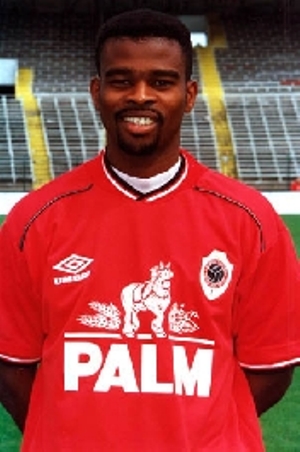
Bimbo left Nigeria back in the 90s to ply his trade abroad. He is very talented, athletic, quick and skilful. He is one of the best strikers/forward I’d ever known in my life. He played for Antwerp for several years and remained settled in Belgium with his wife and children. He didn’t reach the fullest of his potentials but he did his best. We had hoped that Bimbo would play for Nigeria one day but it did not happen. I had a short discussion with him about this in 2002 and I respect his views and will keep them off the web.
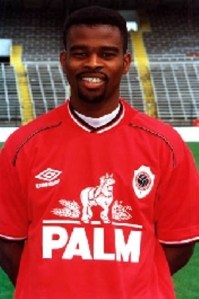
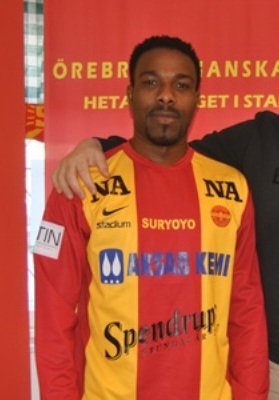
Bimbo Fatokun
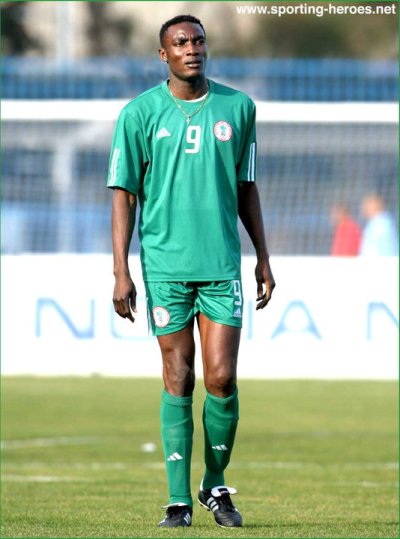
There are quite a number of boys from Festac who reached the national teams of Nigeria (at various levels). Sunday Oliseh, Samuel Ayorinde and Victor Agali are notable examples. I think the Ipayes also have links to Festac Town. Wasiu Ipaye on 401 Road was one of my closest pals before I left Festac Town. A very humble guy, he is. I heard that some younger generation of footballers from Festac Town have represented Nigeria too in recent years. I wouldn’t know them personally.
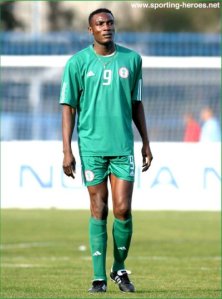
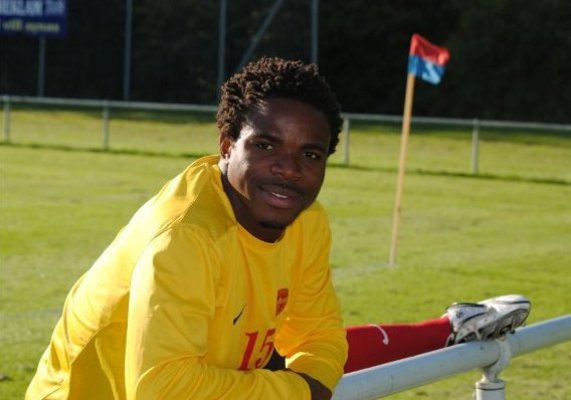
Agali
You won’t read about all the boys from Festac in a single essay and some people will probably get upset with me when they find out that their names are missing in this short story about the boys from Festac Town. Yes, it is a bias history. I write only about some of the boys who played with me and a bit after me.
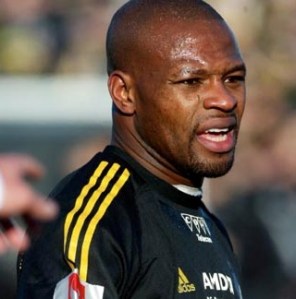
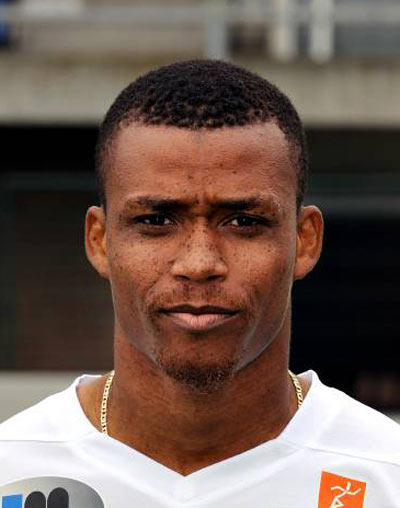
Samuel Ayorinde
George Ekeh is the eldest of 3 brothers from Festac Town who are football talents. I remembered the first time I saw George playing football as a boy. He was under the age of 10 at that time. I marvelled at how such a small boy could have so much skills and confidence on the ball.
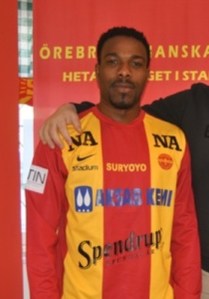
George Ekeh
As a young teenage striker, George can hold and guide the ball with extreme mastery. I admire his skills. George probably did not hit the apex of his talents on the big scene but he went on to play in many countries around the world. I like him very much. He’s settled in Sweden.
Emmanuel Ekeh followed in his brother’s steps and he’s the one that still has more time on his hand to proof what he can do with his boots and skills. I watched a few of his clips on YouTube. He has such a pace and he’s got good vision to make precise passes.
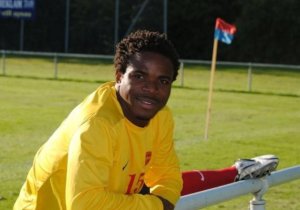
Emmanuel Ekeh
Kingsley Ekeh is a well known player in both Portugal and Cyprus. Famously called King he shone like a millions stars during his playing career. He quit in 2012 and became a scout for his former team.
Life can bring many twists. When I watched or played together with George sometimes, I never saw Kingsley on the football field. In fact, all my years in Festac Town, I didn’t see Kingsley kick a ball. He was always talking on the sidelines. To be honest, Kingsley can provoke anybody back in the days and you can’t win over him in an argument. I actually thought it was a joke when I heard that he was a professional footballer. I do hope to see Kingsley soon. When I do, my first question to him will be “come, which time you start to play ball sef”?
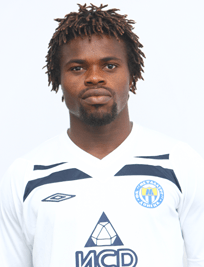
Kingsley Ekeh
Azubuike Oliseh probably enjoyed the influence of his brother Sunday Oliseh in gaining international prominence. I have to be honest. This guy trained hard to ensure that he carved a name for himself. However, not everybody will agree with my last submission because despite playing for big teams in Europe, it was obvious he didn’t have the skills and fluidity of Sunny his brother.
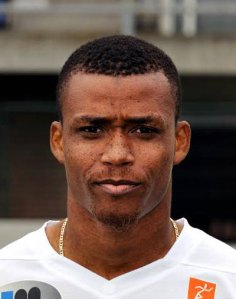
Azubuike Oliseh
The youngest Oliseh that I know, Egutu Oliseh still plies his trade as well. We never played together. I saw him grow up and I saw him at the Sunday services many times along with the rest of the family.

Egutu Oliseh
To complete this short story about the boys from Festac, I called up Femi Oladele in the middle of it. Femi is an encyclopaedia of Nigerian football. He grew up in Festac and studied Veterinary Medicine at ABU. But today he holds a Phd in sport administration from a German university.
As a result of his passion for football, he abandoned a PhD program along medical line in Sweden. I have convinced Femi to join me in writing the second part of this story. I have to forgive Femi though, he still doesn’t acknowledge my skills and I’m shocked he didn’t see any of my big games in Festac, Ebute Metta, Yaba Tech, Unilag, Mile 2 and in Ibadan.
Bassey of 23 Road did not turn professional. The story of Bassey will be told differently depending on the speaker and how well they know Bassey. In Festac in those days you cannot separate Bassey and George Ekeh. I always find them near mama Ibeji’s shop, chilling and talking for long hours. They are always together in the evening to discuss how they played/trained during the day and they talk a lot about the future. They had the same dream. There was definitely a link between Bassey, George and the Olisehs. I am not in the position to elaborate. I was at the University of Lagos when many water passed under the bridge.
In any case, historically, I was probably one of the first groups of people who played football with Bassey in Festac Town. His family moved into an apartment behind ours. Hardly had they put their belongings in place than Bassey came down to find me and 2 boys playing football. Bassey joined me and we played against the other 2 brothers Dada and Oyinye.
I could say we played for about 1 hour and I almost did not touch the ball again. At that time, we didn’t know his name was Bassey. He was simply called “Ba”. Ba was running round the field with the ball practically fastened to his feet. He was short and very quick. I said to myself, “another footballer has arrived”. Bassey went on to be a household name in Festac football. I learnt he played for some clubs in Nigeria. From afar, I could see that he did not reach his full potentials.
Ubaka is a very close pal of Nigerian International Victor Agali, as I learnt. Obviously, I don’t have my eyes on all our potentials. I missed Agali to the extent that when people talked about him, I’m like….how come I didn’t know him? Well, I don’t think he knows me either!
I remembered playing against Ubaka’s team in one tournament on 71 Road/24 Road. He was a disciplined defender and very well respected as a young player. But when I’d played against him, it had been easy to beat his team silly. With all due respect, I was a fine striker and for being such a quiet striker, I had extremely good qualities and a ball sense that is extraordinary. I did my share of damage to many lines of defence and teams.
Another boy who’s really very close to George and Bassey is Emeka Okpor Anthony. I think he’s career was punctuated by a series of injuries right there in Nigeria. I learnt in particular that he had a recurrent shoulder problem. A great talent and a clever defender, Okpor is a graduate and he also has a coaching qualification from NIS. He is nurturing young talents and looking ahead to becoming a great coach and motivator.
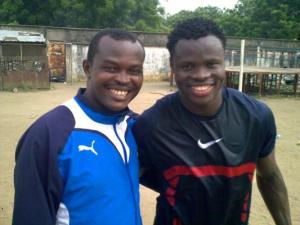
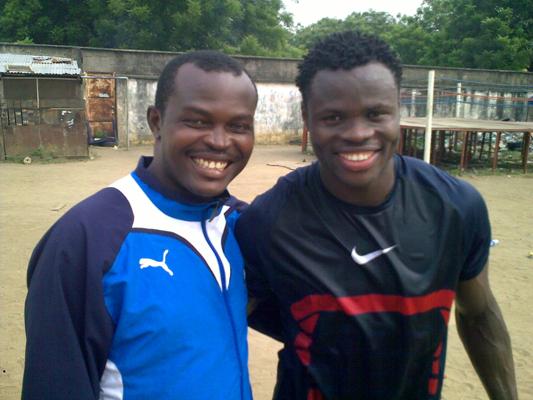
Emeka Okpor and his friend Taiye Taiwo
There’s abundant joy when you help other people to reach their dreams even if yours suffered a setback. Setbacks are not meant to be permanent hindrances to happiness and contentment in life.
In Festac Town when I was growing up, Ebere was the most composed player on any football field. Ebere continued to tell us that his father preferred his education to his football career. He had dribbling skills that reminds you of a combination of both Maradona and Okocha. He topped those qualities with his eyes for goals. Whilst Bimbo was quick- actually one of the best sprinters in 100m in Lagos State in those days, Ebere was calm but they were both strong and they find the back of the nets in different ways. We have talents in Festac Town.
We had Dapo of 5th Avenue D1 close. He was a player in a world of his own. He combined well with Ebere during their school days at Mile 2 Boys. At that time, Amuwo Odofin Boys Secondary School was a force to reckon with in the Junior Principal Cup. It was Ebere and Dapo who wrecked the defence line-ups across Lagos State.
I remembered playing one-on-one against Dapo one day on my way from school. They had a small park in front of their block of flats then. Today the park is no more. FHA stupidly sold the park and people built houses on them. Anyway, it was like “he tortured me when he had the ball, and I tortured him when I had the ball”. The rule was clear, “don’t lose the ball”. When I read Eden Hazard’s interview and how he became clever at dribbling by playing in the garden with his brother, I remembered what I went through playing alone with Dapo.
One of my best friends through the years Modestus Okechukwu Okafor played for many years in the German Amateur league. He finally settled there and we even spoke over the telephone less than one week ago. Oke as he’s fondly called was the one who tried to tell me more about Victor Agali. He’s still not able to understand how I missed the Agali’s story. Apparently, Oke lived on 22 Road when he was a little boy.
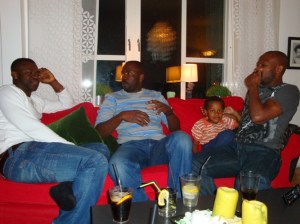
Okechukwu Okafor, Adeola Aderounmu and Samuel Ayorinde
By the way I first met Oke by accident. I was on my way home from school one day. I stopped at a park near CCC, X Close on 5th avenue. I started to play football with the boys whom I met there. Then Okechukwu who went to a primary school on another side of town was also on his way home. He stopped too and joined us. Those days after school, our other occupation was football.
Later on by some stroke of fate Oke and I attended the same secondary school. Then I remembered him immediately. He has a built that is hard to miss. Still, Oke moved from 22 Road to 5th Avenue end that is near to 23 Raod. Since then, we remained very close friends and played on our “stone filed” everyday!
Chinneye Okolo, I almost forgot. What a left footer! He played with sense. Many of us back then didn’t just kick the ball. We were intelligent boys. We did well at school and we transferred that cleverness to the football field. I remembered my school mates like Wasiu Ikharia (a biochemist), Sanya Okanrende (a cardiologist). I mean these are finest amongst footballers!
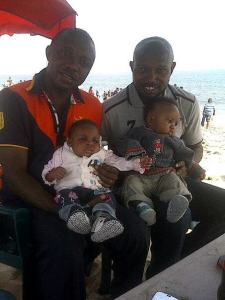
Afam and Nenye Okolo
We had Kingsley Nzete who suffered a broken leg and we knew at that time that he’s not going further as a footballer. He got back on his feet again and started playing in between the goal posts. I salute his courage. We have another Bassey on 5th Avenue. I know his eldest brother lived and played in a foreign country but I never followed up on Bassey himself. Another fine player we still have in Asia is Gabriel Obadin.
We had Michael Fatokun, Solomon and Felix Uboh. Afam Okolo, and the Osuji’s of 401 road. If you want to write about the talents in the Osuji Family, you’ll need a whole edition of a sport magazine. The elder Uboh is Kennedy Uboh. He also went to the higher institutions. If he had been discovered, his football career could have earned him a place in Real Madrid’s line up. He was that good.
What about my friend Abideen, my cousin Tilewa Majekodunmi. There is Abega, a boy who loves football with all of his heart. I know Bauna on 721 Road and I remember many boys from the 402 end. We were players on the field!
This story will be incomplete without an analysis of how some of the boys from Festac failed to reach their fullest potentials and how many dreams were punctuated. We lost many boys along the way under different circumstances, many of them relating to health issues. Emotions have been high many times of how we grew up and the dreams we had.
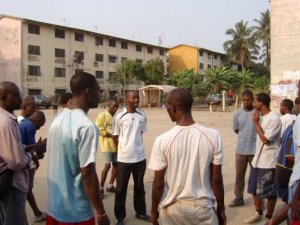
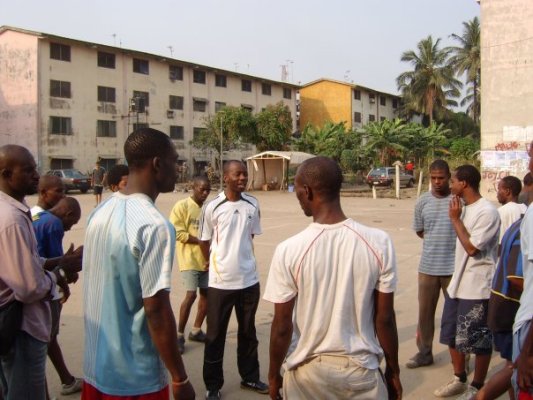
me and some boys on our stone field in 2006
In the meantime as we continue to ponder on what could have happened to the boys who did not reach their full potentials or whose dreams were punctuated, we should be glad for the representations at the national and international levels.
We should be glad for the Olisehs, the Ipayes, the Ayorindes, the Agalis, and the Kingsley Ekehs, they did their best to put Festac Town on the map in the most positive ways. The Amunekes have very strong links to Festac Town and also to many of the boys mentioned in this essay. At some point Emmanuel Amuneke was living on 5th Avenue.
I am glad for Kinglsley Ekeh who reached his full potentials playing in Portugal and Cyprus. I am happy for Bimbo Fatokun, that he found the reasons to continue with his life in Belgium after a playing career punctuated by a few disappointments and unfulfilled promises.
I remembered how my team mates in the Oyo State NYSC in 1995/96 urged me to pursue that line. Niyi-our oyinbo from UI, Jato, Uche and the rest of the pack trusted me on the right flank and in the 6 yard box of our opponents. I hope they are glad for me that I decided to keep my pen and papers.
Today in Festac Town, there is scarcity of football talents. This is relative depending on who the observer is. When we moved to Festac in those days, there were football fields, playgrounds and parks in every corner. I wrote extensively about this here in the Village square (The Rise and Fall Of Festac Town, parts 1 and 2).
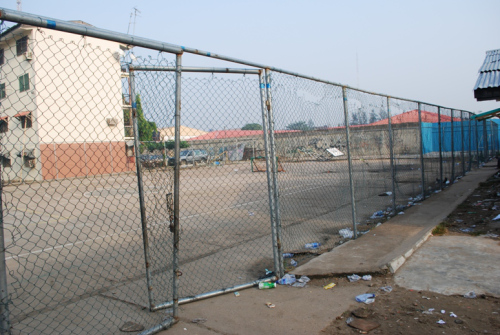
All the playgrounds are gone. There are no more football fields. I think only one major field was spared. FHA sold all our playgrounds. They sold all our parks. These are unforgivable acts.
In place of sports, football in particular, our youths have turned to crime and drugs. Festac became notorious globally as the town of 419ers. I also wrote about that in my story titled Festac Town and Its 419 reputation. There were many reasons why things took a turn for the worse in Festac and in Nigeria as a whole.
There is a need for Nigeria to return football to its glorious days. Today we all hail the EPL and in fact we worship the EPL and other European leagues in what appears like a permanent colonial mentality. Nigerian league can be made attractive again through good planning and administration.
The aim should be, “if our talents don’t go abroad, they should be able to live successfully playing football in Nigeria”. One way or the other the Nigerian intelligence needs to surface on the football scene. The market is huge. What are the problems?
Nigeria is very rich as a country and sport facilities should be at every corner of town. Our football stadia should be many, different sizes and world class standard. The training pitches should litter every community.
There are so many things wrong with Nigeria. It is sad that despite their love for the game of football, Nigerians allowed the sport to suffer as well.
I know that for many young talents, the dreams died. I think about many of my friends on the stone field: Suraju, Abbey and many more. How did I forget about Medo Obanya until now? Medo is one of the greatest talents to have emerged from Festac Town. His dribbling and goal scoring skills are extraordinary. His football career simply melted away right in front of our eyes. Who do we blame?
Even Nwike, Medo’s younger brother was a wonder boy on the ball. I didn’t forget Osaze and Richard Omoregie. It’s going to be an unending essay if I write about everybody that I know. Kelechi, all the best in the south of Sweden!
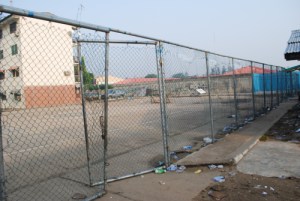
stone field in 2010
I’ve spoken to Femi Oladele and he should be the main contributor to write about the implications of what happened to the boys from Festac. I hope he will use his expertise in sport administration and his life experiences to write about how Nigeria can discover, develop and invest in her talents in football. There are many “boys from Festac” scattered around Nigeria. In this country, many talents have been wasted and dreams have been dumped. Some lives were actually shattered due to unfulfilled dreams.
What happened to the boys from Festac Town can be likened to a sliding door. There are many implications to this expression. When the door slides, it separated us. The sliding door also meant that while some hinged their hopes only on football, some of us looked at our options.
I can say a word for the young people coming up. Keep your heads up, live healthy and keep all of your dreams alive. Don’t put your eggs in the same basket and don’t count them before they are hatched..!
aderounmu@gmail.com
 A View From The Scandinavian