Mass Poverty in Nigeria

Adeola Aderounmu

Instagram @thygloryonigeria

Twitter  @aderinola
20170604_194753

I had used the term “mass poverty” in a recently published article in The Guardian (Nigeria: The absence of Common Good 21/5/07).

A popular online dictionary defined mass in the noun sense as a large body of persons in a compact group. The same dictionary defined mass further as the great body of the people as contrasted with the elite. It is from mass that the commonly used plural form “masses” was obtained. Poverty describes the state of one who lacks a usual or socially acceptable amount of money or material possessions. The Merriam Webster dictionary informs that poverty may cover a range from extreme want of necessities to the absence of material comforts.

These introductory definitions reveal that mass poverty without doubt is prevalent in Nigeria. Simply, mass poverty is the poverty that affects the masses of a population who have extreme want of necessities. Mass poverty in Nigeria epitomizes this definition plus the aspect that expatiate on the almost complete absence of material comforts. In general, mass poverty is an expression with broad implications that goes beyond the limitations of the amount of money or material possessions that the people have. 

A quick trip round Nigeria like the one that changed Pat Utomi’s life and views on the perception of Nigeria can reveal much. It is very annoying actually to see the reality of life in everyday Nigeria in contrast to the deceitful jingles and praise singings that the government and sycophants orchestrate. What we see and what we get as Nigerians is not what we deserve. We deserve a better life.

Poverty in Nigeria has many indices. This discussion on poverty may actually have been overflogged yet it is still been addressed and treated locally and internationally. Nigeria is a country with over 140 million people therefore the dimension of mass poverty in Nigeria is both dreadful and shocking. Many citizens of Nigeria cannot afford to live a decent life. Several millions of Nigerians do not have the usual or socially acceptable amount of money or materials possessions. Only a few people are comfortable.

The situation is made worse because of the absence of basic infrastructure of life.  It doesn’t seem that successive governments in Nigeria are involved in providing houses for masses in Nigeria after the 1970s. Some states governments have been involved in building houses that are affordable by the few and more privileged persons, the elites. Beyond the textbook editions or verbal policy, what are the roles of the Ministry of Housing? The masses are invariably always out of the poverty alleviation or eradication question.

Commonly, drinking water does not flow in Nigerian homes. People have to buy water as many bore holes have run dry and the public taps have virtually disappeared. You begin to wonder what the functions of the Water Corporation are. Even cities like Lagos that is lineated by the Atlantic Ocean plus a number of internal lagoons cannot get water to its inhabitants. Yet, every election year the people receive promises from desperate politicians that they will be provided with water. Lies upon deceits you may say.  

There is nothing more serious to express the physical mass poverty in Nigeria than the prevalence of hunger. Food substances are the cheapest things you can lay your hands on in some other countries. In Nigeria, common and staple foods are now very expensive and many people have devised different formula to survive daily, weekly or monthly. Stepping into a new year is seen as a miracle in Nigeria. What is the significance of the Agriculture Ministry when there are no clear policies on how to put food on the (dining) table of the masses? To what use are the vast fertile lands across the length and breadth of Nigeria?

Food, water and housing are 3 important parameters to measure the values of our lives and these things have become elusive to the masses in Nigerians. However, mass poverty in Nigeria has other ugly faces. For example, the purchasing power of the Naira is extremely weak. In some very bad situations, some people do not have money at all.

There has not been efficient or functional power supply even if you can conveniently pay for it. There may be no fuel to run the noisy and environmentally unfriendly generators. Nigerians have no known options to blackouts. It is a hard reality of life. It depicts cruelty. This deficiency of power supply has aided the mass poverty as thousands of people have been put out of job since many companies can no longer sustain their operations in the absence of it.

The situation is very demoralizing and still there are worse things that define the intensity and seriousness of mass poverty in Nigeria. The Nigerian masses and elites cannot travel on safe roads. The masses are more affected because there is constant chaos in the public transportation methods. The conditions are dehumanising to say the least.

Mass poverty in Nigeria is further displayed in the health schemes. There are no solid or clear cut health care policies to care for the population especially babies, pregnant women and old people who are more helpless than other groups of people. The cost of getting good treatment at the hospital is prohibitive and the access of modern health facilities is greatly hindered. I am not sure if there are handicap friendly facilities in public places in Nigeria. The poor and helpless masses are always at the receiving end of all the misgivings of the politicians and policy makers.

The overall consequences of poverty are diverse. Quickly, some of these things have spiral effects and these have obviously spun down to the upcoming generations. For example as a result of the range of extreme want of necessities and the absence of material comforts, the children of the masses no longer have access to quality education. They do not have adequate recreational facilities and their social orientations are falsely modified by various things around them and those that they are unduly exposed to. What is going on daily in Nigeria as a way of life shows very sorry states of things. It was not even that bad 10 years ago.

In place of studying hard for examinations or challenges, people are now stereotyped that they can always cut corners as typically exemplified by the widely condemned and shameful selections (there were no elections) of 2007. They are suffering from the poverty of good knowledge and many have completely lost hope in the system that begot them.   

Mass poverty can also result from high rate of unemployment. There has been an upsurge in armed robbery in recent years. It is not uncommon to find school drop outs and unemployed graduates among the criminals who have become very merciless in their operations. In addition to this, it was a rude shock for me to discover recently that many primary school and secondary students now have some form of allegiance to other persons in their localities or areas. I could not believe that secret cults are no longer secrets.

True stories have been told how some young people have been killed by what seemed like cults activities in broad day lights. I was told that some were shots dead in unsuccessful robbery operations at other places. These stories are told nowadays like “it’s one of those things”. Things have really gone from bad to worse. Many years ago in Nigeria, the emphasis was on academic excellence and sporting activities at leisure.  Indeed, things have changed and very worryingly too. Could all these be due to the spiral effect of poverty in action? What role does poverty play in other neglected aspects of our lives?

I know that a few people consider my stance very hard and extreme but they are mistaken. As a matter of fact, living abroad does not mean that one has escaped the poverty in Nigeria. Each time I find myself in Nigeria, I still find myself living the life I’ve always lived before I travelled out. I go to the same places that I know and the conditions are very bad. I go to places like Oshodi, Mile 2, Ojuelegba, Agboju, Okokomaiko and other areas like Mushin, what I see is poverty and suffering like I’ve always known. I see the struggle called Life and I live it too. My lucky friends and some other lucky people who work in Banks and oil companies no longer share my views. They have forgotten that Nigeria is big and that majority of the people are still living below the poverty line.  They think that other people are lazy or destined to be poor maybe! 

My personal experiences and observations showed that Mass Poverty accelerated by absolute rot of governance over the years may have taken its toll on virtually all aspects of the Nigerian life and the issue cannot be treated in one piece of writing or essay. It will be interesting to see how the issue of mass poverty will be tackle by a new and legitimate government in Nigeria.

Ordinary Nigerians (especially those who cannot treat their leg ache, head ache and stomach ache abroad) have gone through a lot of life excruciating and traumatic experiences especially in the last 8 years when all the hopes raised at the onset of the new found democracy were suddenly and completely dashed.

The Nigerian masses are obviously suffering from poverty inflicted on them mainly by very bad governance but they are not dimmed and they should not be taken as fools because the resiliency in the typical Nigerian is simply a focal indicator of hope for a brighter day and a better tomorrow.  

Adeola Aderounmu   

Twitter @aderinola

Instagram: thygloryonigeria
Obasanjo’s school Trip: My advice

Adeola Aderounmu

We read that it took the former leader of Nigeria about 2½ hours to travel by car from his home in Ota to his school in Lagos.

There should be no complain about this in anyway. He must have been through that before he became the president in 1999. He was part of us before then or even less than us because he had been kept away by Abacha.

He spent 8 years in power. If he had done his job very well in cooperation with the governors of Lagos and Ogun states, the flood or whatever caused the prolongation of his travel would have been taken care of.

The other citizens of this glorious country go through this horrific experience everyday and it is our pleasure to welcome Obasanjo back into our world. The best advantage he has is that he can always return to his more comfortable home(s) or some hotel to get some reprieve from the stress. The majority of the rest of us still have to return home to stress especially with lack of electricity. We go from frying pan to fire!

Without wasting much time, my advice to our ex-president is that he should either travel at night to avoid the trafiic situation or use an helicopter during the day. This way, he will never be late for school or lunch in Lagos.

By the way, Goodluck in your forth coming exams! 

Revisiting the 2006 Census in Nigeria

Adeola Aderounmu   

That census enumerators trek short or long distances to count people is a shame in the 21st century

 The essence of this write up will be to proffer an advice to the Nigerian Nation and the authorities who don’t seem to have learnt anything from the way the world has advanced in recent years. This is the 21st century and it is now possible to count how many people live within a defined geographical region anywhere in the world without much hullabaloo.   

To count Nigerians is not a 5-day project. It is not even a 50 days project. Counting in every country should be a routine work based on how many people live in that country at a particular point in time. It should also involve close monitoring of the number of births or deaths that have been registered in a specific time frame.   

It is the work of some people to keep track of population flow. The first step is to make an attainment to the technological level where you can make a click on the computer and enter a database where the appropriate authorities are keeping track of registration of all citizens within the country. Similarly, immigration and emigration of persons should be noted. Unless certain individuals have decided to live illegally within a country, we now know that in some countries, all the people living in that country are registered on a database system.   

Taken simply in the Nigerian context, what we need in terms of knowing how many people make up Nigerians is a long term plan. It is a process that will start gradually, remain focused and eventually reach a stabile. Nigeria needs a system where her citizens are recognized by social security number (SSN) or what in some countries is known as personal numbers (PN). This number which is also indicated on your national ID or passport is a tag that does not change whatever happens! Everything that affects you (good or bad) is always recorded against this SSN on a computer database.   

This SSN should be with every public institution under strict conditions of trust regarding the personnel that work in such offices. Some private institutions may have special access too depending on the nature of their assignments. It should not be possible for a person to have double SSN because fingerprints go along with it. However, that does not rule out that identities cannot be stolen but if the law catches up with the perpetrators, they should face the music. An individual’s SSN should be connected to records at the Hospital, Tax office, unemployment office, Insurance companies, Motor Vehicle Licensing office, Bank records, Statistics bureau, and so on and so forth.   

Where do we start from in Nigeria? The problem in Nigeria is that counting is not done with sincerity of purpose. Politicians meddle with everything that is of National Interest for selfish gains and personal reasons. This is the debacle that must be removed. A public institution like the National Population Commission (NPC) has to be re-engineered to catch up with modern realities.  The way we count ourselves must change.  

Personally, I will suggest a 5-10 years plan to count all Nigerians coupled simultaneously with daily observations of changes from the start. This will make good planning possible. We should monitor daily population growth and periodic influx or out-flux. Where you reside in the country is not a factor, the point is that we should know that you exist and live within a certain region in the country. If you leave the country, it should be possible to detect that. We should also be aware when you return as long as you have taken the legal approaches to do these things. In crime situations, people can beat some of these checks but the essence of knowing the estimated number of people will remain.  

A 5-10 years plan to determine our population is not a bad idea so that nobody is rushing or running to meet a deadline. There is no need to create chaos just because you want to meet a deadline. It is not necessary to count Nigerians in a hurry. It is also not a matter of life and death that a particular administration should be saddled with the task. Knowing the population is not a job for a particular regime, it is the reason that the NPC is in existence. This commission should be able to send out population figures at a click!  Nigeria must look into the future; make solid plans for things that work forever, not temporarily.

What about the NPC registering every Nigerian at its local offices, giving out SSN and taking fingerprints? All the local office should be connected to a central computer network at the headquarters. State of the art technology must be in place to detect multiple fingerprints. Let us look at this scenario, a young man sought asylum in Greece and somehow surfaced in Sweden for the same purpose. He was told that his fingerprint has been previously recorded on the central European asylum seekers machine!

This is the stage that the world has reached. A person need to be identified with his name, SSN, address, occupation, marital status, children (or not) and so on. A change of address should be immediately reported so that the state or local government knows who has moved in or out. People moved for many reasons; to be with family, change of job and so on.  

A 5-10 year period is more than enough to let people know how population flow is observed and what is expected of everyone concerning their registration on the database. Nobody would rush or engage in irrelevant travelling because they want to be counted. When a child is born, the hospital should have the means (either by the computer network) or otherwise to inform the NPC of a registration of birth. Obviously, the families of newborns know that they are obliged to get a SSN for their newborns. The local authorities would only need to see the baby and the information that they have received from the hospital about the sex, weight at birth, time of delivery, etc. The connection between the local authorities or local governments and the NPC should be paramount as the number of people in the locality has financial/economic implications.  

In essence, what I am trying to say here is that with time, all Nigerians will be registered. The operations of the NPC must be completely computerized with appropriate backup. The registration of deaths should also be taken into account as much as that of births. How many foreigners live among us can also be noted. Foreigners should also have SSN that can be coded so that once they appear on the system, it becomes obvious that they are for foreigners and the exact country they come from appears. The nature of their businesses in Nigeria is also reveal by the same SSN.   

It is unnecessary and a waste of time and resources to count people before, during and after elections. We should be able to click on the NPC database in the next 10 years and say there are maybe 150 million people in Nigeria. We should be able to say things like, 2,000 foreigners live in Ikeja and that 30, 000 Nigerians have emigrated to Europe in the last 2 years for example.  

A statistician should be able to have a cup of coffee or tea by his side and still make a first check to find out the latest entry on the database network and a second click to give the total number of people living in Nigeria. If Nigeria is also truly the heartbeat of Africa, then we need to set the pace not only in population or census aspects but in other areas that affect the quality of our lives.  

I hope that in 2016, NPC will find it easy to look in the digitalized system and tell us how many we are in Nigeria. By then it should be possible to stop counting cows, goats and sheep as humans. The 2006 census should be the last time we count ourselves using paper and biros. It should be the last time the government sent people to our homes. We deserve our privacy!   

JUNE 12 1993, Just Like Yesterday!

The crime about June 12 was that some cabal secretly plotted against Abiola and eternally denied him of the mandate that the Nigerian people gave to him. He was asked by the people to give them hope, but a few hopeless and selfish persons, some of whom unfortunately are still around the corridors of power decided otherwise.

May each June 12 continue to unsettle the mind of the wicked. May it bring jugdement who those who spilled the blood of the innocents.


20180611_093541-11448268168.jpg

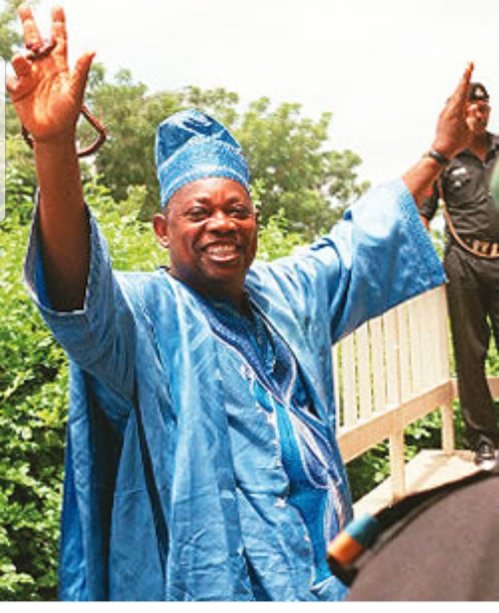
MKO Abiola, winner of the presidential election June 12 1993.

Adeola Aderounmu

I remembered when my parents used to talk about how life was in the 1950s and 1960s. Then I used to imagine how they could possibly remember things that happened so long ago vividly. Now that I am an adult, I think I understand better how time can fly and then 14 years can be like 4 months!

This is the way that the time that had passed since June 12 1993 to this moment seemed to me. In fact, June 12 seemed to me like yesterday. It’s all so fresh in my memory. I was studying at the University of Lagos at that time.

As I remember June 12, I will dwell on the principles of the events of that day and not on the person of MKO Abiola, Bashir Tofa or the tropical gangster called Babangida. The reason why I will not dwell on personalities fully is because the election was not about them, it was about democratic principles and the rule of law.

On June 12 1993, millions of Nigerians voted in the best election ever conducted in the history of Nigeria. It was possible for the people to vote right because the elections were properly planned and well conducted. There were pre-election debates and it was easy to know who was intelligent and who was really dull.

The people voted and the results were rolling in more to the favour of MKO Abiola. When it became evident that Abiola would win, Bashir Tofa (the opponent) was said to have sent him congratulatory messages. Now, that is a good man when it comes to the spirit of politics without bitterness. Records have it that as the results were been announced, the prices of goods and services were dropping.

There was a tailor who refused to be paid for the services he had rendered. He was so overjoyed that “at last” hope has come to the people. That was the spirit and mood until Nigerians received a rude shock from the nonentity called Babangida. This useless man cancelled or annulled the best election in our history.

There were many theories to this annulment including that Abiola is a creditor of the government, or that a few idiots would not like to see him be president of Nigeria. Some people said it was because of what he did when he was in NPN that he betrayed Awolowo. I will not be drawn into these kinds of thoughtless arguments. The fundamental thing about June 12 was that an election held and Abiola won.

The crime about it was that some cabal secretly plotted against Abiola and eternally denied him of the mandate that the Nigerian masses gave to him. He was asked by the people to give them hope, but a few hopeless and selfish persons, some of whom unfortunately are still around the corridors of power decided otherwise.

The annulment was resisted by many true democrats, some were killed and many went into exile. Some people chickened out and were back in subsequent governments because they were simply thieves and opportunists originally. The vice-president-to-be for that annulled election is now back into the new illegitimate government that started on May 29 2007. This will show any reasonable person that such people have no shame for their misdeeds and I doubt that this man was not once a looter of our treasury.

They never get enough, do they? They always stage a return to our lives and the implication is that since 1960, we have had a system of recycling sycophants in our government houses. Those that cannot be recycled stay out as useless godfathers-destroying the system to selfish ends. Many people died in the struggle to actualize that mandate popularly called JUNE 12. May their souls find peace.

They are more honourable than Babangida and his hopeless cabal put together. It remains to be proved if there were no foreign interference in the death of MKO Abiola himself, the man widely believed to have won the 1993 elections. It is not understandable why he died under questionable circumstances while a delegate from the United States was visiting him.

How did a cup of tea become a poison? Historians have their hands full there and those who know the truth but cannot say it will always be judged by their consciences. MKO Abiola died when many thought he would be released to claim his mandate after the death of one of the notorious generals called Abacha. The implication is that he was up against an evil cabal who will not mind travelling to hell just to deny him.

Indeed the cabal succeeded in their plots and 14 years after, can anyone see any progress in Nigeria? Don’t even think about the GSM, I am tired of that jingle as a measure of progress.

One thing is sure, in as much as we have refused to take the right steps and as long as we have not resisted those who are manipulating our country to a selfish end, millions of people will continue to live in poverty. This is not a curse, I lived through this dilemma and my family and friends do not deserve my curse. It is just what I call the unarguable reality of our lives.

It is not for fun that the holy books stated that “You will know the truth and the truth shall set you free”! It is one thing for us to know the truth, acknowledge it, make amends and set Nigeria on the path of glory and it is definitely another thing to continue to deny ourselves the knowledge of the truth, make a few people enjoy the fruits of the land and leave the helpless and resilient majority wallowing in absolute/abject poverty.

The way to GLORY will be a struggle on all aspects of our lives, social, economic…and so on. The way to prosperity and the good of all will be to seek the men and women who will be ready to serve selflessly and dedicatedly.

In Nigeria, we need the rule of law above the rule of men. May each June 12 continue to unsettle the mind of the wicked. May it bring jugdement who those who spilled the blood of the innocents. AND May the goodness of June 12 bring milk and honey back to the Nigerians who are weak and poor, living on less than 1 dollar a day. This is my personal opinion and that is the way that I see it.

THE Immunity for Thieves in the Nigerian Constitution

 Adeola Aderounmu

The part of our constitution that grants immunity to governors, presidents and other thieves that have been in public positions or power in Nigeria is very appalling.I can imagine that that part was written be some thieves too.

So in essence, our constitution gives room for stealing and looting of public funds without liability to prosecution.This is very ridiculous and it is the height of madness in public service.

There are many reasons why public officers should resign from office or be dismissed. Tax evasion and falsification are 2 examples among numerous scandals in the Nigeria Political terrain. Looting is the greatest crime. Invariably, almost everyone who is expected to serve in Nigeria turned out to be a thief of some sort. 

In other places, people can be probed immediately they are alleged to be involved in financial misappropriation and they can be prosecuted immediately and disgraced out of office. In Nigeria, that is not the case. We have to wait until they have left office. In the end, many of them get away with the looting.

There is no way we can make progress in Nigeria unless we start to ask for honesty and sincerity in public offices. If we continue to look the other way because our family and friends are beneficiaries of this looting, the majority will continue to suffer and that is not fair. The life of the citizens should not be based on “lucky chances” to get into privileged positions, it should be based on equality, mutual consideration and the good of all.

I am looking forward to Nigeria been able to delete completely (not amend) that part of the constitution. A new section should be written to state that anyone found wanting with public funds should go to jail. There should be no questions about that. What is bad is bad, it has no alternative name.

If we don’t do that, then I am afraid that the war on corruption will continue to be a fruitless chase. It will only exist in our imaginations.