The APC-Mandate: One Year Of Extreme Pain

What Nigerians have experienced in 2016 alone is by all measure the worst year of the Nigerian life (in a time of “peace”). This unitary system of government is so, so wrong! It is a product of intellectual deficiency that arose from lazy, corrupt and unproductive minds.

The APC-Mandate: One Year Of Extreme Pain

By Adeola Aderounmu
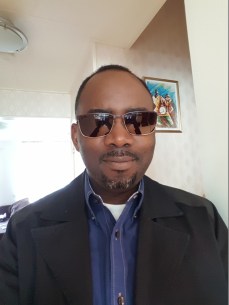
Adeola_June_2016

Adeola Aderounmu

One year after the official emergence of the APC mandate, the most unexpected scenarios are here. The current situation in Nigeria today was unimaginable 12 months ago when the expectations and stakes were raised through the emergence of the APC mandate.

Everyone including PDP addicts knew that the PDP years were totally messed up. But no one expected that as the clean-up started under the APC-Buhari mandate that the situation will deteriorate to a state that has now (also) made nonsense of the APC campaigns and promises.

Even my invented slogan that the 1999-2015 PDP years were the worst years of the Nigerian life had been beaten flat. What Nigerians have experienced in 2016 alone is by all measure the worst year of the Nigerian life (in a time of peace).

What led to these unexpected new lows of general sufferings is arguable. But the degradation of human life, extremely high cost of living and endless surges of joy-killers like the fuel-related problems are both sad and regrettable.

My opinion is that if there had been adequate proactive-ness, Nigerians would not be suffering more today than they already did under the wasteful 16 years of PDP. The APC-Buhari mandate was ill-equipped for the year that went by.  Therefore the mandate becomes a questionable one, I’m afraid.

My opinion is premised upon the fact that the APC-mandate and the rest of us had a clear understanding of what the challenges ahead were. We knew that Nigeria was in bad shape. Our collective expectation was that things should not get worse because they were already bad.

The APC-mandate failed to curb a bad situation. So it grew worse and it’s still going down the road to perdition in so many uncountable ways.

What enlightened and knowledgeable Nigerians must do now is to see the current situation in Nigeria as an opportunity to access the country right from 1960 to date. Why Nigeria got into the mess it is now is no longer rocket science.

Primarily, the country was misruled by almost all the regimes that have held sway at one time or the other after independence in 1960. As if the colonial drainage was not enough albeit side-a-side remarkable infrastructure development, the indigenes of Nigeria chose to simply loot the country to dryness.

As you read, Nigeria is being looted by some elements either directly by their positions in government or indirectly by the failure of the system to curb external appendages of looting.

The crime of looting is so grave that the recovered cash that was revealed recently by the APC government is a tip of the iceberg of what actually disappeared under both the APC- and the PDP-states in the last 17 years.

Politicians on both fronts practically emptied the states treasuries daily. At the parasitic center, the Jonathan-led central PDP government wasted and looted Nigeria’s monies in no manner that were different from his predecessors both civilians and military.

Everything that has a beginning will have an end. When the APC-Buhari mandate is over (because it will be), we will surely be informed of how much went down the drain daily. That, and what went down in the APC terrains whilst PDP held swayed are top secret today. We are looking the other way because the bulk of the latter brought Mr. Buhari to power.

In Nigeria, anybody who is elected or selected as the president can play god. It’s all thanks to the system. But I love the concept of time and truth. They outlive everyone and everything.

Apart from the fact that Nigeria was misruled and looted, there is the other factor of running a political system and constitution constructed by the military juntas.

Some people may still want to argue in favour of unitary government. This is a system that continues to feed the elites, the politicians and their accomplices. On the other hand the system puts hunger, death and sorrows at the doorsteps of the common people.

The strongest argument against unitary government cannot be missed: One man cannot rule Nigeria! The last one year provided the most visible evidence and the end of the first APC-mandate will nail it.

The one man show is not going to lead Nigeria further. He has ministers, yes, but they can’t do anything if that one man does not approve.

There are state governors, yes, but they cannot do anything if their begging plates are not filled by that one man.

This system is so, so wrong! It is a product of intellectual deficiency that arose from lazy, corrupt and unproductive minds.

This system is no longer acceptable and it is very unreasonable. It has not worked and it will not work. Nigerians have a way of hoping in the midst of hopelessness. The results? More than 100 m poor people, a disgraceful world record accumulation of poor people in Africa!

Summarily, the APC-mandate is doing worse than the PDP-mandate because of a system that promotes corruption, looting and incompetency. Again the unitary system of government is ridiculous and devoid of intellectual-problem solving approaches. It is so bad even the current minister of solid mineral resources cannot guarantee wealth production from solid minerals in the next 5 years!!!

For several years now, some people have suggested a change in the system of government but those calls fell on deaf ears. The politicians are not going to willingly change a system that makes them fat and rich.

In recent days some prominent Nigerians including those who have benefited from the fraudulent unitary system of government have joined us in singing: restructure Nigeria!

It took so long for the chorus to emerge and one wonders how long it will be before the actualisation.

The APC-mandate under Mr. Buhari must not act as if it is deaf because the music is too loud: change the system!

Of course we know it will not happen in one night. We know that it is a process. What is important at this stage is to ensure that the process is initiated using the right institutions and appropriate agencies.

There are so many options for Nigeria and they are far more preferable than the agitations in the different regions that have metamorphosed into wars (in form of terrorism in the North, the so-called militancy in the South and the unending secession in the East).

Under the current unitary system, the war/agitation/militancy have no end in sight. Even the re-structuring of Nigeria will not heal all wounds automatically. But restructuring is a necessity to avoid the final collapse of Nigeria in a way that is undesirable.  The road that leads back to regional autonomy will be rough, windy and long. Still, it is the better road if well managed.

Those familiar with medical science know the difference between controlled cell-death and uncontrollable cell-death/destruction. Nigeria and Nigerians need to make the choice whilst common sense can still prevail. When all hell is let loose, there will be no room for common sense and negotiations. Necrosis in any country is not desirable.

It is easy to say that corruption is fighting back in form of NDA-militancy. What was fighting in the name of Boko Haram? What had been agitating in the name of Biafra? We must not forget the words of wisdom. If the wall does not open its mouth, the lizard will not crawl in. These walls have been open for too long and a lot of lizards have crawled in. Now several of those lizards have stomach aches.

The benefits of regional autonomy outweigh those of unitary government. The different regions in Nigeria need to start producing wealth again. Nigeria needs to return to the days when 5-10% of regional wealth is sent to the capital for administrative purposes only. Today money is sent to Abuja for siphoning!

All the parasites and leeches in Abuja under this APC-mandate need to do one of their last jobs which is to initiate the re-negotiation of Nigeria and go back home in peace. A time may come when they will return compulsorily. Since there may not be peace at that time, they need not wait that long.

I stand always with the common Nigerians.

The fight for freedom itself is not a day’s job. It may take a few years, it may several years. But like l wrote in The Kings Are Mad, when the time for freedom comes, there will be no going back.
aderounmu@gmail.com


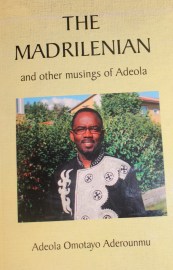
The Madrilenian And Other Musings of Adeola, A Book Review

The Madrilenian and other musings of Adeola will provide a delightful read. The book is a collection of short stories and essays.

The Madrilenian And Other Musings of Adeola

By Adeola Aderounmu

COVER_ADEOLA

The Madrilenian and other musings of Adeola

The Madrilenian and other musings of Adeola is a collection of short stories and essays. The titles in the book are:

No Love Lost

The Madrilenian

The Dream

The Kings Are Mad

The African Woman

Why Men Should Cook

Paying It Forward

Spanish Lullabies


No Love Lost is a story of a young lady, Lucy, who seemed to have all a young woman could dream of. However there was a vacuum in her life because she has not experienced true love.

One rainy day, she met a young man named Paul whose presence in her life became a stimulant to finding her way. In the end it was a twist of fate for both Lucy and Paul. While Lucy eventually found love, Paul’s relationship with his long term girlfriend-Stella, hit the rock.

The Madrilenian was about a boy who had a troubled childhood. Pablo lived together with his parents and 3 elder sisters in Catalonia. He didn’t get along well with his family at home and he was an introvert at school. Fortunately his social problems did not affect his academic progress, so he was able to get on with his life and later on worked as an engineer in Girona.

The Madrilenian took a dramatic twist when Pablo at about aged 30, went to Moscow on holiday. A new character who would change Pablo’s life forever appeared in the script. The Madrilenian is a story of love, hope and determination.

In The Dream I took my readers into the life of a young man called Olawale. He had a dream. But when he woke up, he had forgotten the dream. So he was very upset and unsettled for about a week or so.

How did he remember the dream? Well, he took a long, quiet walk in the forest. He went close to nature and nature revealed to him what his dream was all about. He also found a letter in the forest and in it he found out some of the basic secret of life.

The Kings Are Mad is a story where I tried to find a way to draw attention to some of the problems in Nigeria. The story can as well be a setting in any troubled African country where the economic fortunes have dwindled over the years especially after obtaining independence from the colonialists.

There were 3 major characters in The Kings Are Mad. Mama Esan is a typical trader in Oshodi whose children are out of school because her husband had been jobless for more than half a decade. She became troubled because she had no permanent place to sell her wares and the downturn in the economy destroyed her business.

It was a similar fate for Chinedu who came from the East to seek better fortunes in the West. In the beginning, things were rosy and bright. But since 1993, things have taken a turn for the worse and he could hardly take care of his family. He was divided in his thoughts-whether to go back to his village or to do illegal business to patch his wretchedness.

The third main character in The Kings Are Mad was Bawa. His family was involved in business and this took him to the West quite frequently. Sadly he found his way to the terror network.

In the end he became a confused man because he misunderstood the difference between religion-which is a man’s relationship with his creator and fighting for freedom-which is man’s relationship to his existence.

In The Kings Are Mad, we saw rulers who didn’t care about the people. They took the people for granted. We saw a people, culturally diverse and also divided in opinions so much that they did not know how to wrestle power from the greedy elites. They-the people-do not yet know how freedom tastes.

The African Woman is a chapter dedicated to the true Nigerian woman. She could also have been any other woman from any part of Africa who despite the challenges that she faced daily still managed to take care of the children and keep the house running.

The African Woman becomes even more relevant against the recent denigration of women by the Nigerian lawmakers who have refused to uplift the status of women in the country. It is about time women are given the same rights as men in Nigeria and in fact all over the world.

Personally, l wish more women would understand the need for them to stand up, unite and fight for what is theirs because in a country like Nigeria especially, freedom and rights will not be served on a platter of gold.

In continuation of the plights of women, l wrote Why Men Should Cook to clamour for support for the family as the most important unit in any society. In many African settings and even as a result of distortion of both culture and religion, many people still think that a man is a strange object in the kitchen.

Why Men Should Cook emphasized the importance of taking turns in the kitchen and how such a hobby/role can actually help a man to find peace with himself and his family. The chapter also argued for the benefits of family planning and planned parental leave.

Paying It Forward is an essay about how to start and pay forward good deeds. In the Swedish society and even in any society at all, it is quite easy to stereotype people. Here l told a few stories of how people have paid forward or appreciated good deeds.

The human race would have less problems and almost no worries if people live their lives with due consideration to the rights and happiness of other people around them

The last chapter in the book is Spanish Lullabies. It is a story of how racism has eaten deep into the Spanish society. In the 1960s or even up to the 90s, Spain may have been the haven for Africans seeking to settle outside the African or American continents.

But things have changed and Africans have been wrongly stereotyped, not only in Spain but in many places around the world. So there are limited opportunities for Africans in the Diaspora generally.

The Spanish Lullabies highlights the plights of some Africans in Spain and how their dreams have been dashed because of racism. Is it a coincidence or a direct consequence of this hatred for the African race that Spain and even Italy are among the worst economies in Western Europe?

In general the book-The Madrilenian and other musings of Adeola-should provide a delightful read. The book will be officially launched in Sweden on June 18, 2016.

A release is planned for Nigeria later in the year and the book will be available on Amazon Kindle amongst other planned E-book release.

May the glory of Nigeria come, soon!

May the human race keep walking the earth, shoulders high!

aderounmu@gmail.com

Yoruba Union Stockholm Celebrates 4th Annual Yoruba Day

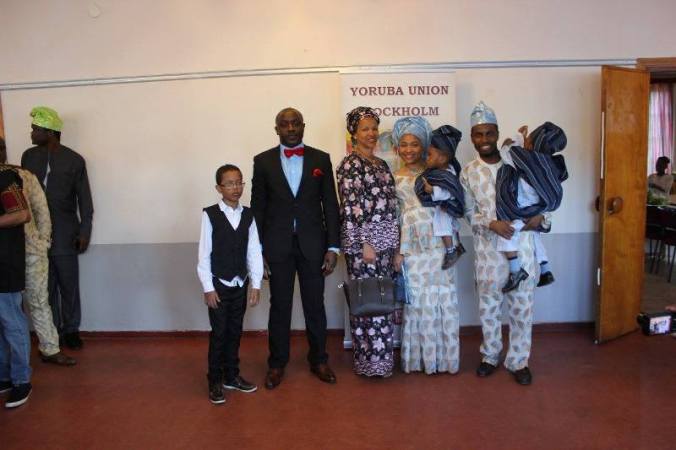
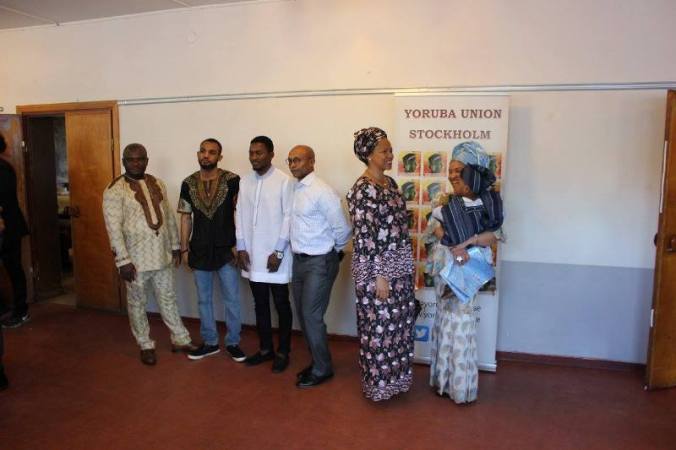
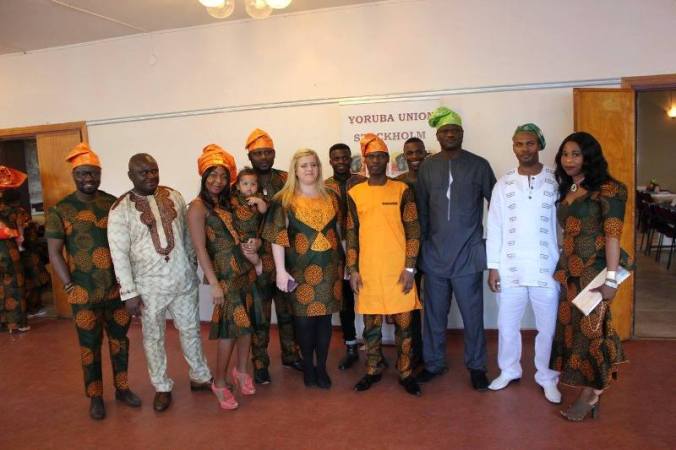
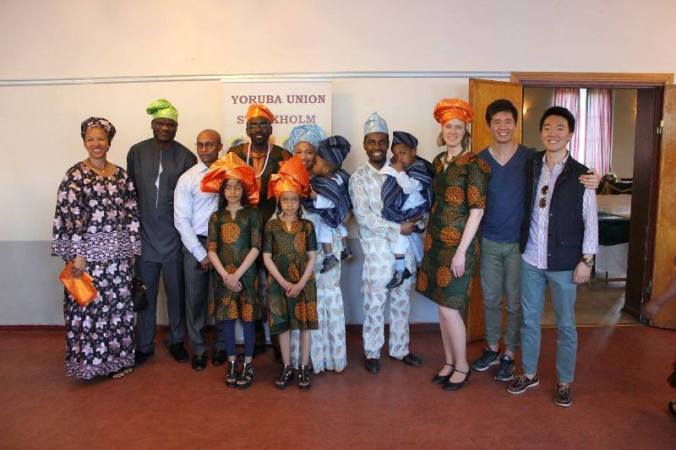
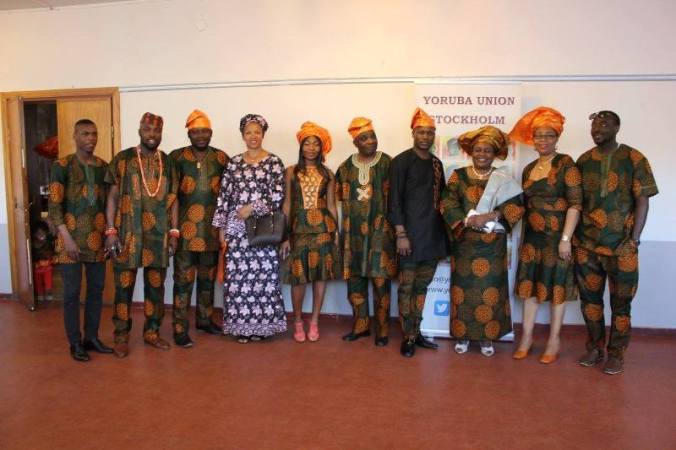
On Saturday the 7th of May 2016 the Yoruba Union in Stockholm, Sweden marked her 4th annual Yoruba Day celebration.


By Adeola Aderounmu

Yoruba Union Stockholm Celebrates 4th Annual Yoruba Day


On Saturday the 7th of May 2016 the Yoruba Union in Stockholm, Sweden marked her 4th annual Yoruba Day celebration.

13161867_10206555870839913_1097802894574890029_o

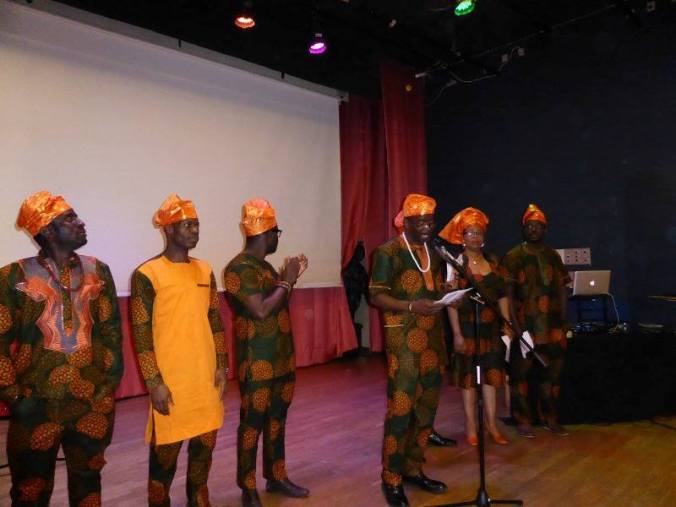
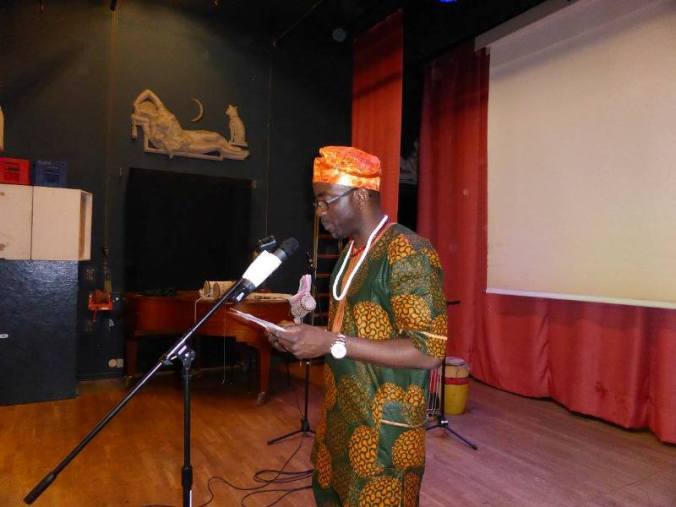
Adeola Aderounmu delivering the welcome address at the 4th annual Yoruba Day in Sweden

The event took place at Alviks Culture House near central Stockholm. Members started arriving from 4 p.m. Family, friends, guests and visitors started arriving as early as 5:15 p.m. The union maintained her reputation by starting the program according to plans at exactly 6p.m.

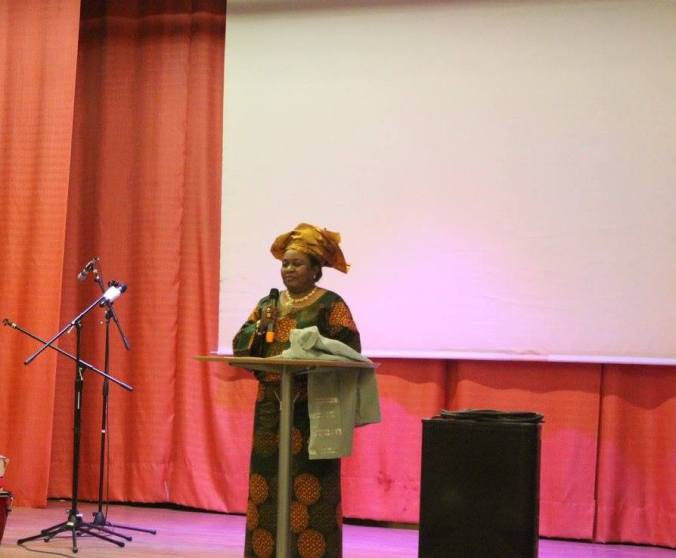
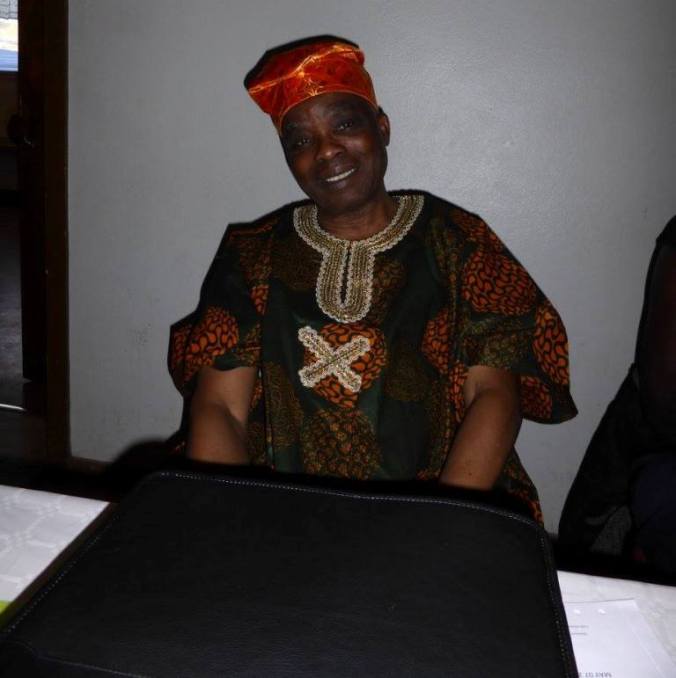
The special guest of honour at the event was the Nigerian ambassador to Sweden, Finland, Norway, Denmark and Finland, Her Excellency Jane Ada Ndem. The father of the day was Baba Kadiri Salimonu.

13161680_10153417959375940_373842547059007297_o

The Nigerian ambassador to Sweden, Denmark, Norway and Finland Her Excellency Jane Ada Ndem giving her speech at the 4th annual Yoruba Day in Sweden

The annual celebration of Yoruba culture and tradition by the Yoruba Union in Stockholm is now the biggest event for Yorubas on the Scandinavia. As it stands the Yoruba Day in Stockholm-Sweden is probably the most genuine and largest gathering for the celebration of Yoruba tradition in Europe so far this year.

13147345_10206555861439678_4154392363692738580_o

Baba Salimonu Kadiri

The Yoruba Union in Stockholm is a non-profit and a non-political group. It is very important to know that the most significant role of the union is to preserve, protect and propagate the Yoruba culture and tradition in Sweden and the rest of the Diaspora. The group is independent and has no affiliation to any other socio-cultural groups or association within or outside Sweden.

During his welcome address Mr. Adeola Aderounmu stressed that the Union is in dire need of sponsors but that will not leave any room open for political affiliation or hijack of purpose as the executives and the general members are resolved and determined to always remain clear of politics and economic gains.

The Yoruba Union therefore hopes that major corporate organisations in Nigeria and even in Sweden can step forward to sponsor the union. Yoruba Union in Stockholm has activities and events that are outlined on her social network pages and website.

13055696_10206555871239923_3634735675179539154_o

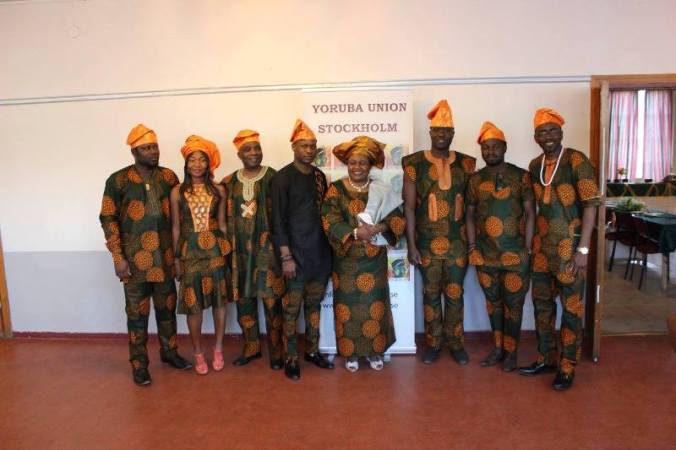
The Executive of the Yoruba Union in Stockholm. Samuel Oladipupo Ayoola, Funmileyi Adenuga, Debo Fasheyi, Adeola Aderounmu, Abiola Kamoru Amos, Lydia Akinwale and Ibrahim Onifade 

The annual Yoruba Day celebrated in the month of May since 2013 is the biggest event. The others are the children’s day in May or June and the family day in August.

The union has a website that is updated every now and then. The most active social network avenue is the YOU-TUBE channel called Yoruba Union Stockholm.

It is on record that the union has represented not just the Yorubas but also the country Nigeria at major events here in Sweden. The most recent before the Yoruba Day was the union’s presence at the Stockholm Cultural Night where dances and songs were on display. The union also presented a tour guide on the creation story according to Yoruba mythology.

13123270_10153417946230940_7331172551513999465_o

Samuel Akinwole, Ibukun Ogunnoiki, Salimonu Kadidir, Abiola Amos, Amb. Jane Ndem, Olarewaju Omogunloye, Debo Fasheyi and Adeola Aderounmu

Moreover, on May 25 2016 the Yoruba Union will perform at the annual African Day celebration in Sweden. This is a day set aside by African heads of missions and ambassadors to celebrate Africa and Africans in Sweden.

13122836_10153417952845940_4267539111380238419_o

Guests, families and friends

13122889_10153417953390940_3180442848691002799_o

Guests, families and friends

13122989_10153417954005940_3424959393974596113_o

Guests, families and friends

13123039_10153417952445940_1378244534310799020_o

Guests, families and friends

13123184_10153417947115940_8257109231967942367_o

Guests, families and friends

Since the inauguration and the registration of the union in 2010 in Sweden, majority of the funding have come from members annual fees and members donations towards events. It has been quite tough functioning that way, but somehow the union remained focused and determine to continue to keep the Yoruba tradition and culture alive.

Gradually, Yoruba children born in Sweden and even citizens of other countries are grasping the importance and significance that the Yorubas attach to their heritage and the process of passing it on to them is on course.

13119983_10153417958910940_4647455020160191911_o

Adowa dancers from Ghana, Theresa Pettersson and Eunice Fenteng

For example at this 2016 celebration, the children could be heard singing and playing instruments to the traditional Yoruba songs, l’abe igi orombo. The next challenge is to create a forum for the teaching and learning of the language under a well planned atmosphere in a living classroom. The union will get there!

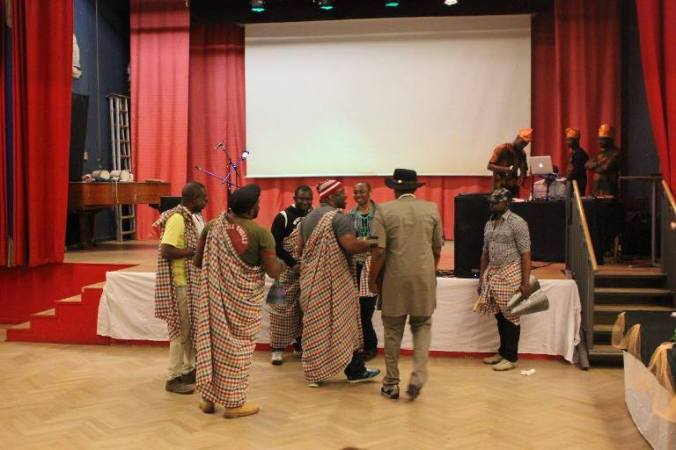
There were other items on the program like the Yoruba cultural dance led by Olarewaju Omogunloye. Guest performances were done by the Igbo Cultural Group in Stockholm and the Ghana Adowa dancers led by Eunice Fenteng.

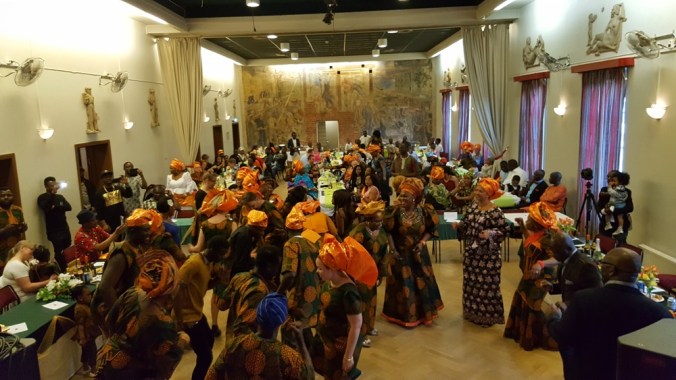
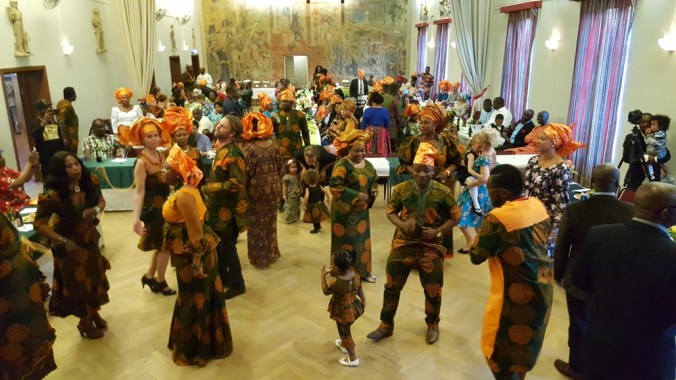
During the program, guests and friends were called upon to dance. Dancing during ceremonies or festivals is a key part of the Yoruba heritage. Yoruba dishes were served and all the guests and visitors expressed their satisfaction with the organisation of the events.

13112843_10153417959765940_2868906474437382984_o

Igbo Cultural Dancers, Stockholm-Sweden

This year’s ceremony was anchored by Lydia Akinwale and Amos Kamoru Adams. The Yoruba mythology creation story was presented by Ibrahim Onifade.

Other coordinators were Samuel Oladipupo Ayoola, Richard Obadimu and Funmileyi Adenuga.

The vote of thanks was given by Debo Fasheyi.

Yoruba Union Stockholm is regarded as one of the most organised African ethnic group in Sweden and people are already looking forward to the 2017 annual Yoruba Day celebration.


20160507_224316

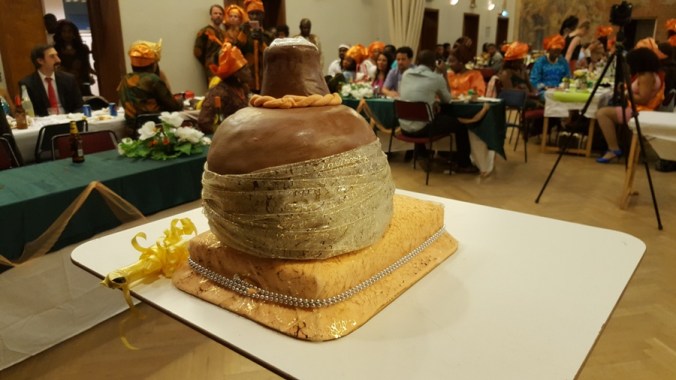
Yoruba symbolic cake

20160507_224352

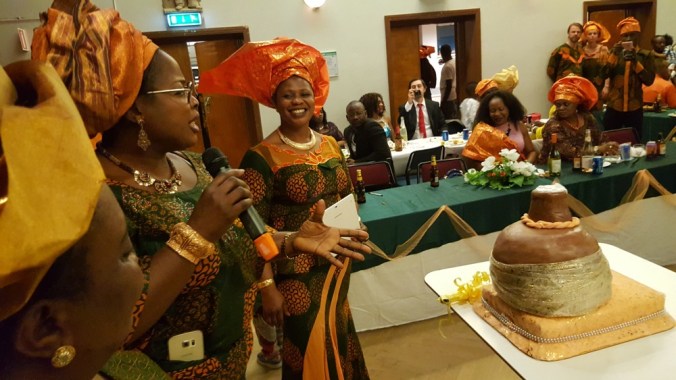
Cake maker Debbie Atinuke Mckintosh explaining the symbolic cake

For information about the Yoruba Union in Stockholm-Sweden, send an email to info@yorubaunion.se

Visit our website,  www.yorubaunion.se

Visit our Youtube channel, https://www.youtube.com/user/YORUBAUNION

Visit our facebook page, https://www.facebook.com/groups/yorubaunion

Oodua a gbe wao!

20160507_201746

There was dancing in line with Yoruba culture

20160507_201923

More dancing


Appreciation

Nigerian Embassy, Stockholm Sweden

SENSUS Studieforbund, Stockholm

Baba Salimonu Kadiri

Clara and John Rogo

Chinedu Oji

Charles Ogunlowo

Charles Onuora, for Igbo Cultural group participation

Eunice Fenteng and Theresa Pettersson, for Ghana Cultural group participation

All Members of Yoruba Union in Sweden


aderounmu@gmail.com


No Rage, No Change..!

In his eyes, he (Saraki) is fighting a political battle. In my view, he is a thrash that Nigerians have refused to dump in the un-recyclable bin. Saraki and the rest like him in/out of politics are not the shame of Nigeria alone; they are the scum of [the] Africa that we are hoping to turn around.

No Rage, No Change!

By Adeola Aderounmu

Adeola_april_2016

In Nigeria criminals in government do not resign even when they are discovered.

A bigger worry is how these criminals have found their ways into governance especially since 1960.

We have read about, seen, and experienced the misrule of Nigeria since the mantle of reign fell on the citizens of Nigeria after independence in October 1960.

What is sad is that the federal government of Nigeria over the years and till date is still very disrespectful to the citizens, failing to address issues and lacking any form of proactive-ness.

A global scandal swept the world a few weeks back. It is now called the Panama Papers.

What followed in many parts of the world following the revelations is instructive.

One of the major casualties was the (former) prime minister of Iceland. The man did not even try to go to court to ascertain if he was guilty or innocent. He just resigned.

Definitely, the prime minister could afford to put up a team of lawyers to defend him and his family. He could even point out that the country is a developed country and that the people should not worry about his wealth on a strange island.

His conscience was enough for him.

He resigned and took a bow out of governance.

There was another man working for Transparency International in Chile. He was indirectly involved in some revelations bothering on the panama papers. He has resigned.

Some prominent Nigerians got mentioned in the scandal. It is not as if Nigerians do not know already before that these men are criminals.

Nigerians know that but they have not taken the bold steps to pursue and chase these bad men out of governance. They should be facing justice outside of governance. Not within it.

If the men mentioned in the panama papers were getting favours from government thereby getting rich at the expense of the people and country, Nigerians care less.

Names like David Mark for several years have become synonymous with endless, shameless scandals. Names like Saraki have been associated with the spread of poverty in Kwara and now across Nigeria through the senate.

Yet these names and several others in their class continue to steer the affairs of Nigeria.

Nigeria is a special country and Nigerians are special breed.

No one can write enough or fill the volumes when it comes to corruption and the criminal tendencies of the Nigerian political class, their families, employees and friends. It is one of the greatest scandals under the sun-that criminals rule over the largest accumulation of the black people in the world.

There is a grading of political thievery in Nigeria, that much l have explained in several essays.

Then when the blend of tribalism and religion are added, you have an insolvent that is going to last for as long as Nigeria exist unless an unexpected revolution wipe things and people away.

It is not in the character of Nigerian politicians or prominent politicians with skeletons in their cupboards to resign.

Rather it is in the character of the people, due to more than 50 years of disorientation, to align themselves along tribal or religious lines and defend the evil people in Nigeria.

The role of the law in Nigeria is another disgusting aspect of the ease of evasion of justice.

The prime minister of Iceland could have stayed on and fight.

But there is justice and there is conscience. In Nigeria, we lack both.

The politicians and criminals in public offices have no conscience and the people do not understand the real meaning of justice. So the judiciary served them with rubbish as justice.

Mr. Saraki wanted to be tried in the court of law for all his crimes and at the same time hang on to power.

Everyday new scandal emerged about this man who now appears to be bigger than Nigeria.

In his eyes, he (Saraki) is fighting a political battle. In my view, he is a thrash that Nigerians have refused to dump in the un-recyclable bin.

Saraki and the rest like him in/out of politics are not the shame of Nigeria alone; they are the scum of [the] Africa that we are hoping to turn around.

Indeed we know that all the political parties in Nigeria harbour thieves. Our dilemma will remain how to weed all of them before the end of the next century.

If we start now, we are doing our children a huge favour. If we don’t they will curse our graves.

The thieves in politics are too many and too cankerous to deal with under a normal system. If there is a system called flushing, Nigeria needs it.

This panama paper scandal came up not long ago. Our problems in Nigeria are older than more than 50 % of the population.

The panama paper is not our wake up call. It will fade soon.

We, the people have actually resigned long ago and left our fate in the hands of tropical gangsters in uniform and mufti.

Since we have resigned, criminals like Saraki and the others do not see the need to resign.

There is no shame even to family names that are now nonsense and rubbish.

They will fight back tooth and nail; they will hide under the permissiveness of law to justify evil.

Things are not going well for Nigerians right now, so it’s very easy to fight for one’s survival at the expense of the prosperity of the country.

It is very easy to become fatigue thinking about fuel, light, road and other areas that highlight the failures of past and present government.

The problems confronting Nigerians give the politicians an ease of passage, a ride over the will of the people. This has been the way since time immemorial.

In the face of all the problems, Nigerians must know that change as promised by the APC is not forthcoming for several reasons beyond the scope of this essay.

I can recall several golden moments in Nigeria’s history where the opportunity for change were missed including but not limited to the June 12 elections of 1993 that was cancelled by the military gangsters led by one Ibrahim Babangida.

Every time Nigerians needed to react in unity and show their rage, they divide along political lines, along religious lines and along ethnicity.

Nigeria needs a political solution before economic solutions or true changes can be reflected. The system of governance is not working and it is not going to work.

One factor that is missing and which can propel or force changes to begin is the “people’s rage”. It’s long dead.

Nigerians, read this loud. No Rage, No Change.

You can start tomorrow morning by sacking the wasteful, inefficient, needless and scandalous Nigerian senate. Then the change begins!

aderounmu@gmail.com


Reflections

When l was 8 years old, my class teacher Mrs. Nwaoha taught me the importance of merit in attaining positions whilst handing me my first experience of taking responsibilities outside my home. Her approach continues to influence my thinking to this day.

Reflections

By Adeola Aderounmu

Aadeola_March 2016

Usually l write my random reflections annually on July 12 to mark my birthday. In recent weeks l have written sporadically in this column (View from Scandinavian in the Nigeria Village Square).

I have not been able to keep to the schedule of publishing every Sunday.

There are explanations for this.

One is that sometimes one feels the urge to just take it easy during the weekend when the week days have been intensive and tiring.

Second is that sometimes l listen to the news from Nigeria or I read the newspaper and then l found out that what my friend told me is true: the more things change in Nigeria, the more they stay the same.

As a columnist it is becoming more demanding to write about Nigeria in order to keep the content fresh or valid. It is hard to do this.

The problems that Nigerian columnists wrote about in 1980 are still the same problems that we are writing about today.

Nigeria has failed to develop or evolve.

We have not been able to change or raised the standard of our discussions to issues that challenge our growth or development because Nigeria is not growing or developing in comparison to several countries with high standard of living and high life expectation.

We are stagnated on economic issues as the value of the Naira remains a disgrace to the country and the people.

In far away places including America, Nigerians have been placed in strategic positions to help the country remain progressive in various ramifications.

However in Nigeria, for more than 50 years, we convert our economic gurus and scientists to fellow political criminals as soon as they arrive on the political stage.

We don’t move forward.

In politics, at a time that the world is discussing migration politics and politics of job creation, we in Nigeria are still struggling with counting of ballot papers.

Nigeria is a disgrace to Africa when it comes to conducting elections.

Recently it was in Kogi State and last week it was in Rivers State where people in this century and age went about killing fellow human beings just because they were asked to cast their votes.

In 1980 whilst I was in primary 3 my class teacher thought it was time to appoint class representatives who would be good ambassadors of her class. She adopted the merit system.

She based her arguments on performances during classwork and related activities.

It was a peaceful exercise. l emerged as the class captain and Foluso Agboola emerged as the assistant class captain.

It probably wasn’t a democratic process but it is an integral part of democracy, that merit would be considered a factor in producing candidates.

We were rewarded with positions because we deserved it.

Before that process I had seen boys since l was 6 years old or less fighting for place and supremacy and l have no idea how or why they thought they had to fight to claim authority when they have not shown that they are responsible.

Mrs. Nwaoha cleared things in my head forever. Merit first.

In 2016 the Federal Republic of Nigeria cannot conduct elections that involve ordinary counting of votes.

The people of Rivers cannot conduct themselves orderly. They went about committing murders and arsons rather then fishing out men of character and integrity like civilised people.

I weep.

In several essays l have written of the times l wept for Nigeria in my private moment and it is not a joke or make believe. Sometimes l had cleaned tear drops from my laptops.

If an x-ray can reveal a bleeding heart, the beam light should come to my chest.

Nigeria makes me sad.

Stories like those associated with the beheading of politicians and the massacres of citizens in River States are devastating to my health status.

I think about where civilisation has brought mankind and what Nigerians are doing to themselves. I’ll been insensitive and inhuman to hold back my tears.

Stories from the north are not news. The traumas of my childhood just became incurable as l wrote in a previous essay.

I don’t think that Boko Haram or terrorists (individuals or government) anywhere in the world represent the true species of humans. I long for a new biological classification of the animal kingdom. The world needs a new Carl Linnaeus.

The fuel scarcity in Nigeria is still unbelievable. Nigeria is naturally endowed with this resource. I have no words to flog the curse of the black oil. Huge disappointment for the black race is an understatement.

Power supply does not trip off in many countries around the world. Nigerians are undoubtedly among the smartest and most creative people under the sun.

Hence, it is hard to find an answer to the question: why do Nigerians have almost no electricity at all in the country?

Femi, my smart friend in Stockholm, gave an insight, it may be an answer.

He said that even if Nigeria decides to provide electricity on 100% supply mode, the infrastructures are not there to sustain it. O dear!

If that be the case, what about spending the next 2-3 years putting the infrastructure in place and constant power supply for ever more? Is that rocket science too?

I called this essay reflection and my intention was to make it short.

One can be hard on self if the issues and problems with Nigerians are taken too hard/harsh.

Whatever, it will always make me sad to see all the possibilities for growth, for development and for making Nigeria a paradise yet that the useless political class and the thieving ruling class have decided that the status quo shall be sustained.

I could definitely go on to reflect or complain. They want us to be tired of doing this. If we get tired, things might even get worse for the voiceless and the downtrodden in Nigeria.

I wish that good roads, good schools, good hospitals and modern infrastructures will be developed in every local government and every state in Nigeria.

I wish that as many people as possible will know and experience quality life style before they bid the world goodbye.

It is sad to see people who have lived all of their lives in extreme poverty whilst the country Nigeria has the potential to be the best place in the world.

The people paid severely for bad governance and mismanagement.

They are still paying and when restructuring the political system and realigning the country regionally or on true federalism are not even mentioned as probable solutions, there is little hope that we will change the lines of discussions soonest.

aderounmu@gmail.com