The Things We Took For Granted (Part 1)

When l was growing up in Nigeria l had no idea that one day I will be living in another country and eating meat and chicken that are produced in factories. I miss my poultry in Nigeria..!

The Things We Took For Granted (Part 1)

By Adeola Aderounmu

IMG_2269

As Africans we need to start appreciating the things we have in Africa especially nature’s endowment.  We also need to preserve our culture, our heritage and the true versions of our stories and pass them intact from one generation to the next.

There are so many things we took for granted in Africa. We still take them for granted on the home soil.

When l was a little boy in Nigeria, l had not doubt in my mind that all the food including fruits and vegetables were coming from nature and in natural ways. It is possible to write a book then about Feeding Without Fears in Nigeria.

I remember my involvements and experiences in farming as a school boy. We planted crops as part of practical Agricultural Science. We even tilled the soil and prepare them for cultivation. Groundnut was my favourite. There was no need to cultivate water leaf (spinach); it was growing everywhere-along the roadside, among the bushes and just about anywhere there is soil and moisture.

I remember the poultry l kept at the backyard. My love for the hens and cocks was for them to grow up and end up in my pot of soup on that famous kerosene stove. Some of these adventures must have helped in forming me. I have patience to see things through. I know how sweet the reward is for genuine labour.

In Nigeria we have everything that nature could provide for life in the tropical region. There is rainfall, and there is adequate sunshine. There is a clear demarcation for day and night.

We have all kinds of trees. We have mango trees, the coconut trees, the orange trees, the cocoa plant trees. We have the sugarcane plantations. We have cashew crops and so on.

Irrespective of where these crops are found, one didn’t have to worry about consuming them. It was unthinkable that certain chemicals inimical to human health were consumed with them. We were children, we felt safe.

The good stories about growing up in Nigeria are varied and marvellous.

Now in Europe and other parts of the advance world, it is very disturbing to note how unnatural the foods we eat are. It is extremely disturbing to walk into the stores and find all kinds of labels on the food items.

What is biological mango? What is ecological mango? What is fair trade banana? What is ordinary banana? What is ecological carrot?

Reading food labels and tags on fruits and vegetables is a way of life that emanated from outside Africa. It may be the beginning of fear or wisdom depending on your views about food and nutrition. In whichever case, it is not a pleasant trauma.

As a child, when l bought oranges at Agboju market or when l jumped and plucked Mama Tunji’s mango and ran away to eat it while hiding, l have no idea that one day l will be settling down to first read the labels before buying or eating fruits.

One day a friend who thought that she has found a new knowledge tried to explain to me the difference between ecological and biological fruits and vegetables. What an effort to make..!

In this part of the world we are in some deep troubles because people eat all kinds of things that they don’t even know where they are coming from. How can anyone trust the labels on fruits and vegetables in these days when people are fed pork and horse meat as beef? When meat and fruits are made by artificial methods, how can expiry dates be valid?

When l was growing up in Nigeria l had no idea that one day I will be living in another country and eating meat and chicken that are produced in factories. I miss my poultry! Where are all these fake and giant bananas coming from?

There is trouble here; we eat synthetic materials as food.

Some oranges are bigger than the human head. Some bananas are bigger than the African plantain. We are in trouble.
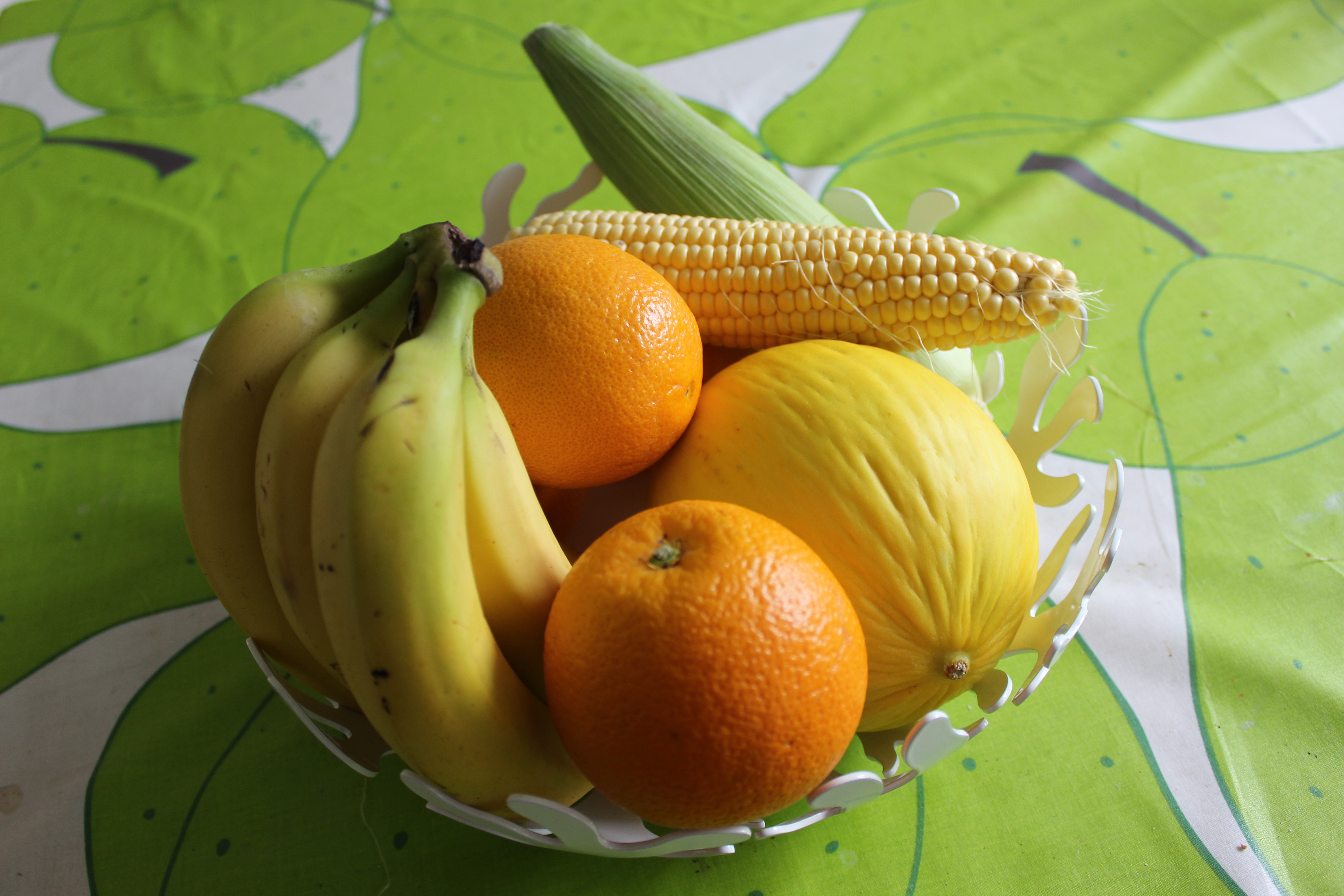
Fruits with labels? How Healthy are tey?

Fruits with labels? How Healthy are they?

For Africans, it is sad that many of these fake products and synthetic food items have crept into the continent.

In Nigeria l remember the influx of fake chicken and turkey into the Nigerian market. This year 2015 the Nigerian custom continues to fight the smuggling of the fake poultry products from neighbouring countries into Nigeria.

In Nigerian traffic especially in Lagos, everything is sold. The shiny green apples look purely synthesized. Sometimes you’ll think they have been taken for polishing at the shoemaker’s stall.

Nigeria has since become a consuming society and a dumping ground for all kinds of fake food products and dangerous medicines. The failure of governance and the systemic collapse of institutions in Nigeria left much to be desired.

There is no shame greater than the importation of food and crops that can be produced in Nigeria. It was totally senseless to relegate agriculture as the leading foreign income earner for regionally governed Nigeria.

The rulers of Nigeria are weak intellectually. They even import petroleum products! Their dumbness is exposed in their primitive accumulation while sacrificing the present and the future at the same time, all for nothing.

In Nigeria we took for granted all the free gifts of nature. Nigeria is a rich country in all ways and by all ways. Mr. Buhari can continue to misfire-calling Nigeria a poor country-because of his low intellectual capacity and inability to reason out the meaning of rich or blessed with.

The Nigerian climate is perfect for agricultural practises. The countries that have long winter season would probably stop synthesizing food items if they have such optimal climate.

I will not forget that eating fruits while growing up in Nigeria was devoid of looking for tags and labels. There was no doubt about the safety of the crops that my grandfather nurtured on his farmland in Igbogila. I had no doubt buying roasted plantain-boli at the roadside or oranges from the hawkers.

We ate healthy and unless we expose our skin to malaria parasites we hardly become ill. In comparison the reports of catching ordinary cold all year round in the advanced countries is amazingly high.

The present and upcoming generations of Nigerians must be told the true stories. There was trust in Nigeria in the past and there was dignity in labour. Sadly when things fell apart politically, everything else fell apart. The proportions of failure in Nigeria since 1966 especially are unimaginable. It is a sad story.

For Nigeria food production that will completely eliminate reliance on import and adulteration is still very possible. The potentials are still there and though the climate may have change, it is not significant enough to disrupt full blown back to the golden days of Nigeria.

The blueprints that allowed Nigeria to flourish under regional government up till the early 70s need to be reintroduced. It is getting clearer that the APC mandate is a fluke as Nigerian politicians remain hell bent on looting and destroying Nigeria because of the nonsensical unitary system that gives power to one man as if he is a dictator even under a democratic system.

How did the Old Western Region succeed with the regional farm settlement schemes alongside a world class education system? What made the groundnut pyramid in Northern Nigeria so high? Why was the East home to cassava, yam and other cash crops? The answers to these questions that will return Nigeria to her rightful position in cocoa export, oil-palm production, yam and groundnut export are political!

How we let go of healthy living in Nigeria is related to the collapse of the Agricultural sector and it happened due to bad governments. Living in places where natural food are now produced by synthetic methods or gene modification makes one to appreciate the continent of Africa that is blessed by Mother Nature.

In my part of Africa, the tropical zone of Sub-Saharan, nature smiled on us and provided optimally for our living. When we are ready, Mother Nature will still be waiting.

A deep-rooted and sincere reorientation of the citizens will be necessary to rid Nigerians of their affinity for food and things that are foreign. Those who indulge in illegal importation of food stuffs should spend long years behind bars. They are a risk to people’s health and also economic saboteurs for local/indigenous farmers.

The health of the citizenry is the wealth of the nation.

Repeatedly, a functional political method is an integral part of the solutions to all of the problems in Nigeria. This is where the burden falls back on the citizens. They have a collective right to fight the politicians and take back their functional regions and bring back the days before the civil war when there was abundance and prosperity.

It will be a long road to freedom.

aderounmu@gmail.com

THE ROLE OF NUTRITION IN THE PREVENTION AND TREATMENT OF OBESITY

A review by Adeola Aderounmu (Written in May 2005)

Introduction
Obesity is a worldwide chronic disease affecting over 300 million adults. Excess body fat is the largest nutritionally related problem in the United States and many other affluent countries (Willet and Leibel, 2002). The prevelance of obesity in the United States continues to rise dramatically (Flegal et al., 2002) and the situation may represent an epidemic in such a society because of its widespread and prevalence (Kottke et al., 2003).Over the past decade, the obesity rate among French children has doubled, from 6% to 12%, and between 1997 and 2003 the percentage of overweight and obese adults jumped from 37% to 42%. That growth curve parallels the one in the US about 10 years ago (TIME Magazine, May 23 2005). This disease is not limited to industrialised countries as over 115 million people in developing countries suffer from obesity-related problems (Whitney et al., 2005).

Quite naturally, excess intake of food (carbohydrate, protein and fat) can lead to obesity or at least the maintenance of an overweight body. To a reasonable extent, body weight regulation depends on the balance between energy intake and energy expenditure (Jequier and Bray 2002). It is not clear if high-fat diets are in part responsible for the increased prevalence of obesity in several countries. Some questions are of interest, for example (1) why are several epidemiological studies in the United States showing that the prevalence of obesity is increasing at the same time that fat consumption is decreasing? (Willet, 1998); (2) why is the prevalence of overweight worldwide directly related to percent of fat in the diet? (Bray and Popkin, 1998). What is known however is that the ability of the different macronutrients to stimulate satiety and to suppress subsequent food intake is not equal. There is a hierarchy such that protein intake has the most potent satiating effect, carbohydrate has a less pronounced effect, and fat has the lowest capacity to stimulate satiety and to decrease the amount of food energy ingested at the next meal (Rolls et al., 1994 Stubbs et al., 1997 and Prentice 1998). Additionally, glucose is the preferentially oxidisable food nutrient in the cells and the processes involved in the storage of fats seems to consume less energy and therefore fats are easily stored.

High-fat diets are more energy dense than high-carbohydrate diets, and the former favor hyperphagia (increased food intake) (Jequier and Bray, 2002). With high-fat diets, which are energy dense, more calories are passively ingested than with high-carbohydrate foods. High-fat diets favor passive overconsumption and body weight gain (Blundell and Macdiarmid, 1997). It is difficult to correlate the known effects of food substances on the prevalence or incidence of obesity in various epidemiological settings. Nevertheless obesity remains one of the several chronic diseases that have been implicated or linked to dietary and lifestyle factors. Those who are obese are more likely to suffer from life-threathening diseases such as diabetes and heart disease.

On the other hand, positive energy balance is not always undesirable. For instance, a growing youth (or pregnant woman) should be in postive energy balance, i.e consume more energy than expended, since they are growing / increasing in body tissues.

Etiology
There are controversies over the factors that lead to obesity. The major factors can be discussed under 3 major headings viz: total energy intake, lifestyle factor and genetics.

Total energy intake
There has been an inverse relation between dietary fat intake and obesity in the US over the last several decades: as the prevalence of obesity has increased, the percentage of calories from dietary fat intake has decreased, (Willet and Leibel, 2002). Despite the lower fat percentage in diets, there has been an increase in total calorie intake. The total energy intake is the primary contributor to obesity, [Bray and Popkin (1998), Jequier and Bray (2002) and (Forrety and Poston,(2002)].

Some investigators attribute part of this problem to the greater frequency of eating outside the home, particularly in fast-food restaurants (McCrory et al., 2000). Significant associations have been demonstrated between eating fast food and body weight (Binkley et al., 2000) and between consuming restaurant food and body fatness. For example, after controlling for age, sex, education, smoking, alcohol intake and physical activity, restaurant food consumption was significantly correlated with the total daily intakes of energy and fat; most importantly, it also was significantly related to body fatness (McCrory et al., 1999). Many full-service and fast-food restaurants and convenience stores offer “super-size” portions that contain 2 to 3 times more calories than regular-size portions.

Dietary fats as well as carbohydrates are probably important contributors to the excessive caloric consumption (Poston and Foreyt, 1999) and evidence has accumulated recently showing that high-fat, energy-dense meals favor passive overconsumption, a mechanism that very likely helps to explain the increasing prevalence of obesity in many countries ( WHO, 1998).

Lifestyle Factor. Physical Activity
There also is a consensus that high prevalence of a sedentary lifestyle in the United States plays a central role in the development of obesity (Barlow et al., 1995). Generally, the lack of physical activity can be an important contributor to positive fat balance and weight gain. Crespo et al., (1996) reported that the prevalence of little or no physical activity is 54% in the general American population and nearly 70% in African American and Mexican American women, a particularly disturbing figure because minority women also experience the highest prevalence of obesity (WHO 1998). Inactivity contributes to weight gain and poor health.

Genetics
Genetic influences do seems to be involved in some cases of obesity; at least researchers have identified an obesity gene called ob which codes for the protein leptin (Whitney and Rolfes, 2005). Even if these suspected genes do not cause obesity, genetic factors may influence the food intake and activity patterns that lead to it and the metabolic pathways that maintain it (Froguel and Boutin, 2001). Genetic factors may influence which individuals within a population will develop excessive adiposity but the rise in obesity observed in recent years cannot be down to genes, the environment is paramount.

As a sequel, in a very recent study University of Glasgow and Bristol researchers reported some findings that support the theory that early life environment could determine obesity:

• Birth weight
• Parental obesity
• Over 8 hours of TV a week at age 3
• Short sleep duration less than 10.5 hours per night at age 3
• Size in early life-measured at 8 and 18 months
• Rapid weight gain in the first couple of years
• Rapid catch-up growth up to 2 years of age
• Early development of body fatness in pre-school years-before the age at which body fat should be increasing
(Source, BBC News, May 19 2005)

Prevention
People with clinically severe obesity may need aggressive treatment options such as drugs or surgery (Yanovski and Yanovski, 2002). There are 2 drugs used to treat obesity: Sibutramine suppresses appetite while Orlistat inhibits pancreatic lipase activity in the GI tract. However, these drugs are side effects and some shortcomings. The challenge for obesity is to develop an effective drug that can be used over time without adverse effects or the potential for abuse. No such drug currently exist (Halsted 1999).

Surgical procedures effectively limit food intake by reducing the capacity of the stomach and suppress hunger by reducing production of the hormone, Ghrelin. This protein is secreted primarily by the stomach cells and act in the hypothalamus. It promotes a positive energy balance by stimulating appetite and promoting efficient energy storage (Kojima and Kangawa, 2002). Surgery to treat obesity involves very risky procedures.

Role of Nutrition
The important question for the prevention and treatment of obesity is to assess whether low-fat diets promote long-term weight loss or slow weight regain (Willet, 1998). Low-fat diets have been consistently shown to promote moderate weight loss over 1 year, and no study has reported an increased incidence of cardiovascular diseases with low-fat diets (Mensink and Katan, 1992). It has not been justified that low-fat, high carbohydrate diets lack the efficacy to elicit weight loss or that they have adverse effect in cardiovascular disease prevention. Instead, low-fat diets with more fruits, vegetables and fibres have also been shown to promote regression of atherosclerosis (Gould et al., 1995) and reduction in blood pressure (Appel et al., 1997).

Although low-fat diets have a significant effect on body weight of overweight individuals (Jeffrey et al., 1995), their long-term effect from a public health perspective is limited in the treatment of obesity (Prentice 1998). Nevertheless, promoting low-fat diet should be a priority in any programme for the prevention of obesity. The concept of a weight-maintaining diet is important and may be a realistic approach even in obese individuals, particularly after a successful weight loss after a hypocaloric diet or after gastric surgery in obese patients (Jequier and Bray, 2002).

Some researchers used a new simplified method to assess meal pattern among 2 groups of women in Sweden. Their findings revealed that the number of reported intake occasions across a usual day was higher in obese women compared with controls and the timing was shifted to later in the day. They suggested that these findings should be considered in the treatment of obesity (Forslund et al., 2002). Therefore, it is appropriate from a public health perspective to promote a reduction in total fat intake as an important goal for the prevention of obesity and obesity-induced diabetes because modest weight loss in obese subjects is usually accompanied by an improved insulin sensitivity and a decrease in impaired glucose tolerance (Appel et al., 1997; Ferrannini and Camastra 1998).

It will be reasonable that obesity treatment-related dietary modifications include suggestions to reduce total calories by reducing fat intake, particularly saturated fats and reducing intake of high-carbohydrate foods. In furtherance to this for example, the European Dietary Guidelines stipulated that the specified goal for dietary fat content as percent total energy is for the primary prevention of obesity (EURO DIET). Similarly, the current US incidence of overweight and obesity, and the chronic diseases to which they are precursors, will be mitigated and prevented only with major changes in national dietary policies and programs based on successful experiences and models (Gifford, 2002).

Finally, Physical activity is a necessary component of nutritional health. People must be physically active if they are to eat enough food to deliver all the nutrients they need without unhealthy weight gain (Whitney and Rolfes, 2005). A low level of daily physical activity is a factor that contributes to the positive energy balance, which leads to obesity. Exercise of moderate intensity will stimulate oxidation of fat (Smith et al., 2000). It seems considerable to compensate for the low-fat oxidation by not only promoting low-fat diets but also by promoting adequate daily physical activity.

This review paper was submitted to the Department of Bioscience at NOVUM, Unit of Preventive Medicine, Karolinksa Institure, Huddinge-Stockholm in 2005.

REFERENCES
References
Appel, L.J., Moore, T. J., Obarzanek, E et al., (1997). A clinical trial of the effects of dietary patterns on blood pressure. N Eng J Med 336, 1117-1124.
Barlow, C. E., Kohl, H. W., Gibbons, L. W et al., (1995). Physical fitness, mortality and obesity. Int J Obes Relat Metab Disord 19, S41-S44.
BBC News. TV ‘increases child obesity risk. http://www.bbc.co.uk/health. Published 2005/05/19.
Binkley, J. K., Eales, J and Jekanowski, M (2000). The relation between dietary change and rising US obesity. Int J Obes Relat Metab Disord 24, 1032-1039
Blundell, J. E and Macdiarmid, J. I (1997). Passive overconsumption. Fat intake and short-term energy balance. Ann NY Acad Sci. 827, 392-407.
Bray, G. A and Popkin, B.M (1998). Dietary fat intake does affect obesity! Am J Clin Nut 68, 1157-1173.
Crespo, C. J., Keteyian, S. J., Heath, G. W et al., (1996). Leisure-time physical activity among US adults. Results from the 3rd National Health and Nutrition Examination Survey. Arch Intern Med 156, 93-98.
EURO DIET (2001). Core Report. Nutrition and Diet For Healthy Lifestyles in Europe.
Ferrannini, E and Camastra, S (1998). Relationship between impaired glucose tolerance, non-insulin-dependent diabetes mellitus and obesity. Eur J Clin Invest 28, 3-7.
Flegal K. M and coauthors (2002). Prevalence and trends in obesity among US adults. J Am Med Ass 288, 1723-1727
Foreyt, J. P., Poston, W.S.C (2002). Consensus View on the Role of Dietary Fat and Obesity. The Am J Med 113, 60S-62S.
Forslund, H.B., Lindroos, A. K., Sjöström, L and Lissner, L. Meal patterns and obesity in Swedish women; a simple instrument describing usual meal types, frequency and temporal distribution. Eur J Clin Nut 56, 740-747.
Froguel, P and Boutin, P (2001). Genetics of pathways regulating body weight in the development of obesity in humans. Exp Bio Med 226, 991-996.
Gifford, K. D (2002). Dietary Fats, Eating Guides and Public Policy: History, Critique and Recommendations. The Am J Med 113, 89S-106S.
Gould, K. L., Ornish, D., Scherwitz, L et al., (1995). Changes in pyocardial perfusion abnormalities by positron emission tomography after long-term, intense risk factor modification. J Am Med Ass 274, 894-901.
Halsted, C. H (1999). Is blockade of pancreatic lipase the answer? Am J Clin Nutr 69, 1059-1060.
Jeffrey, R. W., Hellerstedt, W. L., French, S. A and Baxter, J. E (1995). A randomised evaluation of a low fat ad libitum carbohydrate diet for weight reduction. Int J Obes 17, 623-629.
Jequier E and Bray, G. A (2002). Low-Fats Diets Are Preferred. The Am J Med 113, 41S-46S.
Kojima, M and Kangawa, K (2002). Ghrelin, an orexigenic signalling molecule from the gastrointestinal tract, Curr Opin Pharmacol 2, 665-668.
Kottke, T. E., Wu, L. Aand Hoffman, R.S (2003). Economic and psychological implications of the obesity epidemic. Mayo Clinic Proceedings 78, 92-94.

McCrory, M. A., Fuss, P. J., Hays, N. P., Vinken, A. G., Greenberg, A. S and Roberts S. B (1999). Overeating in America: association between restaurant food consumption and body fatness in healthy adult men and women ages 19-80. Obes Res 7, 564-571.
McCrory, M. A., Fuss, P. J., Saltzman, E and Roberts, S. S (2000). Dietary determinants of energy intake and weight regulation in healthy adults. J Nut 130, 276S-279S.
Mensink, R. P and Katan, M. B (1992). Effects of dietary fatty acids on serum lipids and lipoproteins. A meta-analysis of 27 trials. Arterioscler Thromb 12, 911-919.
Poston, W. S. C and Foreyt, J. P (1999). Obesity is an environmental issue. Atherosclerosis 146, 201-209.
Prentice, A. M (1998). Manipulation of dietary fat and energy density and subsequent effects on substrate flux and food intake. Am J Clin Nutr 67, 535S-541S.
Rolls, B. J., Kim-Harris, S., Fischman, M. W et al., (1994). Satiety after preloads with different amounts of fat and carbohydrates: implication for obesity. Am J Clin Nutr 60, 476-487.
Smith, S. R., de Jonge, L., Zachwieja J. J et al., (2000). Concurrent physical activity increases fat oxidation during the shift to a high fat diet. Am J Clin Nutr 72, 131-138
Stubbs, R. J., Prentice, A. M and James, W. P (1997). Carbohydrates and energy balance. Ann NY Acad Sci 819, 44-69.
TIME Magazine, May 23 2005. Mon dieu! The French Get Fat. p14
Whitney, E and Sharon, R. E (2005). Understanding Nutrition. 10th edition. Thomson Wadsworth.
Willet, W. C (1998). Is dietary fat a major determinant of body fat? Am J Clin Nutr 67, 556S-262S.
Willet, W. C and Leibel, R. L (2002). Dietary Fat is Not a Major Determinant of Body Fat. The Am J Med 113, 47S-59S.
World Health Organisation (WHO) 1998. Obesity: Preventing and Managing the Global Epidemic. WHO, Geneva.
Yanovski, S. Z and Yanovski, J. A (2002). Obesity. N Eng J Med 346, 591-602.