The Cost Of Freedom

Unless a country or a group of people are willingly to genuinely give their today in the name of true freedom, their children will never be free tomorrow.

The Cost Of Freedom
Which Way Nigeria?

Which Way Nigeria?

By Adeola Aderounmu

Nigeria’s 54th year as a so-called independent country was marked in several ways. One headline that caught my attention was the one that stated that poverty in Nigeria has been reduced by 50%.

The headline is first class fraud.

Statistics was one of my favourite subjects during my first and second degrees at the University of Lagos. It is one of those subjects that I really felt comfortable doing. At Idiaraba it was Medical Statistics and oh, how I enjoyed every bit of it and the lecturer was awesome.

Poverty may have been reduced by 50%, it depends on the sample size or the part of the population where you draw your samples from.

So I can conclude that if we take the population of the follow-follow people flocking Aso Rock since the inception of Jonathan’s administration, he has successfully tackled the poverty among 50% of the ass-lickers including the expanding society of Aso Rock Bull Dogs.

If I cast my dragnets at the places that I know like Oshodi, Ojuelegba or Okokomaiko, my data will produce a result that will make nonsense of the results produced by some drunkards in Aso Rock. More than 90% of the people will be below poverty level and living on less than N500 a day.

For more than ever before majority of Nigerians groan under an increasingly senseless and insensitive government. Increasing the death rate and lowering the life expectancy of a population does not mean that poverty has been reduced.

In several essays I have depicted the nature, spread and characteristics of poverty in Nigeria as one of the worst hidden tragedies in the world. I have also been very quick to dismiss the claims of the few people who escaped the threshold of poverty sometimes through luck or unmerited opportunities that their situations cannot be used as the yardstick.

The title of this essay came as a result of my feelings in recent months. I’ll approach it.

I do know, and convincingly too that there are a few people in Sweden who have cultivated the habits of reading my articles, not because they want to be “my readers” but because they “enjoy” this culture of gossiping about “what did he write this week”?

I am happy for them, that they found a weekly delight.

I’ll keep them in the dark by not defining their range but amongst them are people who need to understand though that I have the right to my views about Nigeria no matter what they think or feel.

I cannot help those who found out too late that they had been talking to someone who has been writing about Nigeria since 2001.

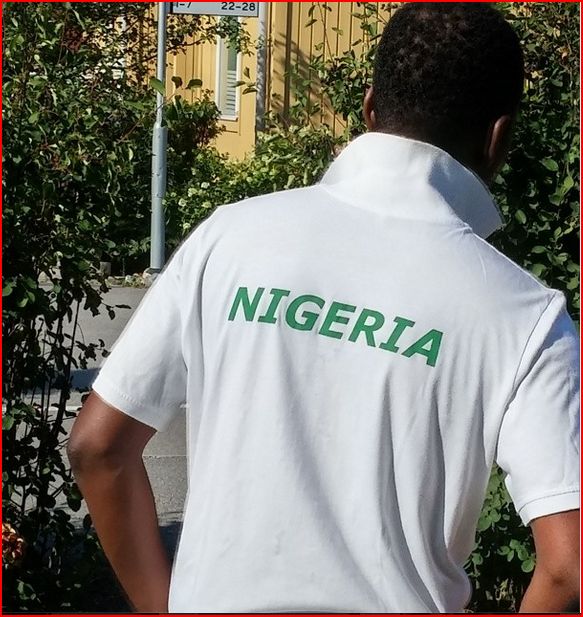
One of my pictures on Facebook must have tilted the table over. I had a T-shirt with the inscription Oduduwa republic on my mind. It is one of my ideas of freedom. The image must have gone viral among some folks. I am still happy for them and I hope they get a pat on the back when they make their reports.

I wonder how much shock my Swedish-Nigerian readers suffered in the last 4 weeks when I had written stories about love. I will choose love any day over a failed country under the bondage of crazy and deaf rulers.

The love stories came to me after a recent trip to Finland. I think my ancestors love nature and they prefer the solitude of a calm sea to bring me teachings and guidance.

Today I wanted to write a story about “The Dreamer Boy” but I thought some people will like to know if I am still in tune with Nigeria and how the drunkards have reduced poverty by 50%.

What is more interesting than this blatant lie is the growth and spread of individuals, groups and associations that are intensifying their doubts about their continuous recognitions as Nigerians.

They are weighing the options of bailing out of a jaga-jaga Nigeria. There are many t-shirts nowadays with a lot of messages and one boy even tore his green passport and posted it on YouTube.

I have a lot of reflections on this emerging trend especially among “Nigerians” who are far away from their regions in Nigeria, based mostly in Europe, Asia and America.

For the Nigeria we have today became a total mess as a result of our collective failures as citizens and participants or onlookers in the successive corrupt and useless governments in Nigeria over the years and even to this day in October 2014.

The Nigeria of today was not the dream of the men and women who fought collectively to wrestle the country from the colonialists.

The reason we write or recite or even highlights repeatedly our failures as a country is because some people need the education at some point on what has happened and what we expected. Where Nigeria is today on the scale of human development and quality of life is a complete disgrace to the intellectual abilities of the African race.

One failed government blames the other and the cycle of idiocy rotates as nobody tackles the menaces of corruption, federal character (yes, it is a menace), nepotism and tribalism.

It was the greed in Nigerians and the corruption in their veins that exposed the madness of the colonialists who married different nations into one entity. “Irreconcilable differences” is an expression made in Nigeria. The crazy rulers destroyed the institutions of governance and many crazy people in government stole for themselves, their friends and their unborn generations-even to this day.

Since the mid-1960s, no government has made efforts to return power and freedom to the regions just the way it was when education, health and technological developments were functional until greed and outright stupidity reared their ugly heads.

The process of divide and rule, looting and total disregard for the rules of law continued and reached a new dimension since the inception of pseudo-democracy in 1999.

For Nigeria I have oscillated between hope and hopelessness and my understanding of statistics says it is time to try something else.

I am all for the freedom and the emancipation of the people who are currently enslaved in Nigeria.

It is imperative to define the modalities and the cost of freedom so that the sycophants and the major players of today do not ruin the future of our children and grandchildren the same way they ruined our parents lives and displaced us to different places around the globe.

I wish that all the groups and associations around the world will emerge from their clandestine positions and start to talk openly. The Scottish people just had a vote. The outcome was not as important as the action they took but it will define the things to come in the future. Their children will grow up feeling more secured.

It is old fashioned to seek freedom in the dark rooms. It is very primitive to seek independence through confidential emails or social media closed groups.

If you want something, make it open, make it plain. Go for it and carry the people who need the change along.

Healthy debates, open groups, open discussions and other form of transparent dealings may help to check some of my personal fears regarding the stakeholders in all these clandestine groups scattered around the world.

What is the cost of freedom?

The cost of freedom lies in service to humanity. It is not looting the treasury and telling stupid lies about security and poverty.

The cost of freedom in public service lies in willingness to die at the altar of truth. It is not in building houses of gold on the polluted land across Nigeria.

The cost of freedom is the deprivation that comes with the belief that humanity comes before self.

The cost of freedom will be correlated to conventional free thinking and explorative mindedness.

It will not be locked to dying for the sake of acquiring virgins in an imaginary place. It will not have anything to do with deadly assembly at the feet of gangster mortals called prophets. The cost of freedom will rid a nation of the defenders of evil.

Unless a country or a group of people are willingly to genuinely give their today in the name of true freedom, their children will never be free tomorrow.

For the nations entangled in Nigeria these sacrifices are non-negotiable.  Along with the irrepressible truth, they will be the ultimate cost of freedom.
aderounmu@gmail.com

Big Rewards For Political Prostitution In Nigeria

By Adeola Aderounmu

The wave of swapping political allegiance in Nigeria is out of this world. There is no need to assign a Guinness book of world record to it. It is super unique and there are just no other countries as contestants.

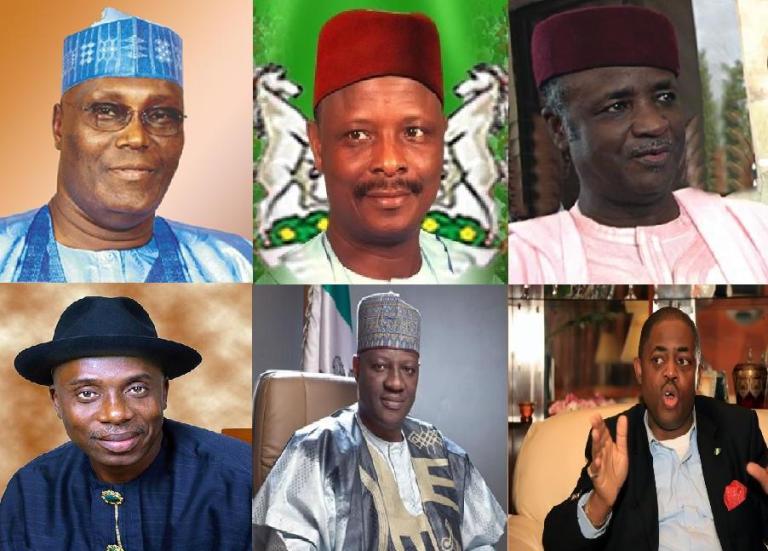
Last year five governors (s)elected on the platform of the PDP in Nigeria left their party and joined the APC. What would have been more honourable and sensible was to denounce the mandate they stole through the PDP. They kept their mandates while seeking desperate means of self-preservations. It’s purely unethical and somehow also a criminal act. People who rob Peter to pay Paul will always be diabolical.

Rotimi Amaechi of Rivers has been leading the pack of aggrieved governors and he is still at loggerhead with Mr. and Mrs Jonathan on several River state and national issues. When you read or hear about some of his ordeals, they are like in the movies. It is either he narrates the “police-and-thief episodes” or the “cowboys-on-the-mountains” version. But the series are endless and this makes Amaechi a good real life actor. One day Hollywood may come knocking for him because Nollywood will not be able to afford him.

But seriously, governors like Amaechi (and other swingers cum politicians) who have been swinging or running helter-skelter, changing political parties like their underwear would have done humanity a big favour by delivering services to their people and bringing them out of poverty and extreme hopelessness. Rather than serve with their whole hearts, they keep oppressing the poor and selling propaganda across Nigeria and even paying corrupt bloggers and social commentators to kiss their asses. Politics should be about service to the people, not ego or blandishment of persons.

But trust naija where looting remains the shortest criminal way to wealth, the name of the game is survival, not service. The other PDP governors that defected to the APC with stolen mandates are Alhaji Ahmed Abdulfatah (Kwara), Dr. Rabiu Musa Kwankwaso (Kano), Alhaji Murtala Nyako (Adamawa), and Alhaji Aliyu Wamakko (Sokoto). Nyako was given the shakings of his life penultimate week. He knows who not to blame while his sweat is un-dry.

Just a few days ago one Fayose was returned to Ekiti state house riding on the back of unlimited funds looted by the presidency in Abuja. He had been bundled out of the PDP, went to the APC and then returned to the PDP. In all of Ekiti, there is no one leader to stand tall among the people. There are generally no leaders in Nigeria but rulers abound. No one could stop the return of a looter to the same treasury he once looted. What has become of the children of Oduduwa? Orunmila must be shaking his head in disbelief.

It’s typical Nigerian syndrome, that those who steal more money have greater opportunity to own the government houses across Nigeria. As it is for the PDP, so it is for the APC, they just loot the treasury away while doing very little or sometimes nothing.

Does anyone remember Atiku Abubakar? He probably holds the title of the “chief prostitute” amongst Nigerian politicians. Between 1980 and 2014 he had been a founder or member of PFN, PDM, PDP, AC, PDP and APC. There is no doubt that this behaviour exemplifies lack of seriousness. It shows an unrepentant strong desire of a political prostitute to serve self rather than humanity.

Examples of Political prostitutes in Nigeria

Examples of Political prostitutes in Nigeria

Femi Fani-Kayode (FFK) is among this category of Nigerian political prostitutes. During the reign of Obasanjo he became a minister, first of culture and tourism, then of aviation. Under Yar Adua, he was investigated and arrested by the EFCC. Like many uncountable political-criminal cases, his trials relating to corruption and money laundry will drag until eternity. Then, they’ll fade away too and he’ll continue to claim innocence. In Nigeria, with the useless nature of the Nigerian judiciary, a James Ibori will always be innocent.

Mr. Fani-Kayode is now back in the PDP claiming that the APC is full of dictators. Thanks to Mr. Fani Kayode, we now know that the APC is also pursuing a jihadist agenda. Are we supposed to thank the moron of a corrupt general who cancelled the June 12 1993 elections? Perhaps the PDP is also no longer a nest of killers; it’s safe for some people to return.

Since the renewed romance with Aso Rock, Mr. Fani-Kayode will now have to disown all his “rubbishing” of Jonathan’s government including referring to it as the worst in corruption in the history of Nigeria. He will need Abati’s lesson notes. Nigerian politicians are too shameless.

You also have to wonder what the presidency and the Nigerian military are doing about Boko Haram and APC with all the intelligence and secrets at the disposal of FFK. Obviously FFK has also told us about the man without balls before he went back to his camp. Can Femi help Jonathan get his groove back? Can he help him to regain his balls?

But we know that the balls won’t matter once 2015 is secured by the PDP, for then FFK will likely become a minister again, under the same government (if PDP wins) he labelled as the most corrupt in Nigeria’s history. The toothless EFCC and the corruption-prone judiciary can suck it up in advance if they like.

One of the additions to the ranks of political prostitutes is the former governor of Kano State Ibrahim Shekarau. He’s done the full cycle in his prostitution journey moving from ANPP, to APC and now to PDP. Obviously his political experience can make him useful as a serving minister but it carries a previous taint of allegations of links to Boko Haram.

The ranks of people with alleged links to Boko Haram in the Jonathan government are increasing daily. What is FFK going to do about PDP and the Boko Haram appeasement tactics? Another mischievous angle to Shekarau’s appointment is that it is one of the several nonsensical political gimmicks in Nigeria. His impulsive appointment as a minister without a portfolio is coming on the heels of fundamental changes connected to the emirate in Kano, Northern Nigeria.

The journeys along the line of political prostitution can never be justifiable. It confirms the age-long fear that the major political parties in Nigeria are the fingers on a leprous hand. Some, like Atiku have done the cycle uncountable times. If you have sound principles and a convincing political ideology that are based on honesty, service to humanity and selflessness, there would be no need to change your political party like you change your underwear.

Again, the goal is clear in Naija’s peculiar but rotten politics: always put yourself in the best position to make political gains that will lead you to the treasury you can loot with impunity. The justice system will look away or help you get away if trials come.

It’s impossible to highlight all the unprincipled men ruining Nigeria but Femi Pedro the former deputy governor of Lagos State has been around too. From AD to Labour Party to PDP and now back to APC. I actually wrote about Femi Pedro here in the village square (see Nov 3 2007).

Someone responded then that he had dug his political grave when he left Tinubu’s party. That person saw the future. You wonder if Nigerian politicians are the hungry people actually. Their insatiable lust for wealth, power and ego is either evil or a special brand of psycho-egocentrism.

Olagunsoye Oyinlola must be really feeling princely. Even Jonathan is begging him to serve the PDP. Of course like the rest of the poli-thieves, the guy will keep serving his stomach. How can Olagunsoye missed the fact that Mr. Fayose got unlimited funds stolen in Abuja and his dreams came true in Ekiti in grand style?

I have no doubt that almost all Nigerian politicians are “dead on arrival” on money matters. They’ll kill for it. The forthcoming Osun state governorship election is already a box office thriller everyone is waiting for. Tax-payers money is about to go to the drain again!

Even common aides are shifting bases. Wonders will never end in Bongo! I can’t dwell on the two ordinary aides of Adams Oshiomole who are now political prostitutes in the PDP. But I can emphasise again that as long as the government treasury remains the shortest cut to sudden wealth in Nigeria, and in the face of non-existent honest mentorship manifesto in any of the political party, then the master-and-discipleship relationship or the governor-and-aide concept can rest in pieces.

What has been the saving grace for all categories of political prostitutes is simply the total failure of the Nigerian judiciary system. For we know that under normal circumstances many of these criminal-minded politicians would have been successfully prosecuted and many would have spent time at various prisons.

If punishments for political crimes and other crimes related to abuse of public offices had been in place before and after 1960, Nigeria would have been a paradise and probably the best place to live on earth. Currently, and sadly too, as an outcome of the sum of the activities of all these politicians and their military-junta counterparts/accomplices, Nigeria is ranked amongst the worst places to live in the world. It is still probably the worst place you want to have children!

Ironically, sometimes one wishes that the people can listen to these rulers and crooks very carefully. Just like Reuben Abati suggested in one of his many write-ups before tasting the forbidden fruits that revealed the real Abati, Mr. Rotimi Amaechi has also been quoted more recently as saying that Nigerians need to start stoning the politicians because of their corrupt practices.

Imagine if the Nigerian people start to stone all the crazy politicians looting the treasury at the local, state and federal levels. Maybe that will put Nigeria on the right path again if they are not replaced by similar crooks! There is also a problem of new set of crooks taking over from expired crooks.

Every 1 kobo that is stolen from any treasury in Nigeria contributes to the systemic poverty and these crooks can even steal 12 or 20 billion dollars in one swoop. It’s amazing the magnitude of corruption and impunity in Nigeria that allows the criminals to live large and rise above the law system. I cannot over emphasize this treasury-rape syndrome.

Nigerians are letting the politicians get away. Nigerians are allowing themselves to be fooled by the political parties and all the criminals that saturate these parties. The people are totally subdued mentally and even physically despite their numerical advantage. They act not in the face of obvious oppressions because their friends, brothers, sisters, fathers, mothers and other family members are involved in the crime or are waiting to benefit from the insane system.

The political parties in Nigeria and their imaginary manifestos have never been significant especially after the second republic which saw to the demise of parties like the UPN popular in western Nigeria. Even the days of SDP and NRC provided Nigerians with distinct options.

Nowadays, the common people are happy to mortgage their future and that of their children for a 5kg bag of rice and peanuts as proven again (recently) in Ekiti state. The handicapped police are totally inefficient and the judiciary is absolutely corrupt dispensing justice on a cash and carry basis. In essence the institutions are grounded. This combination produces a dilemma of the highest order in Nigeria.

Come 2015, it won’t matter the prostitutes or group of prostitutes that seize Nigeria when the institutions are not working and at a time when the people are already deflated and defeated by both politicians and terrorists. Even if we turn on the fight for regional governments, it won’t matter if we allow the political prostitutes cum rapists to return to their different regions to continue the rampage and rape locally.

For Nigerians, the roads to freedom within Nigeria or in the different nations that may emerge remain a very long one. Nigerians have one more walk to do. It will be the longest walk of their lives. Freedom from political and mental slavery will never be given on a platter of gold. It must be earned.

Such freedom will not come from the “dead on arrival idea” of a useless rotational presidency coming from the secluded and retired minds caged in a carnival-like arena in Abuja.

Nigeria’s longest walk to freedom which will rid the country of sycophants and low-grade mediocres and hopefully re-establish the institutions that will serve humanity and posterity will come from a united, purposeful and well orchestrated revolution of sound minds and committed citizenry.

aderounmu@gmail.com

FAAN Or NAHCO: Who Employed The Criminals Pilfering At MMA?

By Adeola Aderounmu

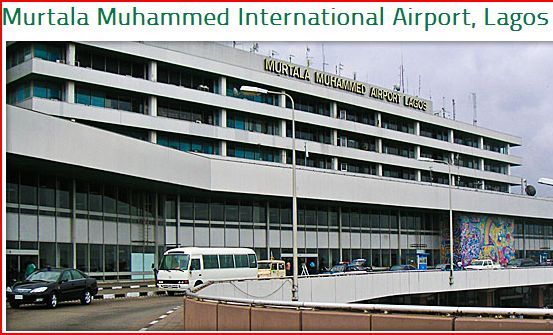
The theft of valuable and cherished personal belongings from the baggage of passengers arriving at the Murtala International Airport is a big deal.

It is time to call out the management of the Federal Airport Authority of Nigeria (FAAN) and the directors and management at Nigerian Aviation Handling Company (NAHCO) Plc to answer questions on why travellers’ items continue to grow wings on a daily basis when they arrive at the International Airport, Ikeja.

Murtala Mohammed International Airport, Ikeja, Lagos

Murtala Mohammed International Airport, Ikeja, Lagos

One anonymous Mr. Lagbaja spoke on behalf of NAHCO when Premium Times made enquiries about the pilfering of baggage at Lagos airport. His comment was typical: no passenger had come forward to report the matter to NAHCO!

OK! We are doing so now. I am making a report on behalf of thousands of people who have complained about these criminal activities over the past decade.

The truth of the matter is that there are criminals working at the Murtala Mohammed Airport (MMA) and they are responsible for the theft of items from travellers’ bags daily.

Arik airlines spokesman Ola Adebanji said that missing items from aircraft was commonplace worldwide citing instances from the US. I think it would have been better for this man to keep quiet rather than exposing his ignorance on public relation management.

Then the NAHCO employee continued, our Mr. Lagbaja said that if such incident occurred, the passenger had the right to report the matter to the airline he or she used for the trip. “We advise the victim to formally report the incident either to the airline or the Consumer Protection Unit of the Nigerian Civil Aviation Authority at the airport”.

Why don’t people report the theft of their personal belongings that occurred before the baggage hits the conveyor belt? The answer is too simple. People don’t believe that reporting the thefts will bring back their belongings. Almost every traveller knows that it is no-brainer to tackle FAAN or NAHCO workers at the Airport on missing items.

The question and answer sessions that will go along with the reporting which may include making a police report can cause a fragile traveller to develop a heart attack. So, indeed nobody will be willing to make any report. No one has the time to drag issues with airport authority on missing items. It is different when the suitcases or baggage do not arrive. Then it’s normal to take up such cases with the concerned airline.

FAAN

FAAN

Somebody or some people at MMA, FAAN or NAHCO should be getting sacked if the seriousness of the matter is to be handled appropriately. The undeniable fact is that criminals open the baggage of travellers and they pick out items that now include hand-held computer tablets. These disgraceful acts take place usually between landing and when the bags hit the conveyor belts.

Some of my friends who visited Nigeria recently (this year 2014) had tales of woes to tell about the items that were stolen from their baggage. I am not talking about one person only; I am talking about a group of people whose items were ransacked between landing and the conveyor belts. Gifts bought for friends, family and even children went missing.

This week, I read how several passengers are also lamenting about their missing shoes, bags, gift items and other accessories that they thought should be saved in their travelling bags. The report was in the Premium Times of June 16 2014. How did criminals get on the employment services at such a sensitive place as the International Airport?

There are so many investigations that need to be done regarding these persistent criminal activities. For example, what is the connection between the length of time it takes for the baggage to hit the conveyor belt and the numbers of items/ goods stolen?

Are the long delays in delivering the baggage to the conveyor belts connected to the fact that these men and women who are off loading the aeroplane need so much time to open and pilfer travellers’ baggage?

NAHCO

NAHCO

Is it part of the employment contract that you must be sticky-or light-fingered to work at that department at the airport? Who takes away all the stolen items? Are the stolen items delivered or remitted to the bosses and directors and shared among all the “criminal” workers?

What is going on at MMA? What is going on at FAAN? What is going on at NAHCO? Who are we going to hold responsible for the missing items? The workers? The Directors? The Board?

When some of us complain about these things, we always hear some people say “noo o!!” that was before! Nobody is stealing again at the airports! We have heard similar stories before at the sea-port; we hear…noo o! No more port rats! Then importers started welding their cars and vehicles like armoured tanks before they hit the international waterways heading to Nigeria!

But the denials on the part of Nigerian airport authority or NAHCO are the usual lies! There are definitely still criminals working at MMA, just the same way the sea-port rats never left.

It is not acceptable when airline or airport officials state that these criminal activities are common around the world. There is a difference between lost and found items or forgotten items and the items that are deliberately removed from travellers’ bags by airport workers. The act of pilfering is not common around the world. In any case there can never be a good reason why criminals should be employed and allowed to remove things from our bags at MMA.

Are there cameras at the terminals to follow the arrival of aeroplanes at the terminals? Are there cameras to follow the progress of baggage until they hit the conveyor belts? At what point exactly do these “airport rats” have the courage to open bags and suitcases and remove items? Who is the head of this organised crime at the airport? Is it something that is approved by the directors of FAAN and NAHCO?

Someone heads the human resources department where these criminals were approved for employment. That person’s integrity is also at stake here. So also are the managers or directors in charge of landing and transportation of baggage from the aircrafts to the arrival hall.

Again, many people are too busy and do not have the time to bring about their cases to the appropriate authorities. This is because once the items are gone, there are no means to trace or find them. People are tired of the way things work in Nigeria. They don’t trust the system and they just “conform” and move on with their lives.

The severity of this painful experience of pilfering cannot be over emphasized. My friends lost so many valuables that they were almost crying when they narrated their stories. This cannot continue and this essay should not be treated as a rant. There is a need for action and I hope that the directors or board members who are tagged in this essay will find a reason to call an emergency meeting to address the embarrassment that the staffs of MMA/FAAN/NAHCO are causing them and their reputations.

Some of us have great difficulties to work out the functions of the various uniform people at the airport. We get totally confused by the several people doing the job meant for one computer or a simple machine!

We need answers (and not denials) from the management of both FAAN and NAHCO.

FAAN is a service organization statutorily charged to manage all commercial airports in Nigeria and to provide service to both passengers and airlines. Its managing director and chief executive at the corporate headquarters in Ikeja Engr Saleh Dunoma must ensure that stealing from passengers’ baggage ends immediately. He cannot claim to be new on the job.

Mr. Wendell Emeka Ogunedo is FAAN’s director of security services. Dear Mr. Ogunedo, how secured are our baggage when they arrived at the airport in Ikeja?

Hajia Salamatu Umar-Eluma is in charge of FAAN’s human resources. Ma, does your office run a background check on those people moving our baggage at the airport in Ikeja? Is it NAHCO’s fault that our things are stolen?

Barrister Ikechi Uko is the director of administration. Can he tell us how security measures will be administered to stop this mess? FAAN must work together with the other agencies at MMA to ensure that they put an immediate end to pilfering at MMA.

NAHCO’s mission is to be the leading service provider in the African market. Unfortunately all the core values of NAHCO are questionable with this permanent trend of stealing from passenger’s baggage. There is no integrity when bags are opened and things stolen from them. There is no respect for individuals when NAHCO workers steal from passengers.

The chairman of NAHCO Mr. Suleiman Yahyah must call his workers to order. Nigerians need to be sure that the stolen items are not ending up on his desks!

The vice-chairman is NAHCO is Mr. Denis Hasdenteufel. How is he working together with the chairman to ensure that criminals are not working for NAHCO AVIANCE?

Altogether there are about 12 directors at NAHCO. Their areas of responsibilities and job descriptions are other areas that would be of interest when some of us look for information on NAHCO’s website. It is clear however that NAHCO is responsible for aircraft handling, amongst other services that it provides at the airport.

An average traveller does not really know the interrelationship between FAAN and NAHCO or their terms of agreement. People just want to be sure that when they travel to Nigeria that their bags are not tampered with. As a people heading to Nigeria we don’t want to develop any panic or heart attack just because some thieves working for NAHCO or FAAN are going to steal our personal belongings or the gift items in our baggage.

Those who manage the Lagos Airport must stop living in denial. They should wake up; smell the coffee and live up to their responsibilities. What is important is for them to educate their workers. NAHCO for example must ensure that its core values do not exist only on papers, but in actions. By all or any means, those whom we entrust with our baggage must stop stealing our personal belongings.

aderounmu@gmail.com

Brazil 2014: This Time For Africa?

By Adeola Aderounmu

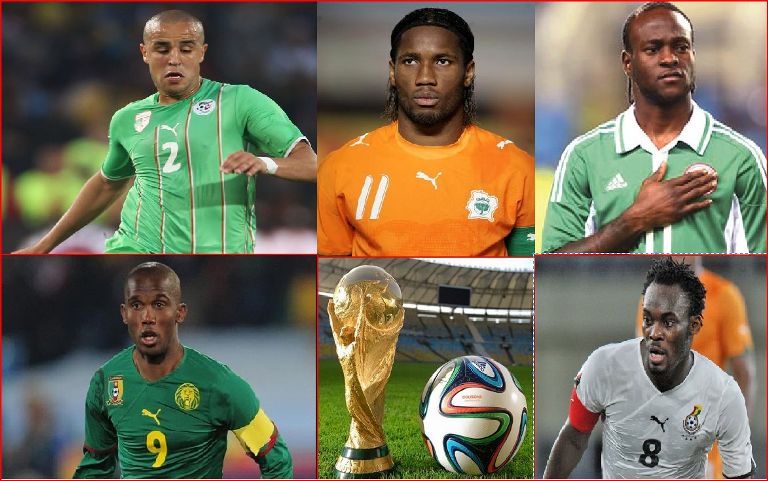
World Cup Africa

Nigeria, Ivory Coast, Algeria, Cameroon and Ghana will fly Africa’s flags at the world cup which starts on the 12th of June in Brazil.

Egypt went to the world cup in Italy in 1934. That was the first time an African country featured at the championship which started in 1930 in Uruguay. Since then 13 countries in total from Africa have participated at various editions of the mundial. The other 12 countries are Morocco, Zaire, Tunisia, Algeria, Cameroon, Nigeria, South Africa, Senegal, Angola, Ivory Coast, Ghana and Togo.

When Africa’s representatives at the world cup for 2014 arrive in Brazil this summer they will be chasing an unfulfilled dream-that an African country is ripe enough to win the world cup.

To make this dream come true, Cameroon will have to cross the hurdles in Group A where they will do battle with the host Brazil, Croatia and Mexico.

Cameroonians are playing in their 7th world cup. This is an African record. But what has Cameroon got to show for previous appearances? The best exploits came in Italy in 1990 as the career of Roger Milla was winding up. Cameroon was beaten in the quarter finals by England. After Italian 90, Cameroon quickly transformed and became “not indomitable”. For an African country to win the world cup, consistency must be shown.

Ivory Coast is a country also in need of consistency and even more, delivery. This country must emerge from Group C that include Colombia, Greece and Japan.

The men representing Ivory Coast and led by Didier Drogba are the popular golden generation that has won nothing to show for the name tag-“golden”.

This is the third straight world cup for the so called golden generation. They failed to emerge from the groups in 2006 and 2010. Any country that wants to win the world cup must be able to emerge first from the group. It will not matter if the group is mildly classified or if it is termed the group of death.

One country that shaped the organisation of FIFA’s world cup after the 1982 edition was Algeria. In 1982 Germany and Austria “sold” their last game “to each other” so that Algeria could be eliminated. You need to find and read that story if you love the history and football. In 1982, the Germans and the Austrians brought huge shame to football.

Football scandals or match fixers are not restricted to Asia or any particular geographical part of the world. Rather it is something that has been a part of football at every level and in almost every country for as long as the game has been in existence. The roles of FIFA officials in recent reports seriously brought the game into disrepute, again. Yet, this is a game people love no matter the problems related to scandal or “arranged outcomes”.

After the 1982 games, FIFA decided that the last games in each group will be played simultaneously. Algeria will try to emerge this time from a group including Belgium, Russia and South Korea. If they find the form again like they did in 1982, they have a chance of making Africa’s dream come true.

To put Africa’s name on the map as a world cup winning continent can also become a dream come true through the hands of the Ghanaians. Ghana is also making a third straight appearance.

In 2010 on the African continent Ghana reached the quarter final stage where they fell to Uruguay. That match will not be forgotten easily in the stories of FIFA senior world cup.

Luis Suarez had to become a “goalkeeper” at some stage to save the ball from going into the net. It was a sad day for Africa as Ghana failed to convert the extra time spot kick that would have sent them to the semi-final stage. Our dear brothers lost on penalties.

This year in Brazil, Ghana must scale Germany (the match-fixers of 1982), Portugal and the United States in order to prove that African countries can show consistency and make serious claims to world cup glory at the senior level.

African champions Nigeria will also be making another attempt to show the world that an African country is indeed prepared to win the world cup. Nigeria must emerge first from a group that includes familiar foe-Argentina, Bosnia-Hercegovina and Iran.

This is the second time Nigeria is going to the world cup on the back of a Nation’s Cup victory. The first time was in 1994 when Keshi was the captain of the team and Clemence Westerhof, the coach.

In 1994, inexperience was the bane of the Super Eagles as they were bundled out in the second round by the Italians. In 1998, Nigeria was again bundled out in the second round by Denmark.

In 2002, Nigeria had a disgraceful participation in Korea/Japan. In 2006, Nigeria was missing at the German edition. Back in South Africa in 2010, Nigeria failed again to emerge from the groups.

Through the years, bad planning, maladministration and useless preparations have ensured that Nigeria just added to the numbers of the countries going to the world cup.

To date, especially since the Algerian exploits of 1982 and the Cameroonian efforts of 1990, the performances of African countries since 1934 (though sporadically filled with some other brilliant moments) have not matched the expectations of the people of Africa.

Brazilian legend Pele predicted that an African country will win the world cup at the turn of the last century. It did not happen. Even at the time that the profiles of African players rose both on the continent and abroad, it has been impossible for Africa to deliver on high promises.

In South Africa when Ghana crumbled, Africa returned to square one of the struggle to win the world cup.

The organisation of football on the African continent needs a range of face-lifting processes. In North Africa, it appears that the organisation has always been solid. There were a lot of set backs in some North African countries as a result of the Arab spring. But some countries (like Algeria) are reported to be making big strides even attracting players from France to the Algerian league. One hopes that Egypt will rise again.

If Algeria makes progress in Brazil or if her football becomes a reference point irrespective of how they end this tournament, fingers will point at the growth or promises shown at the domestic league.

Among the other African countries representing Africa at the forth coming mundial, Nigeria will be of concern to Nigerians, definitely. Since the first appearance of the country at the world stage in 1994, it has been a permanent impossibility to uplift the game on Nigerian soils.

Nigeria as country or Nigeria comprising of several regions has a population that could turn anything profitable into a goldmine. Sadly like many other things that Nigerians have failed at, including governance itself, football in Nigeria has not been revived since its collapse I would say in the mid 1980s. I may be wrong with the actual date but I remembered how it was fun to watch Leventis United, and Abiola Babes when I was in early secondary school.

Today the English Premier League, the European Champions league and other foreign leagues are very famous in Nigeria with huge followership. The gains that Nigeria should be making in marketing of her own football is totally diminished or drowned.

This essay is not about recounting the problems with Nigerian football or Nigeria as a failed country. It is not about Nigeria as a dead giant of Africa. If one does not draw the lines, the discussion will move from football to every aspect of Nigerian life. It’s very hard to separate the lost glories of Nigeria in almost every aspect of human endeavours.

For one month between June and July 2014, Nigerians will expect the boys that will be selected by coach Keshi to deliver. Many of these boys are plying their trades abroad. Invariably they have been polished by other systems. The exposure is brilliant but when the days and years are running out, many of these boys cannot return home to wrap up their careers like the Brazilians or the Argentines do.

They do not have to finish their careers on the Nigerian soil but the argument is that the level of football in Nigeria in terms of planning, organisation, administration, execution and overall sustenance is not yet in the right hands. Nigerians know these things but for them everything is politics.

As long as there are functional leagues abroad (even in neighbouring African countries like Benin and Togo) where Nigeria’s talents can be nurtured or even de-processed by making them change their roles on the pitch, it is fine with those in the glass house and their pickers in Abuja.

The biggest indicator of the gigantic problems facing Nigeria’s football is the failure of Nigeria since 1985 to transform the glory of the young players (Eaglets especially) into something that the world can emulate at the Super Eagles level.

For an African country to win the world cup will not depend of luck or unexpected favours from some quarters. It will depend a lot on management of the game on the continent. That’s where CAF comes in. This body needs revamping and dynamism. It needs a new life.

The progress of African football will also depend on national organisations like NFF of Nigeria. What are they doing to promote the game in all spheres (on the pitch and off it)? Are there serious plans to encourage more youth, more women and anybody interested in the game to pursue their careers knowing that they have a foundation to rely upon?

Africans must also overcome the mental incapacitation that FIFA rankings can infuse on the mind. The best place to play football is on the pitch. Moments like this-in Brazil provide the opportunity to send the FIFA ratings to the dustbin. Football is dynamic and it moves from one game plan to the next.

The future of African football, its organisation and management on the African soil will play significant roles and the world will see these upliftments when an African country eventually wins the world cup. It’s been a long wait but it must happen in the future. July 2014 is part of the future.

aderounmu@gmail.com

Nigerians, You Lost A Paradise (A Photo Essay)

By Adeola Aderounmu

In several of my essays on Nigeria I have made references to what my parents told me about Nigeria. I remember one story about my mother walking about Lagos in the middle of the night. She told me there was nothing to be afraid of living in the old Western Nigeria. People lived like normal people and go about their businesses round the clock.

There was 24 hours a day form of existence, transportation was uninterrupted and life was full of hope and happiness. The future looked super bright. When she told me stories about Nigeria in general, she brought the good olden days in Western Nigeria to life in my imaginations.

Unfortunately for Nigerians the future is here now and it turned out super bleak-full of extreme hopelessness and frustrations.

Invariably Nigeria was once upon a time a paradise on earth until some people decided to reverse the gear of progress. Greed and outright madness took over the people-both civilians and military-entrusted to manage the affairs of Nigeria. Sometimes these people have not been chosen, selected or elected; they took over governance by force or through violence. Then they enforced their own rules and mode of governance.

Nigerians lost their paradise when they could not take back the control of their regional and geographical areas from the tropical gangsters who strangely are somehow still in control of the affairs of the land until today.

My mother told me that security especially took a turn for the worse after the civil war ended. In general, evil rose after the war as weapons remained in the hands of the people. Greed and selfishness set in at different points during pre and post-independent Nigeria.

In many ways too numerous to describe here, Nigerians lost a paradise

Cross River Conical Stone

Cross River Conical Stone

This conical stone is from Cross River State. It stands in front of the National Museum in Lagos. One of the things that went wrong in Nigeria was the drop in the standard and value of education. How many Nigerians visit the museums to learn about their history? Today the ignorant people who run Nigeria’s education have suggested that history should be removed from the curriculum. Nigerians will forget their history totally and the magnitude of historical distortions 100 years from now will be better imagined than experienced.

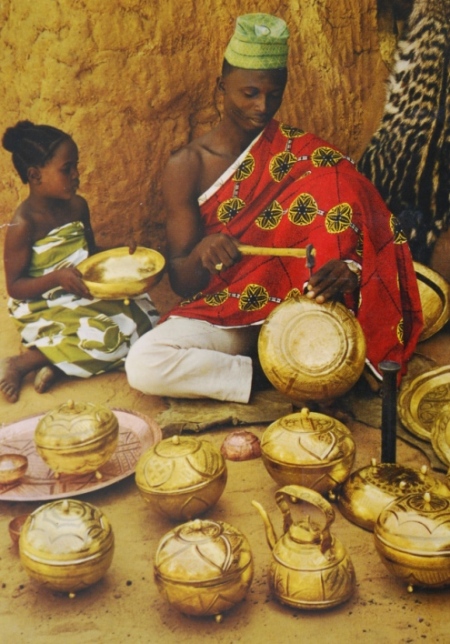
Brass smith in Bida

Brass smith in Bida

This is a man doing his work. That was Brass smith in Bida. We always say there is dignity in labour. Today that expression belongs to the dustbin in Nigeria. Several Nigerians just want to be part of politics so that they can steal and accumulate money and wealth for themselves, their families and unborn generation.

Those who are not stealing in politics are also looking for ways to cut the corners in whatever they do. In public and private enterprises the “make quick money syndrome” has taken over almost everybody. People now believe more in “if you cannot beat them, join them”. Such is the low mentality of an average Nigerian today.

Honesty is now a disease in Nigeria. People who are honest and trustworthy in Nigeria have joined the list of endangered species. One day somebody told me that I cannot be a politician in Nigeria. When I asked him why, he told me that people working with me will either kill me or poison me if I prevent them from stealing in politics.

He said they might even cut my head off. He was trying to emphasize that I cannot do politics in Nigeria if I am not ready to steal. From what we see and know about Nigeria today, that illustration is correct. It’s very sad, disheartening and a piece of the evidence that the paradise may be lost forever.

Decorated Pots, Sokoto

Decorated Pots, Sokoto

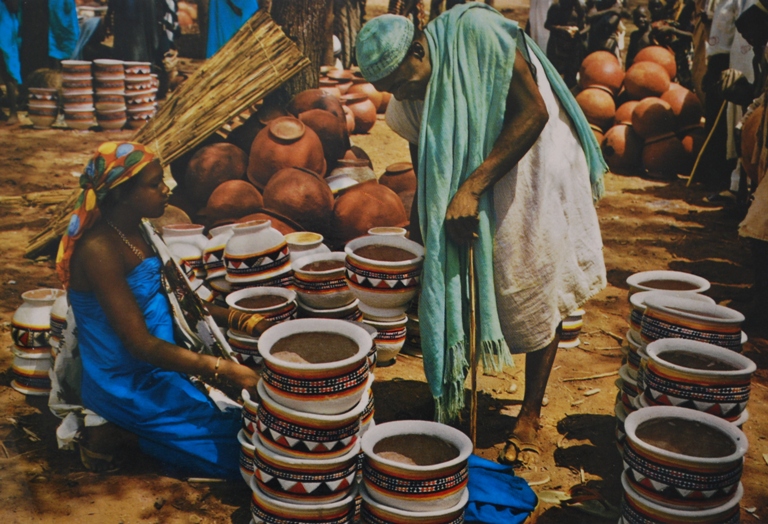
Here above is an image of a girl selling decorated pots in Sokoto, Northern Nigeria. This must have taken place at those times that my mother described to me and what I will call Nigeria’s golden years. At that time when there was still dignity in labour. Some of the pots are not decorated but they look so beautiful you want to have them for your next party or family cooking.

Old Western Nigeria

Old Western Nigeria

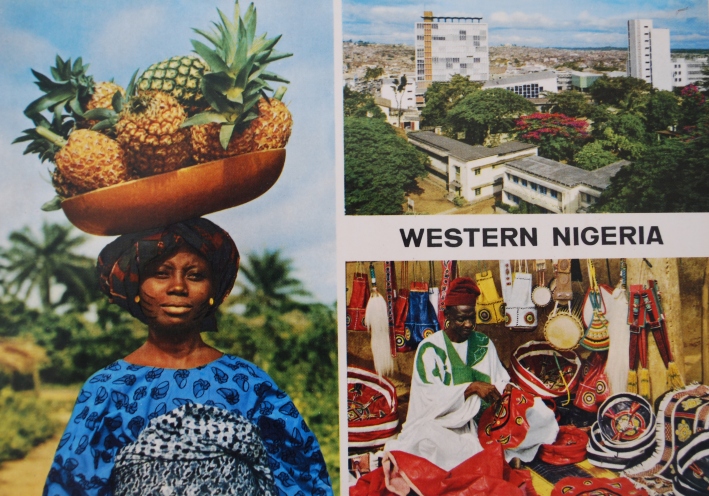
Western Nigeria was part of the regions that made up the Nigerian paradise of the olden days. It is hard to miss the blend of even development and environmental preservation. Look at the beautiful trees among the industrial revolution of old western Nigeria.

One cannot miss the hard work and the quality of the products that this craftsman is making. The image did not say where the man comes from but he was well dressed in native agbada. Interesting I have at least 4 of the items in his production line in my possession.He was not only selling cultural products, he promoted his culture as well by representation.

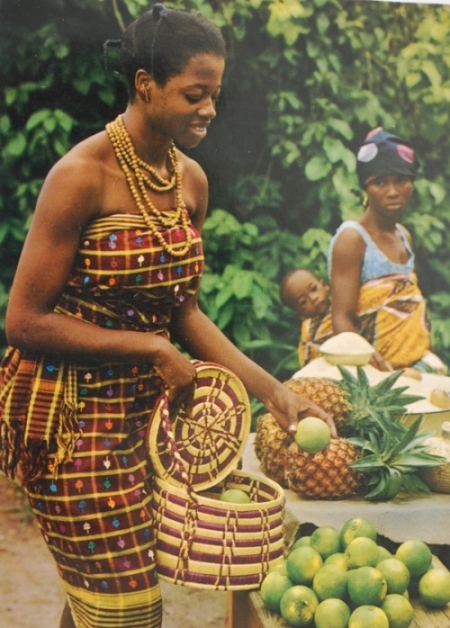
The woman carried healthy fruits. She was also well dressed in Iro and Buba. She looked healthy and happy. She was probably selling the pineapples or just on her way from the farm. Agriculture was the backbone of the Nigerian paradise. Crude oil later became a curse.

A Market Place in "old" Nigeria

A Market Place in “old” Nigeria

This is another beautiful image from the time when Nigeria was a paradise on earth. It was at that time that it would have been proper to describe Nigerians as the happiest people on earth. Some recent global reports describing Nigerians as the happiest people in recent years when the security is low, the roads, schools and hospitals resemble monuments of catastrophe, the economy is good enough on paper only and at a time when majority of the people are living dangerously from hand to mouth, are not only misleading but also irony of the highest order.

The Famous Kano Mosque

The Famous Kano Mosque

In my recent but last essay I described religion as one of the greatest problems in Nigeria. Religion is one of the reasons why Nigeria went from paradise to hell on earth. These are people worshipping peacefully at the famous mosque in Kano. People worshipped peacefully across Nigeria in the olden days. But the agents of prosperity in the face of dwindling economic fortunes changed the mode of worship in Nigeria forever.

Rather than guide the people to demand good governance and accountability, the foreign religious institutions in Nigeria headed by the new-age Nigerian overseers told people to pray. At the same time the people whose actions and activities contributed to converting Nigeria from paradise to hell were active members of various religious organisations.

The situation remains the same today as looters parade churches and mosques every Friday and Sunday. Nigerian looters are popular faces at religious crusades. Religion became a means to wealth for the religious rulers and many young people today are religious fanatics especially after years of joblessness. Politics in Nigeria got contaminated with religion and the outcomes including terrorism and mistrust in the society remain devastating to this day.

Nigerians love to chase shadows. Oh! How they enjoy denying the knowledge of basic truth! Apart from the resurrection of regional governance (the possibility of which is already being thrown away at the “organised” national conference) another hope for the restoration of the Nigerian paradise will be the total eradication of religion(s) from public service.

Issues like pilgrimages for example need to be taken away from government functions. Churches and mosque in/around government establishments need to be demolished. People need to just do the right thing rather than hide under the umbrella of religion while they ruin the state or country.

People don’t need to pray for good roads, good schools, and good hospitals and so on. What Nigeria need across all her geographical regions are the good and honest people who will use the budgetary allocations to do these things. Prayers don’t build roads or schools when the funds have been stolen or embezzled. That is common sense and application of the knowledge of the truth – that which always set people free.

Meeting of the "WAYs" Water, Rail. Road , Old Lagos.

Meeting of the “WAYs” Water, Rail. Road , Old Lagos.

In this picture we see some of the things that millions of Nigerians today have no experiences of. There was a functional train in service. The roads are clean and motor-able. The cars were in the correct lanes-2 lanes and no mad driver on an artificial third lane. There are no LASTMA people on the road; people had a sense of belonging and responsibilities.

On the right side the area is enough for pedestrians and cyclists and on the left side, there is a bicycle track along the major road and also there is a pedestrian path with adequate distance to the train tracks. Life was good, normal just like in a paradise. The street lights are standing upright and there is a stretch of beautiful garden in the middle adding glamour, peace and tranquillity to the streets of Lagos in the old western Nigeria.

Apart from air travel, all the other modes of transportation are depicted in this image. There are no ferries in the image but the idea was to state that they were all available in the old Lagos.

This is the type of image of Nigeria from the past that some people will never know about. Millions of Nigerians have lived and died within the period that the paradise was lost. This means that they actually, sadly enough, passed through life without the experience of a good life or the taste of the real meaning of life. If nobody talks about these things and if nobody makes reference to the things that existed under regional governments millions of Nigeria will live and probably die not knowing that there entire future and happiness were stolen from them even before they were born.

All of my life time in Nigeria, I do not recall the privilege of taking a ride on the train. One day however I took the “Baba Kekere” ferry service from Mile 2 to CMS. It must have been some time in the mid 80s. But as a young boy I remembered the many rides on the LSTC buses in the late 70s and early 80s. I know the number on the buses and their destinations from Festac Town. Those were the end of the good old days.

In today’s Nigeria the paradise is lost. This lose will be permanent for several millions of Nigerians living in Nigeria unless radical political changes and turnarounds occur today.

The paradise will remain lost if one man or a group of people can steal 20 billion dollars and walk free. In the 1970s we saw a man making brass in Bida, in the 80s we saw a man from Minna who stole more than 12 billion dollars of Nigeria’s oil money. He walked free! How did Nigeria go from promoting dignity to embracing criminals? The answers will shed light on how to lose a paradise in 20 years or less!

Nigeria lost their paradise because they allow military juntas and politicians to handle public services and politics like profitable businesses that is devoid of probity and accountability. The paradise will remain lost in the face of non-sensitive rulers and non-functional political structures.

The negative outcomes that follow a lost paradise are too numerous to elaborate but they are largely visible on a day out in various parts of Nigeria. Nigerians need orientation in almost all aspects of their lives. Social studies, moral instructions and history were part of the foundations and orientation in primary education. They still cannot be overemphasized in a society with solid foundation in education.

In a lost paradise, pensioners are crying, students are not getting the correct education, graduates are jobless and the society is on a free fall. In Nigeria, a country heavily polluted from all angles, good health is a luxury. There are almost no consequences for political and economic crimes. There is no sense of belonging and the first and the last law is the same: the law of self-preservation.

When I think about the issue of electricity in a lost paradise, I can’t recollect much from Obele Odan in Surulere but it has always been a pain to recount what we went through in Festac Town. We got a beautiful town with our own transformers and local power system.

Everything went down the drain right in front of our eyes. Growing up in Nigeria for my generation was a traumatic experience. Yet we were not given any social or psychological help by the state or the federal system. We fend for ourselves.

At that time (when I was growing up) the system was under the management of the wasted generation. These are the words of Wole Soyinka, as he aptly described his generation, my parents generation unfortunately. Until this day in Nigeria, the mis-management of Nigeria remains largely in the hands of mostly crooks, criminals and idiotic people who cannot manage their homes. How they got to the positions where they have to manage public services and government institutions summarises the story of Nigeria as a lost paradise.

A paradise can be reclaimed. Nigerians, you lost your paradise when you gave up your sense of belonging in the various regions and allowed a powerful center to destroy the entire system. You cave-in and followed a “rotten head” all the time. The paradise lost is actually the sum of all your negligence and attitude to work, environment and life.

It’s going to be a hard fought battle, but you need to bring back the paradise for the sake of your children and children’s children. Take another look at the images in this essay; you’ll see there’s a need to do away with the rotten head or any rotten head for that matter.

Do away with the center altogether. Claim back your regions, do the right thing all the time when it comes to public service and dedication to local and regional development. Be selfless and content. Start your charity (in this case your love of humanity) again, from home. It will spread. It will bring the paradise your children deserved.

aderounmu@gmail.com

PHOTO CREDITS

Akwashi Conical Stone (from Cross River Area)

(By Elisabeth Seriki)

Brass Simth Bida

By John Hinde F.R.P.S

Decorated Pots, Sokoto

John Hinde

Western Nigeria

John Hinde

Famous Kano Mosque

John Hinde

Market

Photo by E, Ludwig, John Hinde Studios

Lagos, Meeting of the Ways: Water, Rail, Road

By The Railway Printer, Ebute Metta