The Boys From Festac

By Adeola Aderounmu

When Bimbo Fatokun came to Sweden in 2002 for a football trial at Djurgården the first question he asked me when we met was “Omotayo, which club are you playing for”? I told him I came to Sweden to continue my academic studies. It was not all of my dreams that came true.

Over the years I’d pondered on what happened to some of us, the boys from Festac.

Bimbo left Nigeria back in the 90s to ply his trade abroad. He is very talented, athletic, quick and skilful. He is one of the best strikers/forward I’d ever known in my life. He played for Antwerp for several years and remained settled in Belgium with his wife and children. He didn’t reach the fullest of his potentials but he did his best. We had hoped that Bimbo would play for Nigeria one day but it did not happen. I had a short discussion with him about this in 2002 and I respect his views and will keep them off the web.
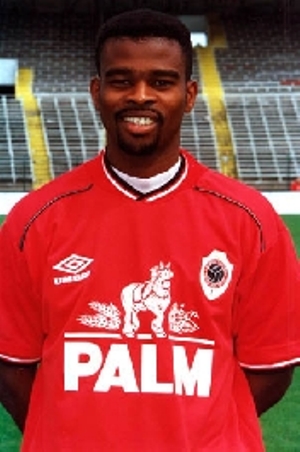
Bimbo Fatokun

Bimbo Fatokun

There are quite a number of boys from Festac who reached the national teams of Nigeria (at various levels). Sunday Oliseh, Samuel Ayorinde and Victor Agali are notable examples. I think the Ipayes also have links to Festac Town. Wasiu Ipaye on 401 Road was one of my closest pals before I left Festac Town. A very humble guy, he is. I heard that some younger generation of footballers from Festac Town have represented Nigeria too in recent years. I wouldn’t know them personally.
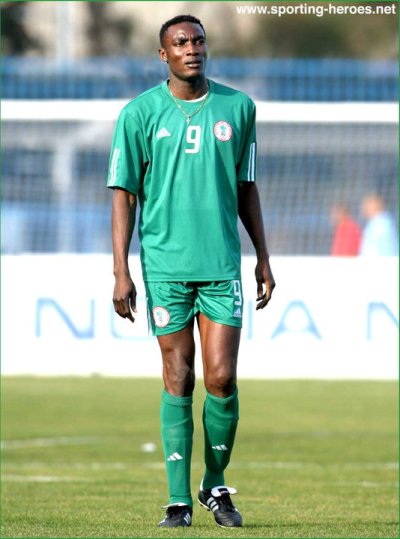
Agali

Agali

You won’t read about all the boys from Festac in a single essay and some people will probably get upset with me when they find out that their names are missing in this short story about the boys from Festac Town. Yes, it is a bias history. I write only about some of the boys who played with me and a bit after me.
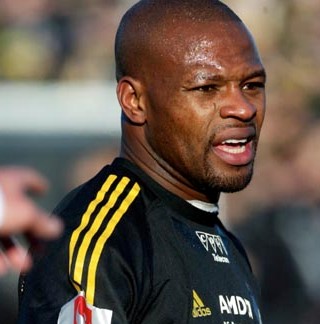
Samuel Ayorinde

Samuel Ayorinde

George Ekeh is the eldest of 3 brothers from Festac Town who are football talents. I remembered the first time I saw George playing football as a boy. He was under the age of 10 at that time. I marvelled at how such a small boy could have so much skills and confidence on the ball.
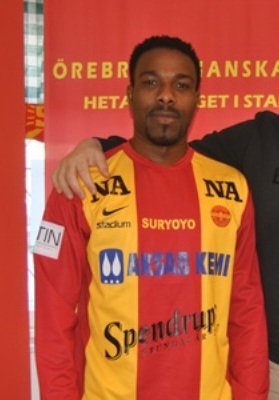
George Ekeh

George Ekeh

As a young teenage striker, George can hold and guide the ball with extreme mastery. I admire his skills. George probably did not hit the apex of his talents on the big scene but he went on to play in many countries around the world. I like him very much. He’s settled in Sweden.

Emmanuel Ekeh followed in his brother’s steps and he’s the one that still has more time on his hand to proof what he can do with his boots and skills. I watched a few of his clips on YouTube. He has such a pace and he’s got good vision to make precise passes.
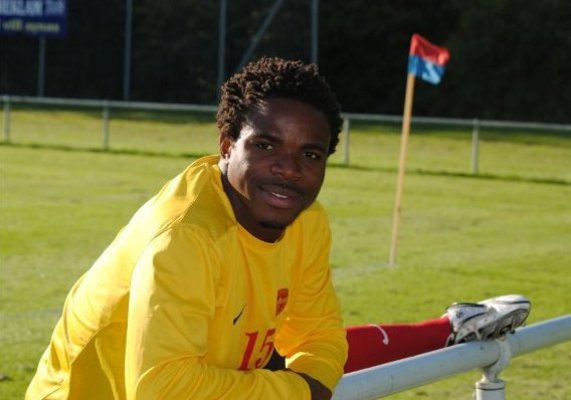
Emmanuel Ekeh

Emmanuel Ekeh

Kingsley Ekeh is a well known player in both Portugal and Cyprus. Famously called King he shone like a millions stars during his playing career. He quit in 2012 and became a scout for his former team.

Life can bring many twists. When I watched or played together with George sometimes, I never saw Kingsley on the football field. In fact, all my years in Festac Town, I didn’t see Kingsley kick a ball. He was always talking on the sidelines. To be honest, Kingsley can provoke anybody back in the days and you can’t win over him in an argument. I actually thought it was a joke when I heard that he was a professional footballer. I do hope to see Kingsley soon. When I do, my first question to him will be “come, which time you start to play ball sef”?
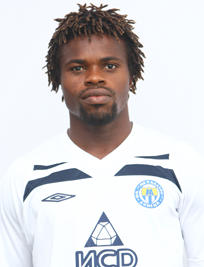
Kingsley Ekeh

Kingsley Ekeh

Azubuike Oliseh probably enjoyed the influence of his brother Sunday Oliseh in gaining international prominence. I have to be honest. This guy trained hard to ensure that he carved a name for himself. However, not everybody will agree with my last submission because despite playing for big teams in Europe, it was obvious he didn’t have the skills and fluidity of Sunny his brother.
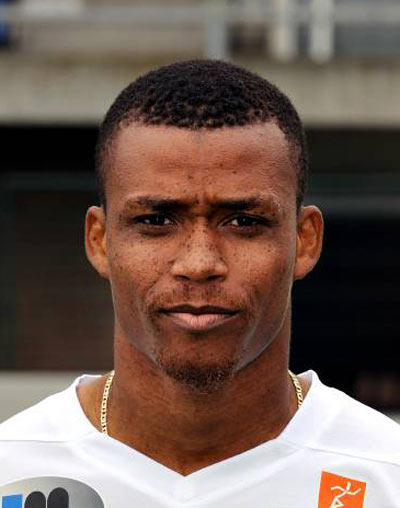
Azubuike Oliseh

Azubuike Oliseh

The youngest Oliseh that I know, Egutu Oliseh still plies his trade as well. We never played together. I saw him grow up and I saw him at the Sunday services many times along with the rest of the family.

Egutu Oliseh

Egutu Oliseh

To complete this short story about the boys from Festac, I called up Femi Oladele in the middle of it. Femi is an encyclopaedia of Nigerian football. He grew up in Festac and studied Veterinary Medicine at ABU. But today he holds a Phd in sport administration from a German university.

As a result of his passion for football, he abandoned a PhD program along medical line in Sweden. I have convinced Femi to join me in writing the second part of this story. I have to forgive Femi though, he still doesn’t acknowledge my skills and I’m shocked he didn’t see any of my big games in Festac, Ebute Metta, Yaba Tech, Unilag, Mile 2 and in Ibadan.

Bassey of 23 Road did not turn professional. The story of Bassey will be told differently depending on the speaker and how well they know Bassey. In Festac in those days you cannot separate Bassey and George Ekeh. I always find them near mama Ibeji’s shop, chilling and talking for long hours. They are always together in the evening to discuss how they played/trained during the day and they talk a lot about the future. They had the same dream. There was definitely a link between Bassey, George and the Olisehs. I am not in the position to elaborate. I was at the University of Lagos when many water passed under the bridge.

In any case, historically, I was probably one of the first groups of people who played football with Bassey in Festac Town. His family moved into an apartment behind ours. Hardly had they put their belongings in place than Bassey came down to find me and 2 boys playing football. Bassey joined me and we played against the other 2 brothers Dada and Oyinye.

I could say we played for about 1 hour and I almost did not touch the ball again. At that time, we didn’t know his name was Bassey. He was simply called “Ba”. Ba was running round the field with the ball practically fastened to his feet. He was short and very quick. I said to myself, “another footballer has arrived”. Bassey went on to be a household name in Festac football. I learnt he played for some clubs in Nigeria. From afar, I could see that he did not reach his full potentials.

Ubaka is a very close pal of Nigerian International Victor Agali, as I learnt. Obviously, I don’t have my eyes on all our potentials. I missed Agali to the extent that when people talked about him, I’m like….how come I didn’t know him? Well, I don’t think he knows me either!

I remembered playing against Ubaka’s team in one tournament on 71 Road/24 Road. He was a disciplined defender and very well respected as a young player. But when I’d played against him, it had been easy to beat his team silly. With all due respect, I was a fine striker and for being such a quiet striker, I had extremely good qualities and a ball sense that is extraordinary. I did my share of damage to many lines of defence and teams.

Another boy who’s really very close to George and Bassey is Emeka Okpor Anthony. I think he’s career was punctuated by a series of injuries right there in Nigeria. I learnt in particular that he had a recurrent shoulder problem. A great talent and a clever defender, Okpor is a graduate and he also has a coaching qualification from NIS. He is nurturing young talents and looking ahead to becoming a great coach and motivator.
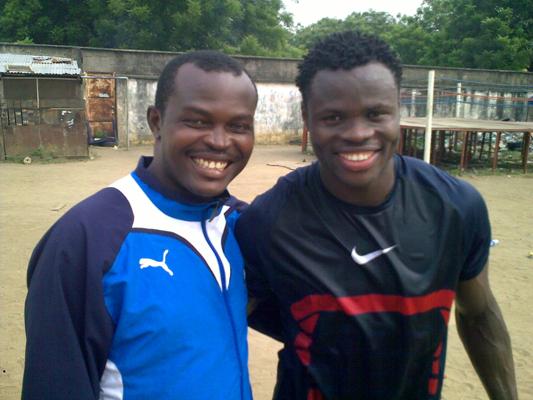
Emeka Okpor and his friend Taiye Taiwo

Emeka Okpor and his friend Taiye Taiwo

There’s abundant joy when you help other people to reach their dreams even if yours suffered a setback. Setbacks are not meant to be permanent hindrances to happiness and contentment in life.

In Festac Town when I was growing up, Ebere was the most composed player on any football field. Ebere continued to tell us that his father preferred his education to his football career. He had dribbling skills that reminds you of a combination of both Maradona and Okocha. He topped those qualities with his eyes for goals. Whilst Bimbo was quick- actually one of the best sprinters in 100m in Lagos State in those days, Ebere was calm but they were both strong and they find the back of the nets in different ways. We have talents in Festac Town.

We had Dapo of 5th Avenue D1 close. He was a player in a world of his own. He combined well with Ebere during their school days at Mile 2 Boys. At that time, Amuwo Odofin Boys Secondary School was a force to reckon with in the Junior Principal Cup. It was Ebere and Dapo who wrecked the defence line-ups across Lagos State.

I remembered playing one-on-one against Dapo one day on my way from school. They had a small park in front of their block of flats then. Today the park is no more. FHA stupidly sold the park and people built houses on them. Anyway, it was like “he tortured me when he had the ball, and I tortured him when I had the ball”. The rule was clear, “don’t lose the ball”. When I read Eden Hazard’s interview and how he became clever at dribbling by playing in the garden with his brother, I remembered what I went through playing alone with Dapo.

One of my best friends through the years Modestus Okechukwu Okafor played for many years in the German Amateur league. He finally settled there and we even spoke over the telephone less than one week ago. Oke as he’s fondly called was the one who tried to tell me more about Victor Agali. He’s still not able to understand how I missed the Agali’s story. Apparently, Oke lived on 22 Road when he was a little boy.
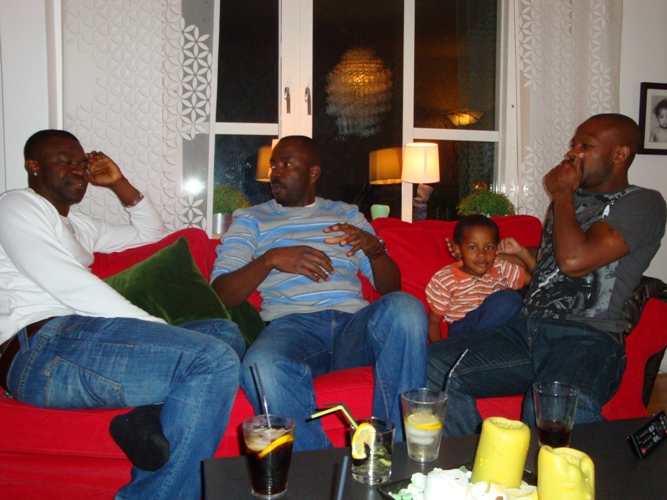
Okechukwu Okafor, Adeola Aderounmu and Samuel Ayorinde

Okechukwu Okafor, Adeola Aderounmu and Samuel Ayorinde

By the way I first met Oke by accident. I was on my way home from school one day. I stopped at a park near CCC, X Close on 5th avenue. I started to play football with the boys whom I met there. Then Okechukwu who went to a primary school on another side of town was also on his way home. He stopped too and joined us. Those days after school, our other occupation was football.

Later on by some stroke of fate Oke and I attended the same secondary school. Then I remembered him immediately. He has a built that is hard to miss. Still, Oke moved from 22 Road to 5th Avenue end that is near to 23 Raod. Since then, we remained very close friends and played on our “stone filed” everyday!

Chinneye Okolo, I almost forgot. What a left footer! He played with sense. Many of us back then didn’t just kick the ball. We were intelligent boys. We did well at school and we transferred that cleverness to the football field. I remembered my school mates like Wasiu Ikharia (a biochemist), Sanya Okanrende (a cardiologist). I mean these are finest amongst footballers!
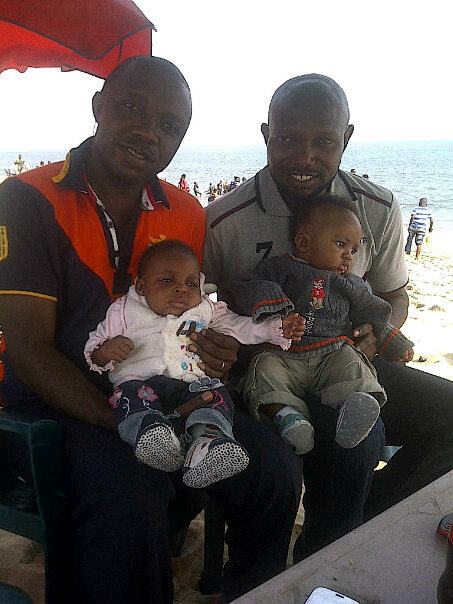
Afam and Nenye Okolo

Afam and Nenye Okolo

We had Kingsley Nzete who suffered a broken leg and we knew at that time that he’s not going further as a footballer. He got back on his feet again and started playing in between the goal posts. I salute his courage. We have another Bassey on 5th Avenue. I know his eldest brother lived and played in a foreign country but I never followed up on Bassey himself. Another fine player we still have in Asia is Gabriel Obadin.

We had Michael Fatokun, Solomon and Felix Uboh. Afam Okolo, and the Osuji’s of 401 road. If you want to write about the talents in the Osuji Family, you’ll need a whole edition of a sport magazine. The elder Uboh is Kennedy Uboh. He also went to the higher institutions. If he had been discovered, his football career could have earned him a place in Real Madrid’s line up. He was that good.

What about my friend Abideen, my cousin Tilewa Majekodunmi. There is Abega, a boy who loves football with all of his heart. I know Bauna on 721 Road and I remember many boys from the 402 end. We were players on the field!

This story will be incomplete without an analysis of how some of the boys from Festac failed to reach their fullest potentials and how many dreams were punctuated. We lost many boys along the way under different circumstances, many of them relating to health issues. Emotions have been high many times of how we grew up and the dreams we had.
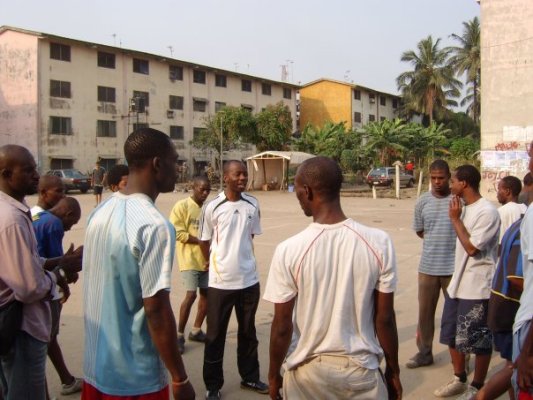
me and some boys on our stone field in 2006

me and some boys on our stone field in 2006

In the meantime as we continue to ponder on what could have happened to the boys who did not reach their full potentials or whose dreams were punctuated, we should be glad for the representations at the national and international levels.

We should be glad for the Olisehs, the Ipayes, the Ayorindes, the Agalis, and the Kingsley Ekehs, they did their best to put Festac Town on the map in the most positive ways. The Amunekes have very strong links to Festac Town and also to many of the boys mentioned in this essay. At some point Emmanuel Amuneke was living on 5th Avenue.

I am glad for Kinglsley Ekeh who reached his full potentials playing in Portugal and Cyprus. I am happy for Bimbo Fatokun, that he found the reasons to continue with his life in Belgium after a playing career punctuated by a few disappointments and unfulfilled promises.

I remembered how my team mates in the Oyo State NYSC in 1995/96 urged me to pursue that line. Niyi-our oyinbo from UI, Jato, Uche and the rest of the pack trusted me on the right flank and in the 6 yard box of our opponents. I hope they are glad for me that I decided to keep my pen and papers.

Today in Festac Town, there is scarcity of football talents. This is relative depending on who the observer is. When we moved to Festac in those days, there were football fields, playgrounds and parks in every corner. I wrote extensively about this here in the Village square (The Rise and Fall Of Festac Town, parts 1 and 2).

All the playgrounds are gone. There are no more football fields. I think only one major field was spared. FHA sold all our playgrounds. They sold all our parks. These are unforgivable acts.

In place of sports, football in particular, our youths have turned to crime and drugs. Festac became notorious globally as the town of 419ers. I also wrote about that in my story titled Festac Town and Its 419 reputation. There were many reasons why things took a turn for the worse in Festac and in Nigeria as a whole.

There is a need for Nigeria to return football to its glorious days. Today we all hail the EPL and in fact we worship the EPL and other European leagues in what appears like a permanent colonial mentality. Nigerian league can be made attractive again through good planning and administration.

The aim should be, “if our talents don’t go abroad, they should be able to live successfully playing football in Nigeria”. One way or the other the Nigerian intelligence needs to surface on the football scene. The market is huge. What are the problems?

Nigeria is very rich as a country and sport facilities should be at every corner of town. Our football stadia should be many, different sizes and world class standard. The training pitches should litter every community.

There are so many things wrong with Nigeria. It is sad that despite their love for the game of football, Nigerians allowed the sport to suffer as well.

I know that for many young talents, the dreams died. I think about many of my friends on the stone field: Suraju, Abbey and many more. How did I forget about Medo Obanya until now? Medo is one of the greatest talents to have emerged from Festac Town. His dribbling and goal scoring skills are extraordinary. His football career simply melted away right in front of our eyes. Who do we blame?

Even Nwike, Medo’s younger brother was a wonder boy on the ball. I didn’t forget Osaze and Richard Omoregie. It’s going to be an unending essay if I write about everybody that I know. Kelechi, all the best in the south of Sweden!
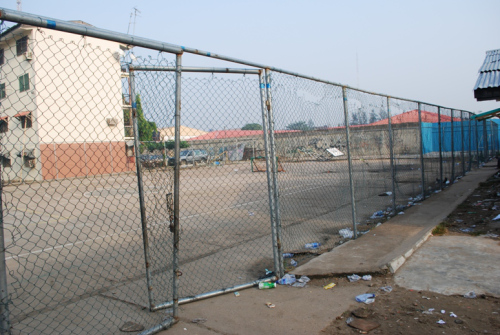
stone field in 2010

stone field in 2010

I’ve spoken to Femi Oladele and he should be the main contributor to write about the implications of what happened to the boys from Festac. I hope he will use his expertise in sport administration and his life experiences to write about how Nigeria can discover, develop and invest in her talents in football. There are many “boys from Festac” scattered around Nigeria. In this country, many talents have been wasted and dreams have been dumped. Some lives were actually shattered due to unfulfilled dreams.

What happened to the boys from Festac Town can be likened to a sliding door. There are many implications to this expression. When the door slides, it separated us. The sliding door also meant that while some hinged their hopes only on football, some of us looked at our options.

I can say a word for the young people coming up. Keep your heads up, live healthy and keep all of your dreams alive. Don’€™t put your eggs in the same basket and don’t count them before they are hatched..!

aderounmu@gmail.com

My Nigerianness Has Expired

By Adeola Aderounmu

One day in December 2006, I sat in my car for more than 4 hours at a gas station in Festac Town, Lagos. We had queued up for petrol because the commodity had been scarce for some time. That morning when I arrived at the gas station at about 6 a.m, I thought I was going to be one of the first people at the station but to my chagrin surprise it appeared that some people slept over at the gas station.

Adeola Aderounmu 2008_2

As I waited and drove at snail speed to the nozzle where all the attention was, I saw how people struggled and fought to procure a commodity that is flowing freely right underneath their feet. For the first time in my life, I cried out loud, profusely with lots of tears flowing from my eyes. I was alone. There was no chance of consolation and my emotions burst without any hindrance. I had returned 2 weeks earlier from a place where I just drive to an unmanned gas station, fill my tank and drive away in no time. MyNigerianness had expired.

One day I wrote to a friend discussing about my paternal leave in 2007. He was shocked as I explained the process to him and that the plan was to be at home with my daughter who was one at the time. In 2011 I repeated the process taking care of our second child. In this piece titled- An argument for parental Leave,http://www.nigeriavillagesquare.com/articles/adeola-aderounmu/an-argument-for-parental-leave-13.html, published here in the village square and in the Nigerian Guardian Newspaper I shared the experiences and the benefits of parental leave. But I know how far Nigeria and Nigerians are from such idealism. I know that my Nigeriannesss had expired.

When I’d talked to some people at home and abroad about picking up my children from school and making them dinner, I know the type of scorn and other types of reactions that people show (or sometimes fail to show). But if you grew up with my mother of blessed memory, it was imperative that you could cook. It was our next line of training after high school to take over the kitchen tasks while waiting for admission to the University.

During our younger years, we were required to be at home when the food was made so that we can participate in the consumption. If you were away, your reasons must be genuine and understandable. Unfortunately this family value given to boys and the ability to use it at home in the presence of the female members of the family is not generalised in Nigeria. Things fell apart many years ago and some misunderstanding of cultural values tangled with ego and ignorance.

There was one man I’d met regularly in Stockholm in the early 2000s. He was always late to our meetings and there was always one reason or the other while he came late. My replies were blunt; I always told him that I didn’t believe him. His problem was that he did not know how to shed the African time syndrome. I don’t meet this man again. He had since found his way back to Ibadan.

There are other things that remind me of the African time syndrome. One day I was invited to an event that was slated to start at 5pm. By 7pm, they had not even finished preparing the venue, so I left and when I got home I was able to see one of the football games for the evening. About a week later I heard from other people at another event that the New Yam Festival event went on to start around midnight! I was glad for the call I made-to return home before the evening burnt out. My Nigerianness had expired!

Last summer (2013) I started using my bicycle more often. I biked to the train station and then join the communal transport. When I arrived at work, I would have been on the bicycle, the train and the bus. I thought it would be over by the end of summer. No, it didn’t! I went on to bike to the train station over the autumn and then winter. Around 2008, I’d found the idea of people changing the tyres of their bicycle to winter tyres ridiculous but that was just what I did in December 2013 as winter sets in. My Nigerianness is over!

If someone had shown me this vision in 2001 or even in 2005, I would have laughed. Now I know that myNigerianness had totally expired. I no longer see the egoistic statuses that we went about dissipating when I was living in Nigeria. I know I’m never going to be able to give up that Nigerian sense of fashion and beauty. But for cars, they don’t mean the same thing to me as they did in 2001.

In another essay from July 2007 I’d asked a question: Who Planned Our Lives In Nigeria? Life can be easy or easier if we judge it by the simple things that have self-fulfilling effects.  Life can be more meaningful if we don’t live above our incomes and if we stop setting standards just to meet other people’s expectations or their fantasies.

Life is more worth living if we live gracefully. My hope for Nigeria is that the time will come when the majority of the people will stop struggling just to survive but rather that they are presented with the fair opportunities to let them reach their potentials and accomplish happiness built on contentment and selflessness. That time will be freedom time, a freedom that will be fought for.

I’m feeling that my hopes mean that the possibility of reviving my Nigerianness may have been lost forever.

aderounmu@gmail.com

Nigeria: The Rise Of Evil And Terrorism

By Adeola Aderounmu

When late Musa Yar’ Adua became the ruler of Nigeria in 2007 after one of the several disputed elections in Nigeria, one of his “achievements” was granting amnesty to the Niger Delta militants. He had a 6 or 7 points agenda which included the empty vow to improve power supply. The rest is history.

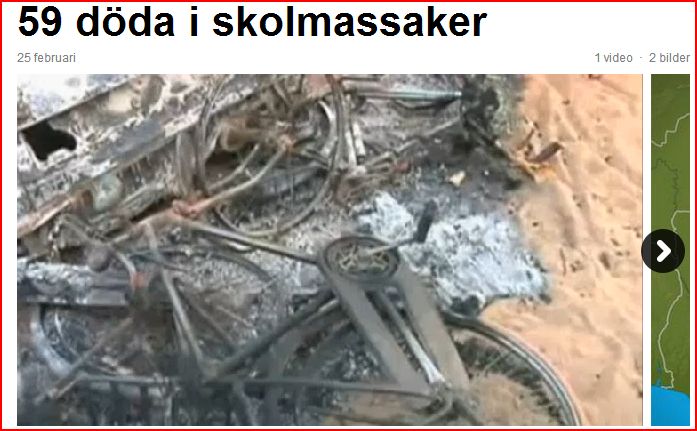
SVT bild 1

The stories regarding the origin and the spread of militancy in the Niger Delta creeks are diversed. They are based on different lines of arguments and different schools of thoughts. The arguments are also influenced by political inclinations. The propagation and sustenance of falsehood in Nigeria is also like an occupation on its own. Some people are paid even by government to do this.

However I know some honest people who earn their livelihood by taking dangerous sea trips to fish in Nigerian internal and territorial waters. Therefore what I know for certain based on eyewitnesses’ reports is that the militants became more “useful” when Obasanjo was aiming for his second term in office.

The allegations wrapped Mr. Obasanjo and some governors from the Niger Delta areas in the game plan and the summary was that when the elections were over, the militants became more potent than ever before and they also found new ways and tools to become more relevant than the pre-Obasanjo era.

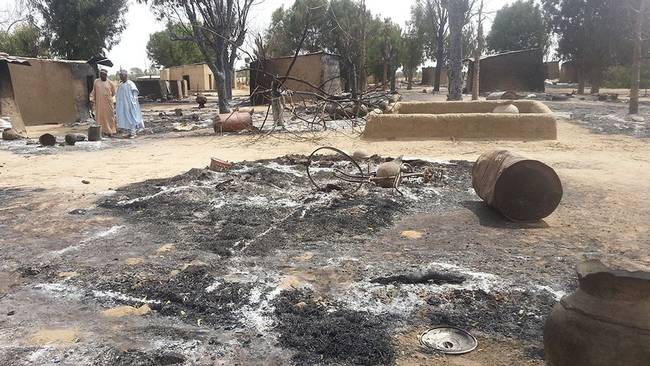
 svt bild 5

The things that happened around that time would lend more credence to these narrations from the people that I know and met. For, at that time in the history of Nigeria more people became aware of attacks on national pipelines and the growing spate of kidnapping, first of expatriates and then of any Dick, Tom and Harry escalated. At the beginning of week 9 in 2014 one man referred to as the adopted father of Goodluck Jonathan was kidnapped. He’s surely worth a ransom of USD20bn.

Let me go back in time. When I was a young boy, at my early teen years to be sure, I remembered that I swore never to step my feet on the soils of Northern part of Nigeria. My decision at that time was informed by the types of news and images that I got about Northern Nigeria. For me at that time, the North was the North. I probably had insufficient knowledge of regional geography.

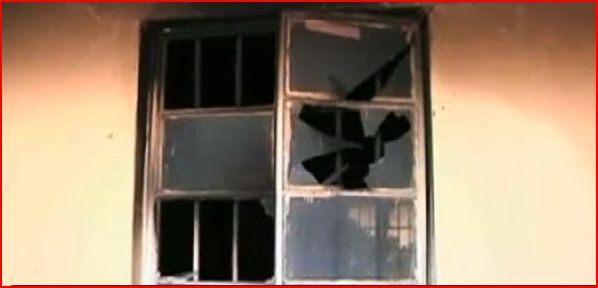
svt bild 3

I was one of those kids who read Newspapers from an early age. I could say I was 8 years old when I started reading Newspaper and I remembered that my father specifically bought me books about Nigeria. At age somewhere between 13 or 15 I read Naiwu Osahon’s “A Nation In Custody”. Those kinds of books helped to build my interest in national issues. They also formed me as I saw from an early age that Nigeria was/is ruled by criminals and heading to perdition. We are still on that road. Sadly too, Nigeria and Nigerians are still in custody.

The formative years of a child are important as I’d come to learn and experience personally. I remembered how I “worked” hard to influence my National service. I had little faith in the program and I was not ready to cross the boundaries of western Nigeria. Once I did so just for fun when I stepped my feet on the soil of Cotonou. I knew what I wanted and what I never wanted was to be part of the inexplicable madness of Northern Nigeria where my aboki neighbour could be the one to slice my throat or cut my head during an upheaval.

Terrorism is not an entirely new phenomenon in Nigeria. It had presented itself to us over the ages and years in different forms. In recent times it was painted variously as communal clashes and sometimes as protests over issues relating to Islam within Nigeria. At one time it was a senseless riot connected to a beauty pageant show.

At another time it was related to issues that have nothing to do with Africa. The Danish cartoon saga was entirely a problem of Europe but it went viral and death tolls were hardly reported from anywhere but in Nigeria it became a means to kill in the North. The upheavals and pandemonium that occur in Northern Nigeria were mostly treated with kid gloves and usually swept under the carpets.

These abnormalities in Northern Nigeria that shaped my thoughts during my teen years are parts of the reasons I deemed courageous the decision of some people that I know to go up north for one reason or the other. If things were different, I would have been a good traveller not only across the world but also in my country of birth. I have praises for my friends who went up north. I have praises for those who have settled somewhere in North even to this day and made it their home away from home. That’s how it should be. If you are from a certain country, you should have the right and possibility to choose your settlement, under normal circumstances.

Unfortunately one of the saddest things about Nigeria is the near total failure of governance at all levels. With the current status of Nigeria as a corrupt country and probably the place in the world with the largest accumulation of poor people, the evidence are rife that Nigerians have not govern Nigeria successfully. From one government to another, impunity rose, corruption soar and the plundering of the country’s wealth by people, government and institutions continue unabated. Nigeria is even opened up to plundering by foreign parasites and imperialists. If the wall is not cracked though the lizards will never find a way in. Nigeria is not cracked, she is completely broken. There are no walls of protection literally and figuratively. It appears the goal is to leave the country in an irreversible ruin. Summarily Nigeria is completely derailed and hope is almost lost.

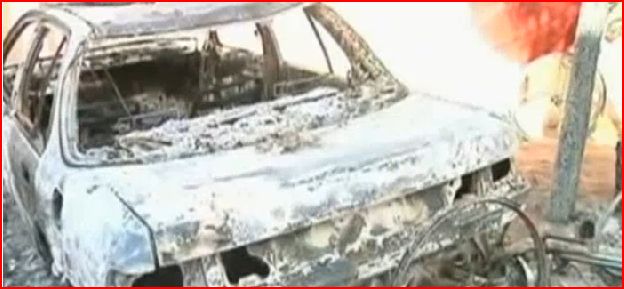
svt bild 2

As I was saying, when Yar Adua granted amnesty to the Niger Delta militants, the signals were obvious. It appears that to be heard in Nigeria; you also have to be armed. The militants gained access to government houses. Some of them got some of the best houses in Abuja and in their home states. Militants under Yar Adua became kings and lords.

These aberrations were sustained and taken to new heights by the Goodluck Jonathan’s regime. Militants simply took over parts of the Nigerian economy by obtaining juicy government contracts and jobs. One rascal called Asari Dokubo who had committed several atrocities against the Nigerian state became one of the chief beneficiaries. How terrorists became bedmates with the Nigerian government is not entirely a mystery. Over the years the government has been a beehive for criminals and all manners of people who are not fit for administration and governance.

In the 2014 budget Mr. Jonathan’s corrupt government is dedicating a whooping N63 billion to the militants. You will not find a greater level of insanity in any government around the world. Where in the world are terrorists paid by government? N63bn can change the face Nigeria as a country if the money is used judiciously to target job creation and youth-oriented educational programs. But Nigeria has a minister of finance who found it honourable to present this jagbajantis as a budget plan.

Nigeria has been misgoverned for more than 50 years. Sometimes political and military aggressions, plain violence, state murders and assassinations have been used to steer Nigeria. These crimes are the “rule of law” and the “codes of conducts” for self-preservation in the Nigerian government.

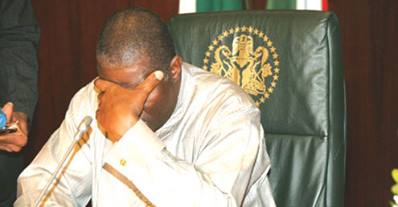
Mr. Goodluck Jonathan remains clueless as Nigerians are massacred and murdered by terrorists

Mr. Goodluck Jonathan remains clueless as Nigerians are massacred and murdered by terrorists

Whatever led to the birth and eventual rise of Boko Haram had a fertile soil on which to bloom and “prosper” as sad as it seems. The rise of Boko Haram was too easy. Among the certainties is that Boko Haram became more prominent in the post-Yar Adua amnesty days. Now, under the Jonathan government, Boko Haram came to war.

The origin of Boko Haram is still under debate. They may have been a group of army constructed by the Islamic governments of Northern Nigeria. They may be soldiers who deflected from the Nigerian military. They may be mercenaries from neighbouring countries blended with the illiterate, jobless and ignorant locals in the name of religion and war. Who knows?

There are evidence of misadventures of what appeared to be roles of established governments in the rise and spread of global terrorism. The roles of the United States in the rise of Bin Laden’s led Al-Qaeda in Afghanistan are well documented. When Gaddafi of Libya became the target of the United States and NATO, terrorists were armed to aid the displacement and his eventual murder, just to mention a few examples. People are still studying the Syria scenario.

Hence, in giving so much money, power and space to terrorists who are politically labelled as militants, the federal government of Nigeria will not be the first to directly or indirectly sponsor terrorism. Therefore the roles of the Nigerian federal government and the Islamic governments in Northern Nigeria and the northern elites/rulers deserved to be investigated as Boko Haram continue to flourish right under their noses. Boko Haram may have existed when I made up my mind as a child not to step on the soil of the blood-spillers. They may have been there when the power hungry rulers of Northern Nigeria promised to make Nigeria ungovernable for Mr. Jonathan.

No matter what led to the establishment and the rise of Boko Haram, the failure of governance at the state and federal levels cannot be excluded as additional factors. The majority of dictators and rulers in Nigeria have been from that part of the country. It seems that they deliberately impoverished their people intellectually. Somehow illiteracy and ignorance levels in Northern Nigeria are far higher than the rest of the country. The hypothesis was that the rulers from the North ensured that their people were educationally deficient so that the northern elites will always have their ways among the ignorant populace. Today, the pay-back prices in terms of blood spillage and outright destructions of towns anc cities are inestimable.

The Boko Haram insurgencies and terrorism that is wrongly tagged as militancy in the South of Nigeria have similar curves. The governors of the oil rich states have over the years looted their people blind. What will remain inexplicable is how the looters and thieves from this region always have the backings of the people they steal from. I have defined the Nigerian syndrome in a previous article.

It is generally known that the local rulers of the Niger Delta region and those who served as ministers in federal and regional institutions like the Oil Mineral Producing Area Development Commission (OMPADEC), the Petroleum Trust Fund (PTF) and Niger Delta Development Commission (NDDC) ought to have been brought to books. They embezzled funds earmarked for the development of the Delta and other places. These rulers are also known to take huge sums from foreign corporations without accountability.

Therefore when addressing the rise of terrorism in the delta as a fallout of gross underdevelopment, maladministration, corruption, nepotism and other vices the bulk goes round in a cycle. The representatives of the delta region have failed their people, the state governments have failed and the federal government is the chief culprit for not ever leading by proper examples.

What the N63bn allocated to the Niger Delta will meet is the greediness of the terrorists. The problems in the region persist. These problems range from lack of basic amenities to serious environmental issues that make the Niger Delta people to be ranked amongst the poorest people in the world. The general percentage of people living under the poverty frame in Nigeria is a hidden global tragedy.

Whatever type of war or destructions that are still attributed to the Niger Deltan terrorists surely are devoid of ideology. They have seen how “easy” it is to become super-rich and influential in government through the use of guns and gun-powders. They have seen how their predecessors have spread all over the places yet still siphoning amnesty funds like leeches and parasites.

What these mostly non-combatant militants hiding in the creeks have not seen is the end to the spillage in their environment. What they have not seen and probably not looking forward to is the implementation of all the policies and promises that have been made by governments and agencies connected to the delta region. They have grown to love the quick money and get rich any-how style. Like their masters-the local chiefs and like the government of Nigeria, the future doesn’t count for them.

Truth is, for more than 53 years Nigerian rulers stole and carted away the treasures of Nigeria. There are no federal plans for nation building and preparing the country for the unborn generations. All Nigerian “roadmaps for development” did not see the light of the day. Not under the military, not under the civilians. Truth is, everything was neglected including education, health and other simple basic infrastructure. Hence, in Nigeria, it actually ought to be a total war on bad governance. All well meaning and Patriotic Nigerians should actually be out there asking the government to surrender, pack and exit.

In Nigeria, the new full-grown terrorism and militancy are delayed responses to the now more than 53 years of absolute waste of the independent status. What the sponsors of these terror groups (whether from inside or external sources) have done is to find the cracks in the walls. It appears that the 3rd generation of post-independence Nigerians are also wasting away.

With the spread of militancy and the popularity of terrorism, one can presume that knee-jerk responses on the part of Nigerian government have made these twin calamities into wars that the Nigerian military will not win easily or early enough. Recent terror attacks in Northern Nigeria show the determination and preparedness of the terrorists and the Fire Brigade Approach of the Nigerian army.

To subdue terrorism in Nigeria on the long run, some political sacrifices must be made. The system of governance must change radically. If pursued honestly the National Conference will provide the catalysts needed for the much needed changes. It is well known that those who have tried to fight off terrorism in the absences of functioning governments and social justice always fail.

The ineffective system of governance in Nigeria has rendered almost all Nigerian government institutions paralysed-they are places for self-enrichment and non- performance. There are no magic doses unfortunately. Therefore when the power that is accumulated to Abuja is decentralised, Nigeria may have taken one giant leap in the right direction.

Nigeria will benefit immensely from a proper change of system of governance. This means that the unitary system of government needs to be abolished in the nearest future. Doing so will on the long term as mentioned earlier probably checkmates future uprisings where terrorists will not be aiming at a central goverment if the ultimate power is not there. In the future N-Eastern Nigeria I am optimistic that a people deciding their own fate will put up enough resistance to fight or resist insurgencies. I don’t think any group of people would like to self-destruct when their destinies are in their own hands.

Regional governments will restore the old Western Nigeria (now being demanded by the Yoruba Congress from a recent gathering in Ibadan) and the other recognised regions that were in existence before the military destroyed the political structures in Nigeria. No doubts, based on newer ideas or ideologies there will be modifications to the regional system in this new century.

The change of the system of governance will not return Nigeria to glory in one night. It may be one of the several steps on the way to recovery. If we make amends today recovery in the regions or acrosss Nigeria can take a decade, half a century or just a few dozen years depending on the will of the people.

In the meantime, the government of Nigeria must not forget its primary duty which is to protect the lives and property of citizens within the boundary of Nigeria. Ending the terrorism in the delta and in the Northern part of Nigeria especially must be done in the shortest time possible without doling out N63bn, or more. Rather it is the Nigerian military that must get all that is needed and required to accomplish the tasks of winning internal wars and fending off external aggressions.

Citizen re-orientation programs which will include patriotism, dignity of labour, promotion of merits, top-level discipline, honesty, trust, commitment to job, family, community and nation/country are among the virtues that will be needed in the various regions that will be reinstated or reconstructed after the National Conference.

aderounmu@gmail.com

Images from SVT Sweden