Why Are Our Politicians Criminals?

The overbearing nature of the systemic corruption becomes the burden of the people, the states and the country. Invariably corruption is accepted as a way of life in Nigeria.

Why Are Our Politicians Criminals?

By Adeola Aderounmu
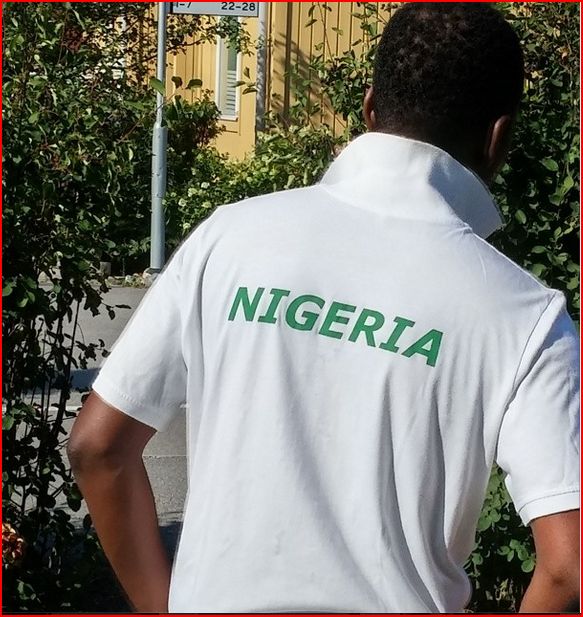
Which Way Nigeria?

One of my earliest articles in the Nigerian Guardian Newspaper (precisely in 2002) was titled: Why Politicians Steal. Since then I have made references to that article several times.

It is still very shocking that nearly all Nigerian politicians are criminals.

In my opinion, since they are all stunningly rich whilst in office and their lifestyles/wealth accumulation afterwards does not reflect their salaries or allowances, l am going to conclude that they are all guilty until proven innocent.

Why are they all criminals?

There are no easy ways to explain how Nigeria got to this point. It reminds me of the irreversible reactions from my chemistry lessons.

In Nigeria you almost cannot get anything done anywhere in the country unless someone’s palms are laced with bribes, kickbacks or advance fees in form of fraud. Hence the overbearing nature of the systemic corruption becomes the burden of the people, the states and the country.

Invariably corruption is accepted as a way of life in Nigeria. It is the system and the way things work.

In Nigeria government and governance collapsed a long time ago giving way to corruption as a highly organised syndrome in the society.

It must be the organised nature of corruption that makes it possible for a respected former governor like Fashola to be in the news for the wrong reasons in recent weeks, no matter if these are the handiwork of his enemies or detractors.

Someone submitted a quotation to drill 2 boreholes for N139 m and the state approved it. The state (represented by Fashola) and the contractor (representing the people) are both criminals.

This is just one example of the thousands of contracts awarded across Nigeria monthly.

Through contracts, inflated wages and allowances and in many other ways Nigerian politicians remain criminals in their dispositions.

Why are the local government chairperson criminals? Why are the state governors’ criminals? Why are the state and federal lawmakers’ criminals? Why are all the former presidents and former heads of states criminals? Must they be criminals?

I heard that when completed projects are commissioned in Nigeria, that contracts are given for the purchase of the pair of scissors used in cutting the tapes or bands. The average cost of the pair of scissors usually ends up at N150 000!

The person who got the contract, the person who approved it and the public official (chairman, governor or president) who used a one-time pair of scissors that cost N150 000 are all criminals.

Next time anyone needs a pair of scissors to cut tape in Nigeria, please send me an email or give me a call. I will send one for free. My only request will be that the N150 000 should be donated to the motherless babies home in lsolo because someone will add the N150 000 to the expenditures anyway.

Nigeria politicians remain criminal because that is what the system requires, sadly. It doesn’t have to be so. I heard that if a man or a woman tries to be honest and trustworthy, that he or she can be murdered by friends or colleagues.

People who try to be honest at places of work or in public services are soon disowned by friends and families.

When good people become endangered species, the result is what reflects in the daily lives of the ordinary masses-the downtrodden.

Nigeria is rotten in uncountable ways. People who are not willing to play ball are neglected, cast aside or even never given the opportunity to emerge as public servants or contributors to the success of the society.

In this sense the country Nigeria has been a tragic occurrence since the years that precede the civil war years.

But are there ways to get out of this ugly situation? How can the people be cured of their permanent fixation on corruption as a means of succeeding in the country? Nigeria does not have a specific dose of ingredients or actions that will cure her.

It is very difficult to know what should come first in an attempt to move this country away from these criminalities that fill the minds of all and sundry. The majority of the people have never known a system that works correctly.

The majority of the people have been wrongly orientated for most part or all of their lives.

Education is no longer universal in Nigeria and civics, history and citizen responsibilities are off the curriculum. People grew up seeing that their existences are like a rat race and the ultimate goal became to be materially better than your friends and neighbours no matter how you do it. This is so tragic!

The only thing that has mattered in Nigeria since the collapse of governance almost 5 decades ago is how one takes the shortest cut to wealth. Family values collapsed as many parents became incapable of raising normal children in an abnormal country. Even politicians mentor their wards and godsons to be criminals like them.

But there are still many people who are representing Nigeria positively in various ways at home and abroad. There are good families and there are good parents.

Yet, one is worried about the several questions that beg for answers and solutions.

How can the majority be educated or given the appropriate orientation that will help to reduce or eliminate the criminal tendencies in them either in private or public institutions? How can Nigeria one day revert to that point where a proposal for a borehole will reflect N1m or N2m if that is the correct cost rather than an exaggerated N70 m?

The alternative costs to Nigeria’s corruption-ridden contracts and looting of treasuries are inestimable. Does the Lagos State government for example know how many Lagosians that can be housed with N70m? Then multiply that by 2…Then let us imagine the scale of corruption nationally!!!  Tragic! Painful!

There must be a particular action that will set the ball rolling.

How can Nigeria stop choosing criminals to serve them? How can Nigerians stop seeing criminality as a normal way of life? How or when will this falling country be able to finally round up all the political criminals still parading themselves around town as saints?

I can reiterate two things that l think are important for Nigeria and Nigerians.

First is the political solution that all beneficiaries of the political nonsense in Nigeria do not want to discuss. Just now Nigeria remains a game and whoever captures the center controls everything.

At this moment it is Buhari and APC who decide who a criminal is or not. To some extent it seems the EFCC is wriggling its tail in recent months after many years of nonsense job done. The EFCC itself is rotten! The judiciary is lame.

A correct political system will remove the power at the center and allow the different regions to develop at own pace. Some 50 something years ago Nigeria was among the best countries in the world under the regional system of government. Why is it so hard or impossible to implement the system that works best? It baffles the intelligent minds.

A correct political system will settle the nonsensical discussions and arguments about the useless federal character to a large extent. Resource control can be discussed so that another idiotic war does not break out.

The second issue is independent of the first. It is about the institutions of governance, how they can be managed correctly and productively.

For a dysfunctional unitary system (as it is now in Nigeria) or a decentralized regional government, it is still important that criminals are not in positions. This is a dilemma for Nigeria or the states.

Under any kind of system, the persistence of criminals everywhere and in political offices anywhere in the land will continue to show in the low standard of living, the high cost of living, lack of electricity, lack of social justice, lack of social amenities, lack of public schools, low life expectancy, high mortality rate, increase in number of uneducated people and many other vices that are characteristics of a poverty-ridden country/a failed country.

One solution that has never failed in history is the genuine revolution masterminded by the downtrodden masses who have lost everything to the oppressors and losing their own lives became the ultimate price for the freedom of their children and children’s children.
aderounmu@gmail.com

The Things We Took For Granted (Part 2)

Let’s love one another in Africa and appreciate the things and people around us always. Maybe if we start with our friends and families, one day the love may go round the world and our lives will be happy and free.

The Things We Took For Granted (Part 2)

By Adeola Aderounmu

Often we forget to show how much we care for our families and friends. Sometimes it is very difficult to express in words or actions how much our friends and families mean to us.

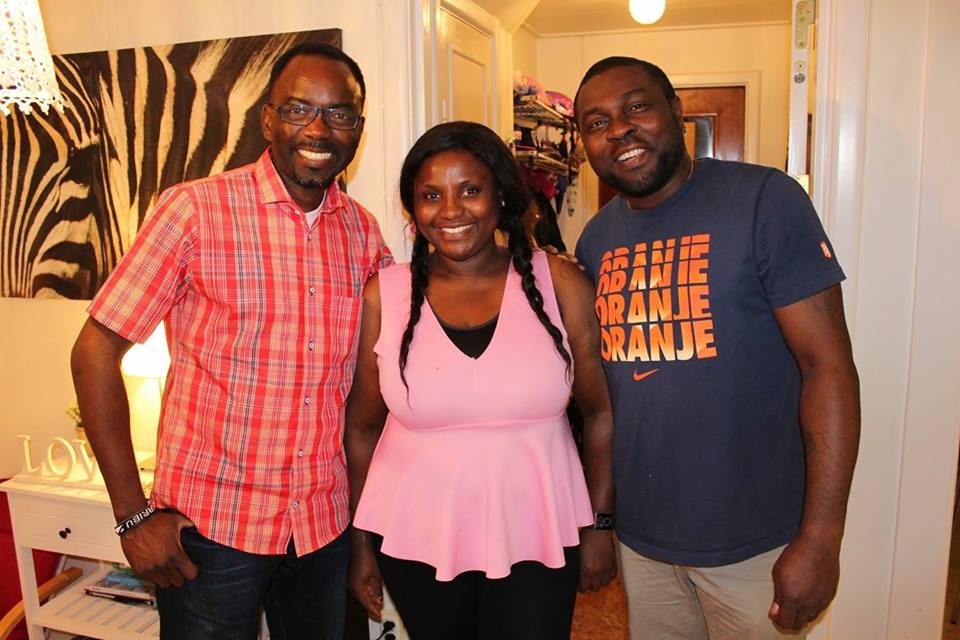
Me and A friend-Onero and his wife

Me and A friend-Onero and his wife

Absence makes the mind to grow fonder. This is so true that we (then) begin to appreciate friends and families when they are separated from us.

Sometimes the separation is irreparable or permanent because death came calling unexpectedly. This can result to extreme sadness or even depression.

Sometimes during this summer I saw my eldest brother again. He came to visit me in Sweden. The last time we saw each other before this visit was also in Stockholm in the spring of 2005. Though l have travelled to Nigeria two times after that we did not meet.

No one will believe that l have never travelled to Abuja or anywhere in the North of Nigeria. It does not even look like it will happen soon. I am that small boy from Western Nigeria.

As l was driving to the airport to pick up my brother l was moved to tears. Suddenly it struck me that a lot has happened since the last time we met. There have been a lot of good things. However since we are getting older we have had our own share of family tragedies which as a matter of principle l never share on the social media. But l made an obituary for my mother in the village square.

Distance apart means that we have not been able to share our emotions regarding these tragedies. Though my eyes were swollen, I could not shut them tight long enough to enable the free flow of tears. I needed to keep my focus behind the wheels.

But in private, I’d wept many times. It’s human nature. In some of my stories I’d written that the men who commit suicide are those who refused to cry. They sealed their emotions and punish their souls giving them up to untimely death.

When people cry on behalves of those who commit suicide, they (the mourners) find the strength to move on because their tears become sacrifices to the gods.

For about 30 minutes which was approximately how long it took to drive to the airport l also reminisced on many of the good times we had together especially in Festac Town where we grew up.

Sometimes l don’t know where to place my memories about Lagos Mainland. Are they real or are they mere fantasies? Why do I always think that my version of the aftermath of the assassination of Murtala Mohammed in February 1976 was the correct version? Why does all the pandemonium in Surulere play back and forth in my head as if they happened yesterday?

At home, when we were boys, I remember the fights and the unnecessary contests for power and supremacy. You cannot avoid these things if you have many boys growing up together in a flat or in a house. I don’t want to remember my violent tendencies because sometimes the repercussions were terrible.

I always remember the football days so much that l wrote the article The Boys From Festac. A follow up to that article is necessary. If someone had told me that l can live without playing football on Saturday mornings and Sunday evenings, l would have responded: don’t go there!

Sometimes l don’t worry to tell people who never saw me play football how good l was because they won’t understand and it is of no use now.

Sometimes too l remember how some people find it difficult to believe my brilliance at school because of my small size and extremely playful attitude. I still wonder too!

If you live your adult life very far away from the closest people you grew up with, the tendency is that when you look back, you’d wish you could turn back the hands of clock.

There are so many things you wish you could do again. There are so many people you long for but whom you took for granted when they were at arm’s length to you. What about the things you took for granted too?

Life will continue to go on and nothing will last, not forever anyway. Life itself will remain transient and temporal.

Recently l heard a story from one of our elders here in Stockholm. Obviously it is one of those stories you heard whilst growing up in Nigeria. But when you are reminded of such a story after a long time, it helps. Mr. Salimonu Kadiri, a respected elder in Sweden spoke about the argument between death and money. It was a case that was taken to the king.

Money argued that nothing can be done without him and death reminded the king that he (death) would have the last say on everyone including the king.

This folklore from Yorubaland has a lot of implications.

People should think about their pursuits of wealth and the opportunity costs.

Perhaps if we sit back a bit and reflect on life holistically….just maybe…we will live our lives differently, spread some love and warmth everyday. Who knows? We may end up living closer to our families and spend more time with the people we love.

We definitely need to appreciate more the people around us including our friends and our families.  If we do, our regrets and disappointments will be minimal if we eventually are (unavoidably) separated from one another temporarily or permanently.

The other day l came home from Finland and made an unscheduled visit to a friend in another part of Sweden the same day. It was 467 km away. I left home late and arrived at his front door at about 10pm. His reaction was priceless. Shock will be an understatement when he opened his door to welcome me and my family. We even ate dinner before we left!

In Nigeria this would have been a normal thing. But in Sweden it is almost a taboo to visit someone without notifying them. It’s rare. On top of that we arrived at night like thieves. I don’t why people look too far and find it difficult to connect the individualistic traits of the western world with the high rate of depression.

When we grew up in Nigeria our lives were mainly communal in nature. We meet people everyday. We share with people everyday and we celebrate everyday. We took these things for granted because we thought we will always have them.

Since we do not have the same powers as the gods, we did not see the future. We were taught the 20 children cannot play together for 20 years. It wasn’t made so clear that the 20 children will have extreme difficulties to re-unite or re-group again once they have said goodbyes.

I see the struggle to re-unite or re-group in alumni or old students’ associations. It’s like a mission impossible though manageable from one event to another when different people show up.

I see the struggle to re-unite with friends. We have all received our fair shares of desperate mails from people on the social media asking if we are the right persons.

Even l have seen the struggle to re-unite families.

We struggle now because we took people and things for granted when we had them right in front of our faces. Some of our struggles are psychological because we are torn between two or three countries and wonder if we will ever make it back to settle in Nigeria. We miss home and the warmth of our friends and families especially.

It is now golden for us in the western world to meet our friends, families and even the people we knew first in this part of the world. Unfortunately, here, most friendships don’t last because individualism and western world syndrome gradually eat into our souls. We are in trouble. Where are our real friends? Where are our true families?

When Mr. Kadiri spoke, it was at a memorial for a man whom many people spoke well of. I’m not sure he heard so much of these good things from his friends and families when he was alive. The people who knew him or who were close to him may have taken things for granted.

How wonderful life would be if people start to say all these positive things to one another whilst they still can!

How can one preach that people should just shun bitterness and hatred towards one another?

I know. It is like a mirage to hope that the human race should place love and care above hatred and war.

Let’s love one another in Africa and appreciate the things and people around us always. Maybe if we start with our friends and families, one day the love may go round the world and our lives will be happy and free.

aderounmu@gmail.com

The Things We Took For Granted (Part 1)

When l was growing up in Nigeria l had no idea that one day I will be living in another country and eating meat and chicken that are produced in factories. I miss my poultry in Nigeria..!

The Things We Took For Granted (Part 1)

By Adeola Aderounmu

IMG_2269

As Africans we need to start appreciating the things we have in Africa especially nature’s endowment.  We also need to preserve our culture, our heritage and the true versions of our stories and pass them intact from one generation to the next.

There are so many things we took for granted in Africa. We still take them for granted on the home soil.

When l was a little boy in Nigeria, l had not doubt in my mind that all the food including fruits and vegetables were coming from nature and in natural ways. It is possible to write a book then about Feeding Without Fears in Nigeria.

I remember my involvements and experiences in farming as a school boy. We planted crops as part of practical Agricultural Science. We even tilled the soil and prepare them for cultivation. Groundnut was my favourite. There was no need to cultivate water leaf (spinach); it was growing everywhere-along the roadside, among the bushes and just about anywhere there is soil and moisture.

I remember the poultry l kept at the backyard. My love for the hens and cocks was for them to grow up and end up in my pot of soup on that famous kerosene stove. Some of these adventures must have helped in forming me. I have patience to see things through. I know how sweet the reward is for genuine labour.

In Nigeria we have everything that nature could provide for life in the tropical region. There is rainfall, and there is adequate sunshine. There is a clear demarcation for day and night.

We have all kinds of trees. We have mango trees, the coconut trees, the orange trees, the cocoa plant trees. We have the sugarcane plantations. We have cashew crops and so on.

Irrespective of where these crops are found, one didn’t have to worry about consuming them. It was unthinkable that certain chemicals inimical to human health were consumed with them. We were children, we felt safe.

The good stories about growing up in Nigeria are varied and marvellous.

Now in Europe and other parts of the advance world, it is very disturbing to note how unnatural the foods we eat are. It is extremely disturbing to walk into the stores and find all kinds of labels on the food items.

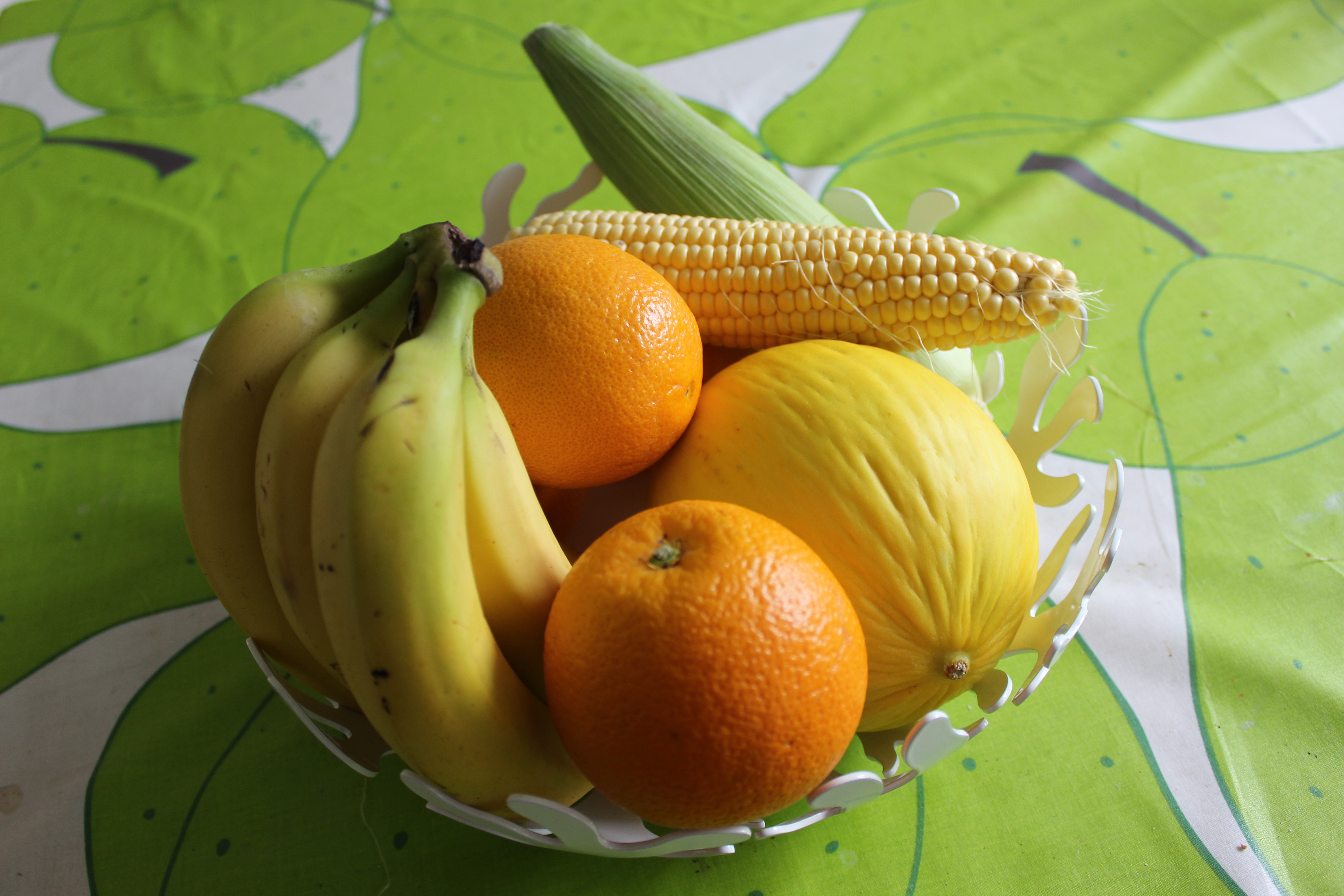
What is biological mango? What is ecological mango? What is fair trade banana? What is ordinary banana? What is ecological carrot?

Reading food labels and tags on fruits and vegetables is a way of life that emanated from outside Africa. It may be the beginning of fear or wisdom depending on your views about food and nutrition. In whichever case, it is not a pleasant trauma.

As a child, when l bought oranges at Agboju market or when l jumped and plucked Mama Tunji’s mango and ran away to eat it while hiding, l have no idea that one day l will be settling down to first read the labels before buying or eating fruits.

One day a friend who thought that she has found a new knowledge tried to explain to me the difference between ecological and biological fruits and vegetables. What an effort to make..!

In this part of the world we are in some deep troubles because people eat all kinds of things that they don’t even know where they are coming from. How can anyone trust the labels on fruits and vegetables in these days when people are fed pork and horse meat as beef? When meat and fruits are made by artificial methods, how can expiry dates be valid?

When l was growing up in Nigeria l had no idea that one day I will be living in another country and eating meat and chicken that are produced in factories. I miss my poultry! Where are all these fake and giant bananas coming from?

There is trouble here; we eat synthetic materials as food.

Some oranges are bigger than the human head. Some bananas are bigger than the African plantain. We are in trouble.

Fruits with labels? How Healthy are tey?

Fruits with labels? How Healthy are they?

For Africans, it is sad that many of these fake products and synthetic food items have crept into the continent.

In Nigeria l remember the influx of fake chicken and turkey into the Nigerian market. This year 2015 the Nigerian custom continues to fight the smuggling of the fake poultry products from neighbouring countries into Nigeria.

In Nigerian traffic especially in Lagos, everything is sold. The shiny green apples look purely synthesized. Sometimes you’ll think they have been taken for polishing at the shoemaker’s stall.

Nigeria has since become a consuming society and a dumping ground for all kinds of fake food products and dangerous medicines. The failure of governance and the systemic collapse of institutions in Nigeria left much to be desired.

There is no shame greater than the importation of food and crops that can be produced in Nigeria. It was totally senseless to relegate agriculture as the leading foreign income earner for regionally governed Nigeria.

The rulers of Nigeria are weak intellectually. They even import petroleum products! Their dumbness is exposed in their primitive accumulation while sacrificing the present and the future at the same time, all for nothing.

In Nigeria we took for granted all the free gifts of nature. Nigeria is a rich country in all ways and by all ways. Mr. Buhari can continue to misfire-calling Nigeria a poor country-because of his low intellectual capacity and inability to reason out the meaning of rich or blessed with.

The Nigerian climate is perfect for agricultural practises. The countries that have long winter season would probably stop synthesizing food items if they have such optimal climate.

I will not forget that eating fruits while growing up in Nigeria was devoid of looking for tags and labels. There was no doubt about the safety of the crops that my grandfather nurtured on his farmland in Igbogila. I had no doubt buying roasted plantain-boli at the roadside or oranges from the hawkers.

We ate healthy and unless we expose our skin to malaria parasites we hardly become ill. In comparison the reports of catching ordinary cold all year round in the advanced countries is amazingly high.

The present and upcoming generations of Nigerians must be told the true stories. There was trust in Nigeria in the past and there was dignity in labour. Sadly when things fell apart politically, everything else fell apart. The proportions of failure in Nigeria since 1966 especially are unimaginable. It is a sad story.

For Nigeria food production that will completely eliminate reliance on import and adulteration is still very possible. The potentials are still there and though the climate may have change, it is not significant enough to disrupt full blown back to the golden days of Nigeria.

The blueprints that allowed Nigeria to flourish under regional government up till the early 70s need to be reintroduced. It is getting clearer that the APC mandate is a fluke as Nigerian politicians remain hell bent on looting and destroying Nigeria because of the nonsensical unitary system that gives power to one man as if he is a dictator even under a democratic system.

How did the Old Western Region succeed with the regional farm settlement schemes alongside a world class education system? What made the groundnut pyramid in Northern Nigeria so high? Why was the East home to cassava, yam and other cash crops? The answers to these questions that will return Nigeria to her rightful position in cocoa export, oil-palm production, yam and groundnut export are political!

How we let go of healthy living in Nigeria is related to the collapse of the Agricultural sector and it happened due to bad governments. Living in places where natural food are now produced by synthetic methods or gene modification makes one to appreciate the continent of Africa that is blessed by Mother Nature.

In my part of Africa, the tropical zone of Sub-Saharan, nature smiled on us and provided optimally for our living. When we are ready, Mother Nature will still be waiting.

A deep-rooted and sincere reorientation of the citizens will be necessary to rid Nigerians of their affinity for food and things that are foreign. Those who indulge in illegal importation of food stuffs should spend long years behind bars. They are a risk to people’s health and also economic saboteurs for local/indigenous farmers.

The health of the citizenry is the wealth of the nation.

Repeatedly, a functional political method is an integral part of the solutions to all of the problems in Nigeria. This is where the burden falls back on the citizens. They have a collective right to fight the politicians and take back their functional regions and bring back the days before the civil war when there was abundance and prosperity.

It will be a long road to freedom.

aderounmu@gmail.com

Goodnight Professor Adetayo-Foluso Fagbenro-Beyioku

Goodnight Professor Adetayo Beyioku

By Adeola Aderounmu

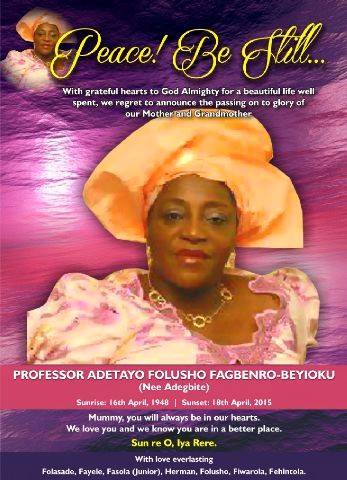
My former lecturer and supervisor Professor Adetayo Foluso Fagbenro-Beyioku passed away on April 18 2015. She was aged 67.

Professor Adetayo Foluso Fagbenro-Beyioku

Professor Adetayo Foluso Fagbenro-Beyioku

Mummy as we fondly called her was born on April 16, 1948. She attended Queens College in Yaba between 1960 and 1964. She also attended Walthamstow Hall, Sevenoaks, Kent for her Advanced Level G.C.E in Physics, Chemistry and Biology between 1965 and 1967.

She was awarded the Bachelor of Science Degree in Biology in 1971 by Georgetown College, Georgetown, Kentucky and Master of Science Degree in Microbiology in 1975 by Roosevelt University, Chicago, Illinois.

She returned to Nigeria and attended the University of Lagos where she was awarded the Doctorate Degree in Medical Parasitology in 1988.

Adetayo Fagbenro-Beyioku joined the services of the University of Lagos as Research Fellow II in 1980. She rose steadily and was appointed Professor of the Department of Medical Microbiology and Parasitology, School of Basic Medical Sciences, College of Medicine, in 2003.

Professor Beyioku was a former Deputy Provost at the College of Medicine of the University of Lagos. She was also a former member of the University of Lagos Governing Council.

She was buried according to her wish (after a private ceremony) on the same day she died.

Until her death she was one of Nigeria’s leading voices in the field of malariology.

In various ways, ranging from research, publications, participation in health programs, formulation and implementation of policies to mentoring students mummy was one of those who ensured that the study and knowledge of the malaria parasites remain relevant in Nigerian medical schools and research institutions.

A quick survey of some recent publications in malariology indicates that mummy contributed immensely to our knowledge of malaria epidemiology, immunology, chemotherapy and prevention.

Recent publications with Professor Beyioku’s name:

A current analysis of chemotherapy strategies for the treatment of human African trypanosomiasis

Variable geographical distribution of Blastocystis subtypes and its potential implications

Identification and characterization of microsporidia from fecal symptoms of HIV-positive patients from Lagos, Nigeria

Comparative studies of entero-parasitic infections among HIV sero-positive and sero-negative patients in Lagos, Nigeria

Strongyloides stercoralis and the human immune response

____________________

Mummy wrote her name in the Nigerian Medical Hall of Fame. She did with an indelible ink as her name and contributions will be cited in literatures and projects for generations to come.

People will talk about her as a good mother, a dedicated wife, a wonderful mentor and an exemplary lecturer/supervisor.

For a long time to come mummy’s work will be carried out and reflected through her postgraduate/research students. Some of her previous students are now professors, associate professors and senior research fellows in various institutions and universities around the world.

Below are the tributes written by some of mummy’s former students: (in no special order)

___________

Tribute 1  Written by Bolaji N. Thomas, Ph.D. Associate Professor, Immunology & Molecular Biology, Department of Biomedical Sciences, Rochester Institute of Technology, Rochester NY 14623. Email: bolaji.thomas@rit.edu

I write not just as a former student, but as a member of the “family”. Professor Beyioku was an advisor and mentor. We call her Mum because she does that one thing, which others would not or cannot, and does it superbly well-LISTEN. She was the support we needed to go through our programs, the calm when things seem difficult and the laughter needed to break the tension and unexpected awkwardness. I recall the days of chatting over coffee, generating research ideas and brainstorming on how to bring the ideas to fruition; the sense of equanimity and the gentle guidance along the way. I learnt a lot from you. You left too soon but be sure we will keep the banner flying. Goodbye.

Tribute 2 Written by Dr. Adekunle Sanyaolu, Associate Professor of Medical Microbiology & Immunology, Saint James School of Medicine, Anguilla, BWI.

This is a tribute to a great mother, Mentor, and Teacher. Professor Adetayo Fagbenro-Beyioku was a dedicated teacher and a loving mother to her children. She made a great impact in the lives of her students and children with her compassion. As a good teacher, she took us, shaped our thoughts and nurtured us in our career path in life. In addition to imparting training, she also inspired us to be good leaders and be compassionate to others. Reminiscing our school days, she showed great interest in our career development and provided advice and guidance to our social lives. Without her guidance and support, we will not be where we are today. We will miss her support forever. Adieu! RIP.

 “Most people end up with no more than few people who remember them, however, teachers have many more people that remember them forever”……..Anonymous.

Tribute 3 Written By Dr. Nnaemeka Iriemenam

Professor Fagbenro-Beyioku was a great tutor and mentor to all her students. Each one of us benefited from her immense and vast expertise. Mummy as we fondly called her nurtured us to be what we are today in the world. Her dedication to service, humility, hard work, and intellect shaped our respective career development. You are highly missed by your students and your legacy lives in our days. Adieu!

________________

To conclude these tributes in honour of our former lecturer and supervisor, l asked one of her daughters (Yele) some personal questions. I wanted to know what she missed most about her mother. She told me that she missed everything about her. That sums up mummy: She was very caring and she meant the world to her children.

It was this motherhood that she brought to her office and to the job.

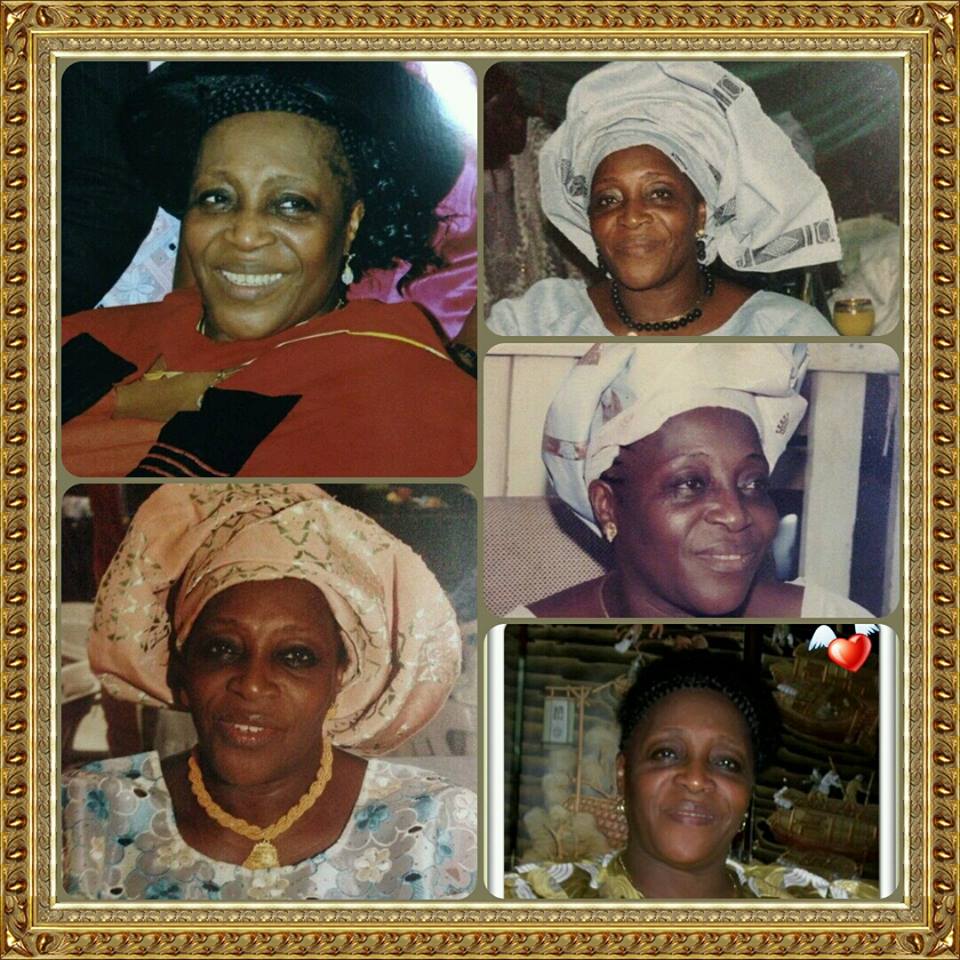
Professor Adetayo Foluso Fagbenro-Beyioku

Professor Adetayo Foluso Fagbenro-Beyioku

Personally, I remember all the laughter l took with me whenever l was leaving her presence. It touches me how she remembered all the things/information l shared with her during my postgraduate days at CMUL. I remember how at just 29, she allowed me to lecture one of her courses-Medical Parasitology for 300 level medical students.

Mummy’s death came to many of us as a shock and one of us Dr. Ninan Obasi is yet to find the words to express his shock.

Professor Adetayo Fagbenro-Beyioku will be missed by everyone that knew her. She touched many lives directly and indirectly and in special ways.

Mummy is survived by children and grandchildren.

May her gentle soul rest in eternal peace.

Goodnight mummy!

_________

Footnotes

The University of Lagos honoured late Professor A-F Beyioku with Academic Procession/Commendation Service at The New Great Hall, CMUL, Idiarabla on July 31 2015.

This piece is published to coincide with her Final Burial Ceremony (Thanksgiving and Reception) on Saturday, August 1, 2015 at 11:00 a.m. at the Divine Events Centre, Shepherd Hill Baptist Church, Obanikoro Bus Stop, Lagos.

Acknowledgements

Thank you for your contributions:

Dr. Bolaji Thomas

Dr. Emeka Iriemenam

Dr. Adekunle Sanyaolu

Thank you for our discussion:

Dr. Ninan Obasi

With additional information from

http://campuslife.unilag.edu.ng

http://www.akahitutors.org

aderounmu@gmail.com

Buhari, Still A Scalar Quantity

For 60 days, a time long enough to start and finish certain university courses, the government is all about Buhari. Buhari this, Buhari that. What about the ordinary citizens?

Buhari, Still A Scalar Quantity

Adeola Aderounmu

Adeola Aderounmu

By Adeola Aderounmu

With respect to the non-appointment of federal ministers and with the promise that the exercise will now take place in September 2015, Buhari without any doubt has shown his unpreparedness for the position that he now occupies.

Buhari is still a scalar quantity on the APC mandate-having magnitude but not yet direction.

Nigeria has been through this sad avenue too often, projecting accidental rulers to the apex of affairs. This one was preventable but when the politics of religion and ethnicity got amplified under the last administration, the recycling of old hands such as Buhari was what the APC came up with.

The beauty or significance of democracy is lost on Nigerians failing to bring fresh and dynamic minds into the front.

In any case at it is now, it seems that Mr. Buhari is enjoying the limelight. For all the days of the APC mandate (now 2 months) everything has been about him. No one else matters!

What l’d seen since early June 2015 is Buhari this and Buhari that. That is pure political egocentrism.

The headlines continue to flourish and center only on what Buhari as a person will do or not.

Buhari stop rice importation

Buhari must prosecute IBB

Buhari probes Jonathan

Buhari to prosecute Iweala

Buhari reverse privatisation of NEPA

Buhari won’t interfere with Senate Forgery

Buhari This, Buhari That..!

Invariably, Buhari as an individual has constituted himself into government so far. As at the end of July 2015, Buhari is government and government is Buhari. A tragic start/occurence if you ask me.

For 60 days, a time long enough to start and finish certain university courses, the government is all about Buhari. He is so enjoying the entire attention he probably thinks by now that he is running a military government.

The leadership of APC needs to pinch their man, wake him up to smell the coffee and probably remind him that the days of tropical gangsterism are over.

I don’t think Buhari gets it yet and please we are tired of that phrase of giving time to those who we thought have the experience of what leadership is all about.

It was bad enough to seek a mandate without a team in place. It gets worse when in 2 months, governance stood still at the federal level under a democratic government allowing only one man to call all the shots.

Buhari praise singers are part of the problems. It was the same way Jonathanians ruined their man. Here we go again..!

The acceptance of mediocrity drained Nigeria of her will and strength as a country and the damage done to the cognitive mentality of the average Nigerian as a result of more than 50 years of maladministration appears to be irreversible. Little wonder people seek miracle everyday.

Generally the people are lost for the meaning and purpose of life because government broke them down and handed them over to religious rites. It is an extremely sad situation.

More than 50 years have been wasted because every time some people complain, someone is asking for more time to destroy what is left of the ruins.

Buhari is running the APC mandate, not a personal mandate. He did not win this as a lone ranger having failed several times doing so. To set September for the appointment of ministers is extreme recklessness and an irresponsible act.

In Nigeria in the absence of ministers and head for public parastatals, almost everything is paralyzed. In several federal agencies and offices across the land, things have stood still and the days ahead look bleak.

In a country where the economy is in ruins and the naira keeps tumbling, it is an act of wickedness to leave the ministries in limbo. I had discussions with some people about this matter and I could not quantify their frustrations. To live in uncertainties at a crucial time like this is totally heartbreaking. It adds to the already devastating health statuses of folks down there.

Again, APC need to pinch their man, Mr. Buhari and tell him that Nigeria is suffering from partial paralysis since the day he was sworn in.

He cannot continue to run a one man show until September. That is absolute nonsense and ingredients! It’s pure rubbish. There are 31 days in August. The economic lose will be huge. Life will remain uncertain for several millions. He will keep gallivanting from pole to pole whilst the citizens are waiting for clues on the way forward.

Buhari need some schooling in economics. As the naira tumbles, the people suffer. Nigerians get poorer. The suffering spreads like a mad fire.

Indeed, many of those that would have been nominated to form the executive cabinet are coming from the expired generation and probably a bunch from the corruption conglomerate.

Buhari needs to sit down and set 1-2 days aside as soon as possible to look into this matter. He cannot continue to rule as a dictator for 3 months! He needs to cure his own headache rather than pass it on the citizens. He must send the names of men and women who will work with him to the appropriate quarters for verification and confirmation.

If he cannot do a common selection of credible people from a pool of more than 150m people, please let him step aside immediately. No one has the luxury of time in Nigeria.

Nigeria is running a sick democracy but until that ultimate political change is instituted or when Nigeria returns to regional government, let Buhari stick to the constitution and stop running a one-man show.

It is time to remove his name tag from all the headlines and set in the appropriate ministries and agencies. What is his business with probe if he or the APC mandate sets the anti-corruption agencies free? Buhari’s name is tagged in almost all headlines because he thinks this is a military government. He needs help!

I hope this change we asked for will not be a one chance change o!

This government is turning out to be a joke so far. The hope that it will improve will be sustained and accessed week in, week out. Real change or fake change, some of us promised to remain on the same side as the ordinary citizens, we will not be tired. Some senses need to emerge from this government.

So far, it is a government that has about 2-3 or even 4 press releases about a single incident. Now, one has to wait for the 3rd version to know exactly what they are trying to say. The fourth one nails it after that.

Buhari’s government and the APC mandate are also acting as if they are still in the opposition seat. They need to move away from speculations and plans to execution of plans and doing things instead of talking like parrots. Together, they were on the side for 16 years. Did they not plan?

Before I end this essay, I need someone in the APC mandate forum to tell Adams Oshiomole to stop acting as the minister of information.

If he has any information he can pass them to the EFCC with ease and he does not have to shout about it. He should also note that we the people expect him to also face the law when his immunity days are over.

We don’t need new sensations or sensational headlines.

Looting did not start and end under Jonathan. Babangida and Obasanjo are also there to give accounts of what they stole and what was stolen under them.

Rather than selective persecution EFCC and the other appropriate agencies-the police, the judiciary should be given the freehand to perform. We have waited for several years for justice. Why make it selective? We expect a justice system that will serve without fear or favour and without limitation of time and space.

What Nigerians want to know, see or hear is the money returned to the treasury, the criminals behind bar and perfect processes where justice actually reigns and yields results.

Buhari and his sensational crew, especially Oshiomole, should spare Nigerians the trauma of revelation of sums of monies or barrels of crude oil stolen. Let the law acts instead but take the money back and show the people what you are doing with it.

Mr. Buhari, in Africa the morning shows the day (The Yorubas actually says Owuro l’ojo-morning is the day). So far, the morning of this administration, now 2 months has not been impressive. The people are not in a hurry. They have waited so long for this change and things must happen quickly.

When they were quiet, they were called resilient. Some irrelevant surveys even called them the happiest people on earth because they suffer and smile.

This resiliency and misinformation about the Nigerian state of mind were all the politicians and military men like you needed to destroy the giant of Africa. You (Mr. Buhari) and this old wasted generation made Nigeria the dwarf and laughing stock of Africa. You ruined it together!

Just like Obasanjo, you also have a rare second and last chance but it’s so far, not good.

The Glory of Nigeria must return and for sure, a lasting political solution will be an integral part of the solution that the upcoming generation will be looking into, should in case you fail again as the representative of the fading wasteful generation.

aderounmu@gmail.com