Brazil 2014: This Time For Africa?

By Adeola Aderounmu

World Cup Africa

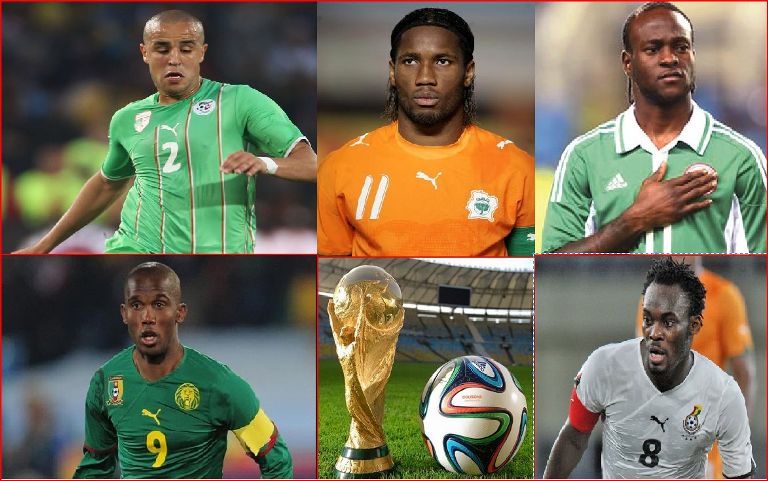
Nigeria, Ivory Coast, Algeria, Cameroon and Ghana will fly Africa’s flags at the world cup which starts on the 12th of June in Brazil.

Egypt went to the world cup in Italy in 1934. That was the first time an African country featured at the championship which started in 1930 in Uruguay. Since then 13 countries in total from Africa have participated at various editions of the mundial. The other 12 countries are Morocco, Zaire, Tunisia, Algeria, Cameroon, Nigeria, South Africa, Senegal, Angola, Ivory Coast, Ghana and Togo.

When Africa’s representatives at the world cup for 2014 arrive in Brazil this summer they will be chasing an unfulfilled dream-that an African country is ripe enough to win the world cup.

To make this dream come true, Cameroon will have to cross the hurdles in Group A where they will do battle with the host Brazil, Croatia and Mexico.

Cameroonians are playing in their 7th world cup. This is an African record. But what has Cameroon got to show for previous appearances? The best exploits came in Italy in 1990 as the career of Roger Milla was winding up. Cameroon was beaten in the quarter finals by England. After Italian 90, Cameroon quickly transformed and became “not indomitable”. For an African country to win the world cup, consistency must be shown.

Ivory Coast is a country also in need of consistency and even more, delivery. This country must emerge from Group C that include Colombia, Greece and Japan.

The men representing Ivory Coast and led by Didier Drogba are the popular golden generation that has won nothing to show for the name tag-“golden”.

This is the third straight world cup for the so called golden generation. They failed to emerge from the groups in 2006 and 2010. Any country that wants to win the world cup must be able to emerge first from the group. It will not matter if the group is mildly classified or if it is termed the group of death.

One country that shaped the organisation of FIFA’s world cup after the 1982 edition was Algeria. In 1982 Germany and Austria “sold” their last game “to each other” so that Algeria could be eliminated. You need to find and read that story if you love the history and football. In 1982, the Germans and the Austrians brought huge shame to football.

Football scandals or match fixers are not restricted to Asia or any particular geographical part of the world. Rather it is something that has been a part of football at every level and in almost every country for as long as the game has been in existence. The roles of FIFA officials in recent reports seriously brought the game into disrepute, again. Yet, this is a game people love no matter the problems related to scandal or “arranged outcomes”.

After the 1982 games, FIFA decided that the last games in each group will be played simultaneously. Algeria will try to emerge this time from a group including Belgium, Russia and South Korea. If they find the form again like they did in 1982, they have a chance of making Africa’s dream come true.

To put Africa’s name on the map as a world cup winning continent can also become a dream come true through the hands of the Ghanaians. Ghana is also making a third straight appearance.

In 2010 on the African continent Ghana reached the quarter final stage where they fell to Uruguay. That match will not be forgotten easily in the stories of FIFA senior world cup.

Luis Suarez had to become a “goalkeeper” at some stage to save the ball from going into the net. It was a sad day for Africa as Ghana failed to convert the extra time spot kick that would have sent them to the semi-final stage. Our dear brothers lost on penalties.

This year in Brazil, Ghana must scale Germany (the match-fixers of 1982), Portugal and the United States in order to prove that African countries can show consistency and make serious claims to world cup glory at the senior level.

African champions Nigeria will also be making another attempt to show the world that an African country is indeed prepared to win the world cup. Nigeria must emerge first from a group that includes familiar foe-Argentina, Bosnia-Hercegovina and Iran.

This is the second time Nigeria is going to the world cup on the back of a Nation’s Cup victory. The first time was in 1994 when Keshi was the captain of the team and Clemence Westerhof, the coach.

In 1994, inexperience was the bane of the Super Eagles as they were bundled out in the second round by the Italians. In 1998, Nigeria was again bundled out in the second round by Denmark.

In 2002, Nigeria had a disgraceful participation in Korea/Japan. In 2006, Nigeria was missing at the German edition. Back in South Africa in 2010, Nigeria failed again to emerge from the groups.

Through the years, bad planning, maladministration and useless preparations have ensured that Nigeria just added to the numbers of the countries going to the world cup.

To date, especially since the Algerian exploits of 1982 and the Cameroonian efforts of 1990, the performances of African countries since 1934 (though sporadically filled with some other brilliant moments) have not matched the expectations of the people of Africa.

Brazilian legend Pele predicted that an African country will win the world cup at the turn of the last century. It did not happen. Even at the time that the profiles of African players rose both on the continent and abroad, it has been impossible for Africa to deliver on high promises.

In South Africa when Ghana crumbled, Africa returned to square one of the struggle to win the world cup.

The organisation of football on the African continent needs a range of face-lifting processes. In North Africa, it appears that the organisation has always been solid. There were a lot of set backs in some North African countries as a result of the Arab spring. But some countries (like Algeria) are reported to be making big strides even attracting players from France to the Algerian league. One hopes that Egypt will rise again.

If Algeria makes progress in Brazil or if her football becomes a reference point irrespective of how they end this tournament, fingers will point at the growth or promises shown at the domestic league.

Among the other African countries representing Africa at the forth coming mundial, Nigeria will be of concern to Nigerians, definitely. Since the first appearance of the country at the world stage in 1994, it has been a permanent impossibility to uplift the game on Nigerian soils.

Nigeria as country or Nigeria comprising of several regions has a population that could turn anything profitable into a goldmine. Sadly like many other things that Nigerians have failed at, including governance itself, football in Nigeria has not been revived since its collapse I would say in the mid 1980s. I may be wrong with the actual date but I remembered how it was fun to watch Leventis United, and Abiola Babes when I was in early secondary school.

Today the English Premier League, the European Champions league and other foreign leagues are very famous in Nigeria with huge followership. The gains that Nigeria should be making in marketing of her own football is totally diminished or drowned.

This essay is not about recounting the problems with Nigerian football or Nigeria as a failed country. It is not about Nigeria as a dead giant of Africa. If one does not draw the lines, the discussion will move from football to every aspect of Nigerian life. It’s very hard to separate the lost glories of Nigeria in almost every aspect of human endeavours.

For one month between June and July 2014, Nigerians will expect the boys that will be selected by coach Keshi to deliver. Many of these boys are plying their trades abroad. Invariably they have been polished by other systems. The exposure is brilliant but when the days and years are running out, many of these boys cannot return home to wrap up their careers like the Brazilians or the Argentines do.

They do not have to finish their careers on the Nigerian soil but the argument is that the level of football in Nigeria in terms of planning, organisation, administration, execution and overall sustenance is not yet in the right hands. Nigerians know these things but for them everything is politics.

As long as there are functional leagues abroad (even in neighbouring African countries like Benin and Togo) where Nigeria’s talents can be nurtured or even de-processed by making them change their roles on the pitch, it is fine with those in the glass house and their pickers in Abuja.

The biggest indicator of the gigantic problems facing Nigeria’s football is the failure of Nigeria since 1985 to transform the glory of the young players (Eaglets especially) into something that the world can emulate at the Super Eagles level.

For an African country to win the world cup will not depend of luck or unexpected favours from some quarters. It will depend a lot on management of the game on the continent. That’s where CAF comes in. This body needs revamping and dynamism. It needs a new life.

The progress of African football will also depend on national organisations like NFF of Nigeria. What are they doing to promote the game in all spheres (on the pitch and off it)? Are there serious plans to encourage more youth, more women and anybody interested in the game to pursue their careers knowing that they have a foundation to rely upon?

Africans must also overcome the mental incapacitation that FIFA rankings can infuse on the mind. The best place to play football is on the pitch. Moments like this-in Brazil provide the opportunity to send the FIFA ratings to the dustbin. Football is dynamic and it moves from one game plan to the next.

The future of African football, its organisation and management on the African soil will play significant roles and the world will see these upliftments when an African country eventually wins the world cup. It’s been a long wait but it must happen in the future. July 2014 is part of the future.

aderounmu@gmail.com
Yoruba Union in Stockholm Celebrates 2nd Annual Yoruba Day (Photo Essay)

By Adeola Aderounmu

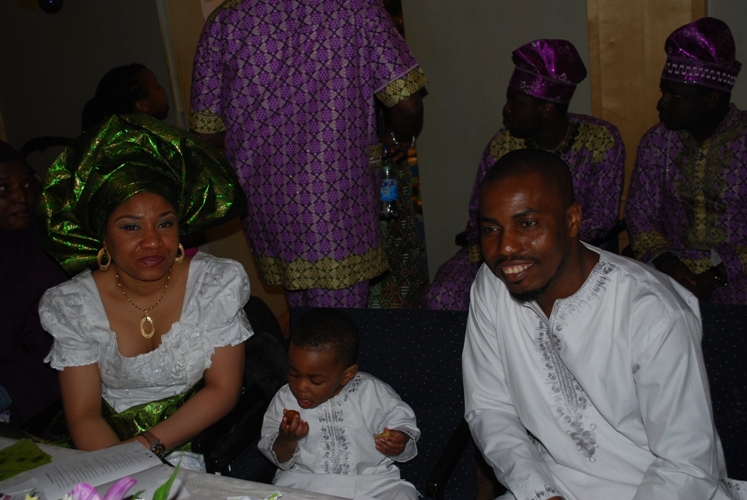
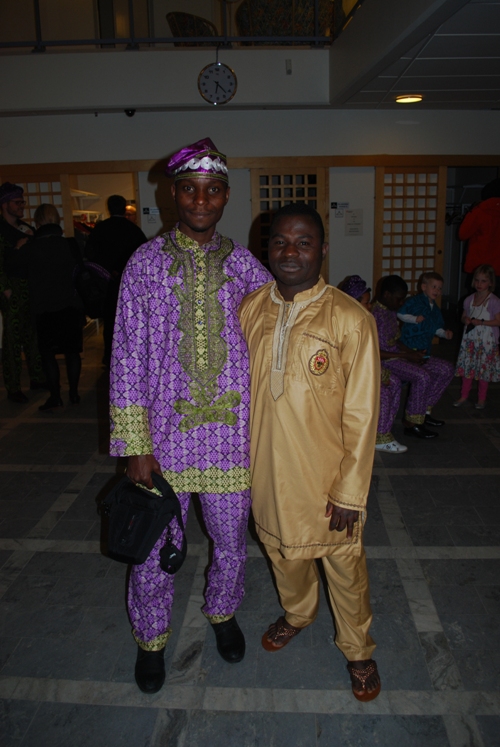
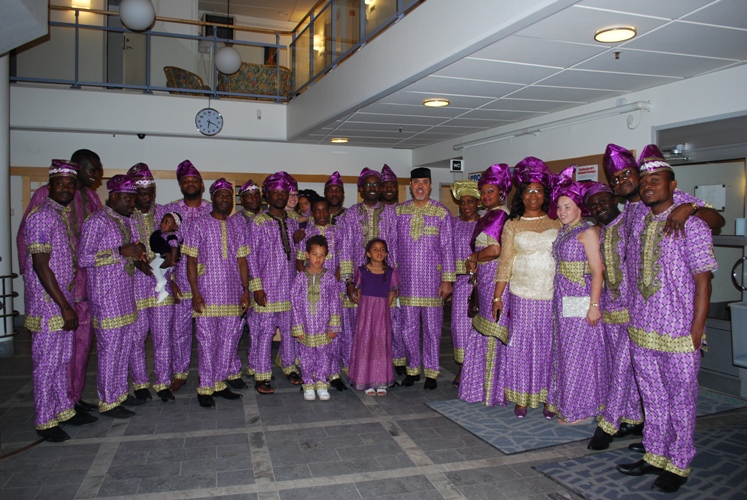
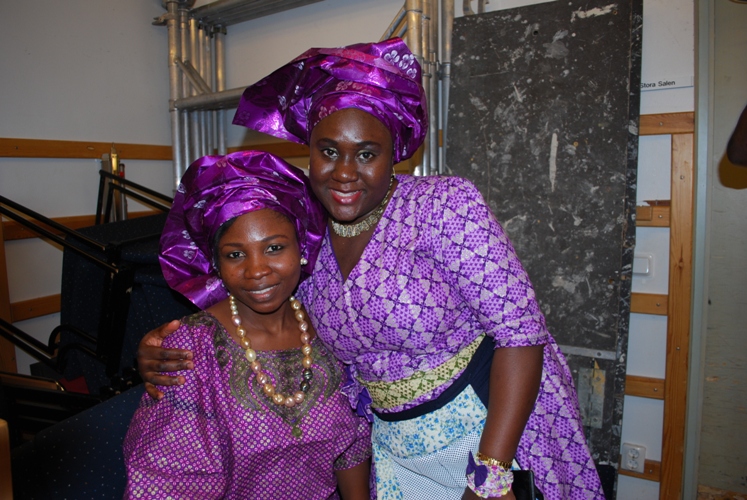
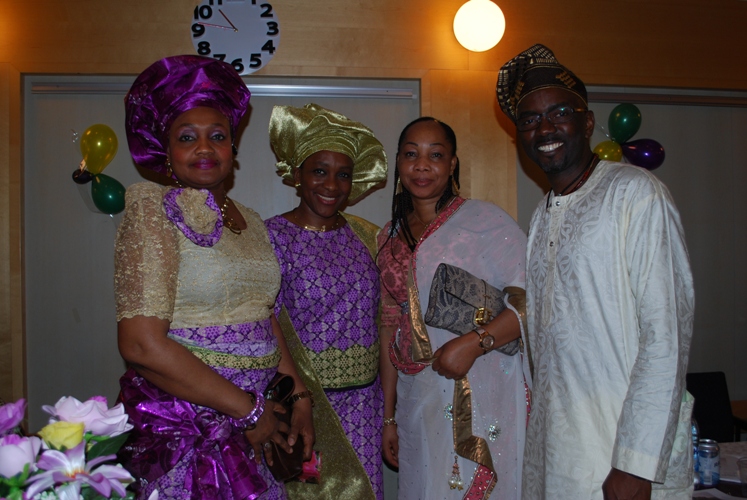
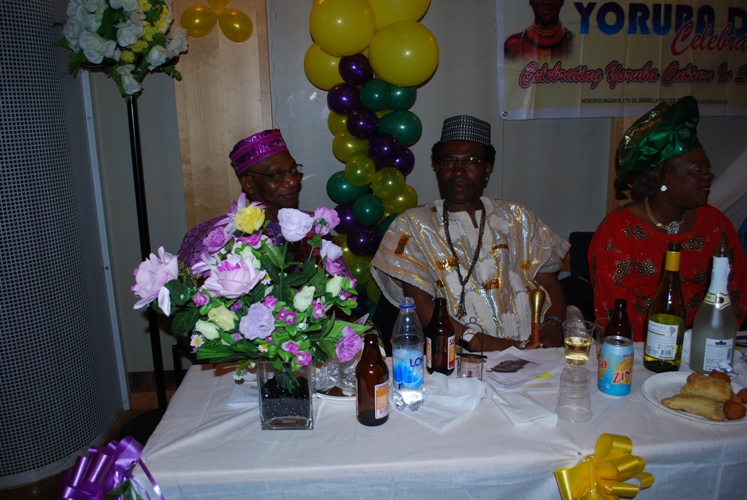
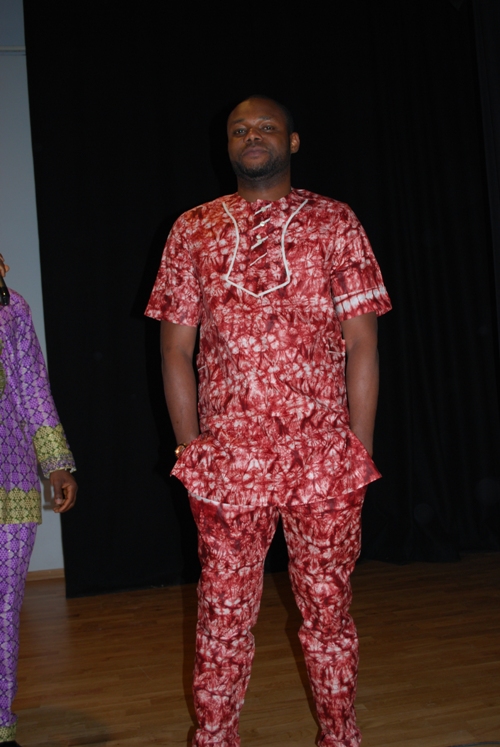
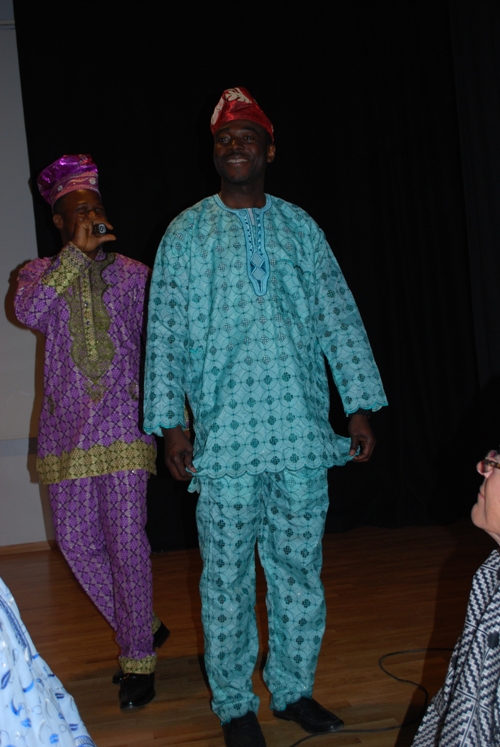
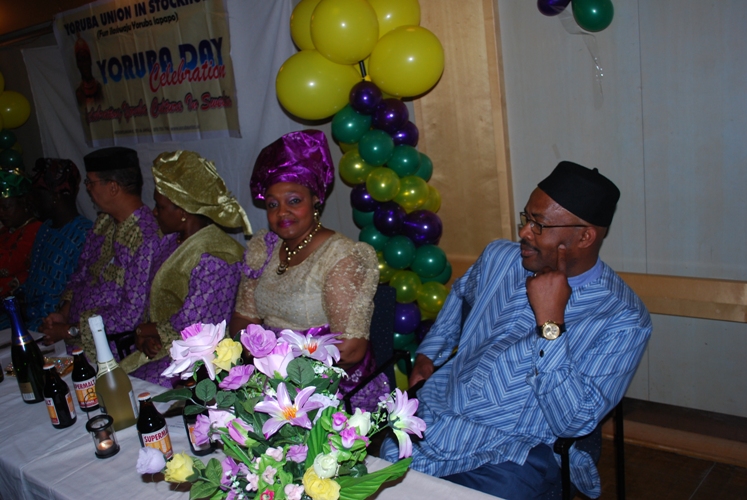
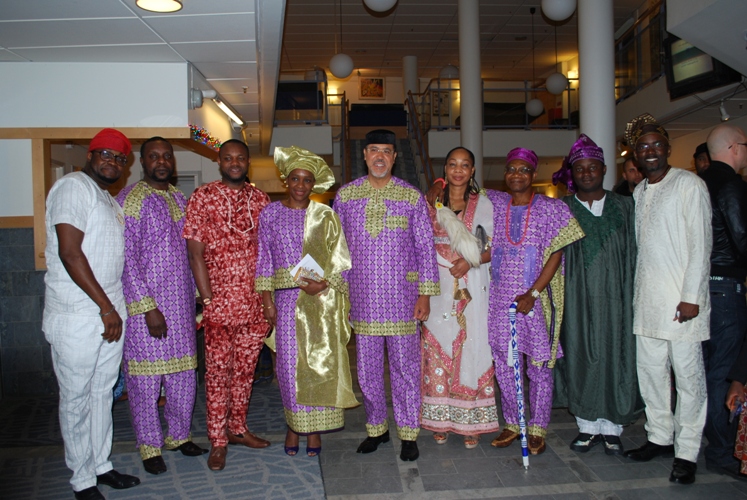
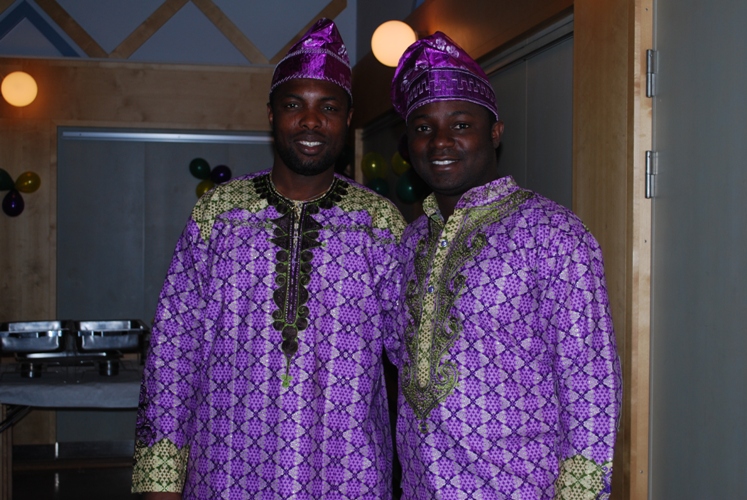
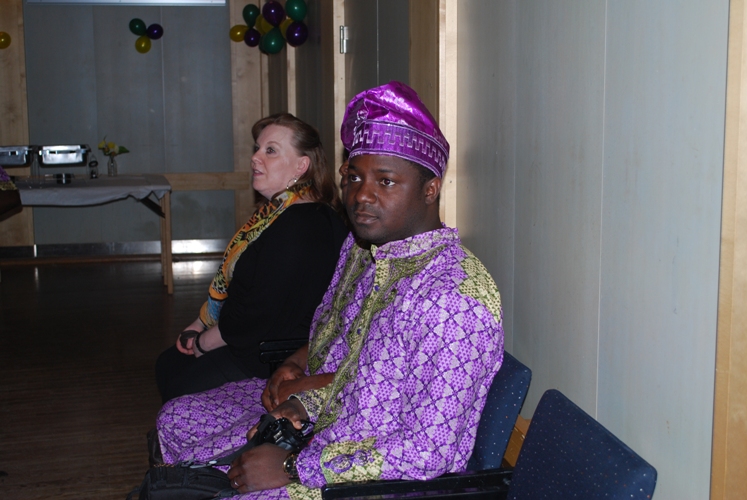
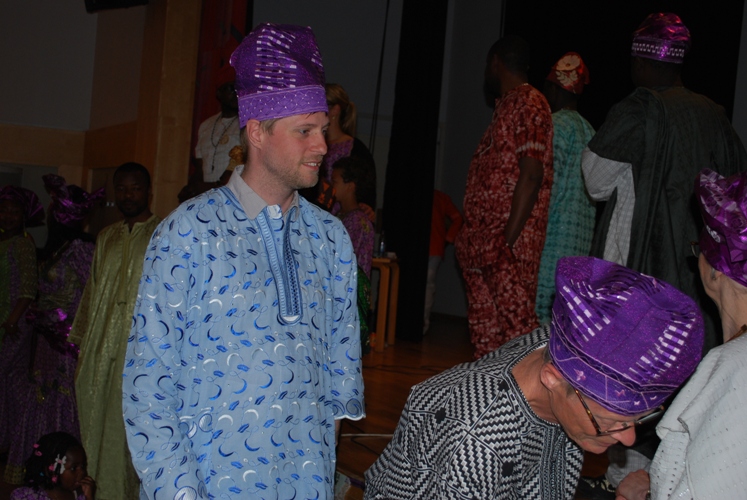
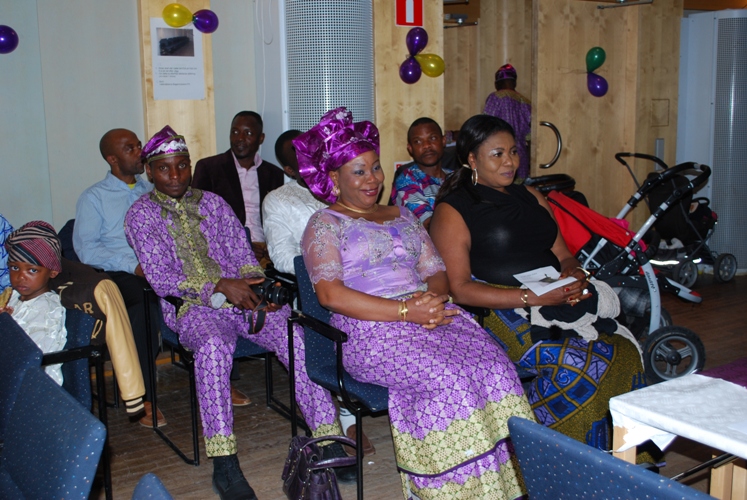
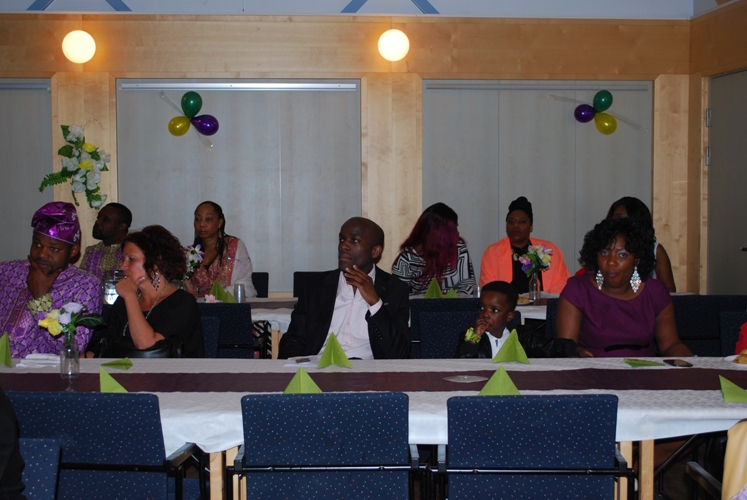
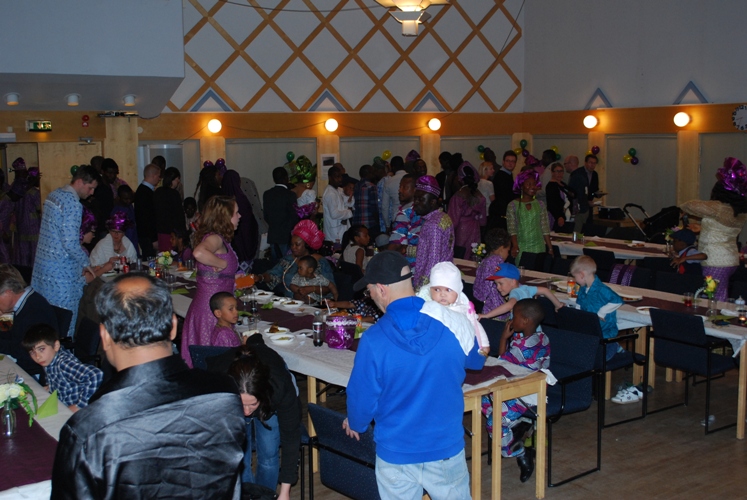
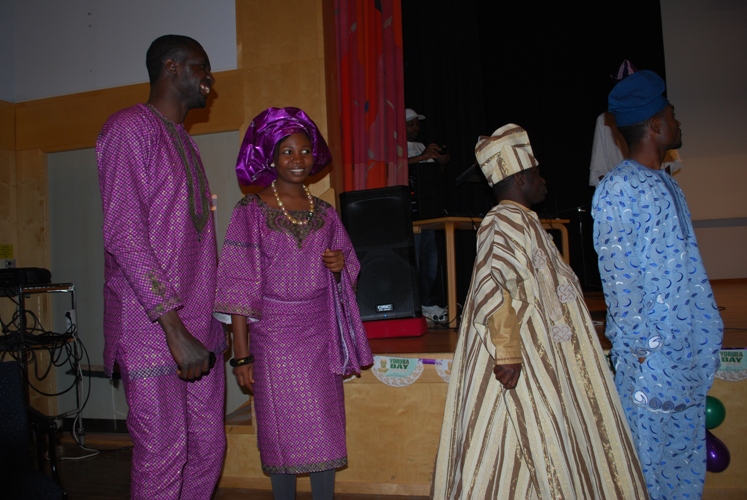
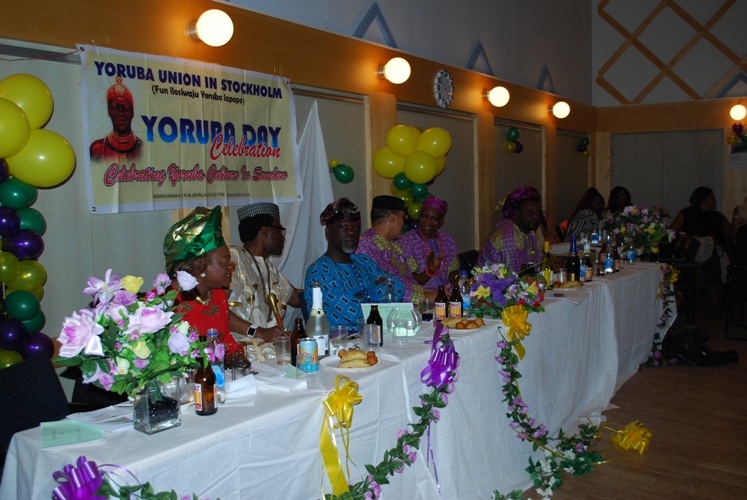
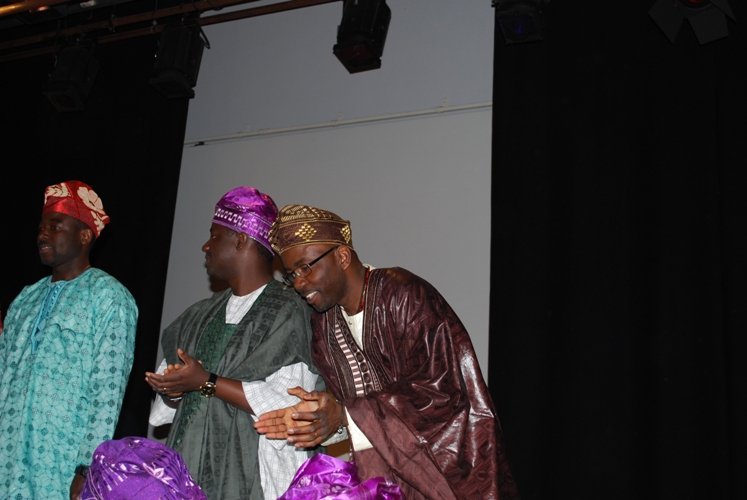
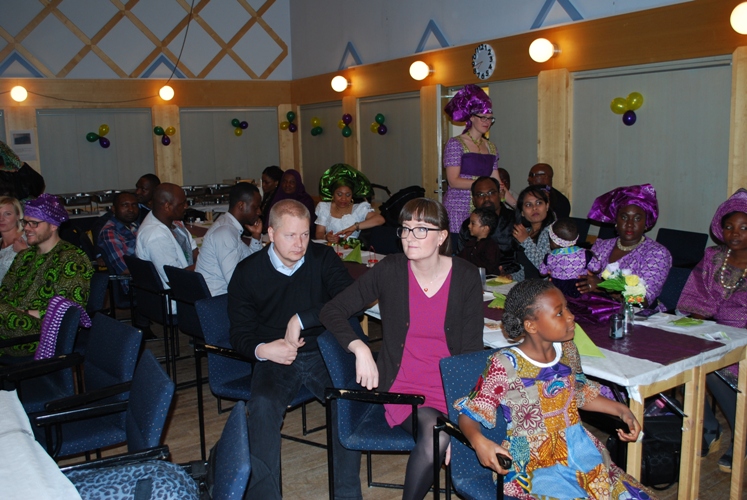
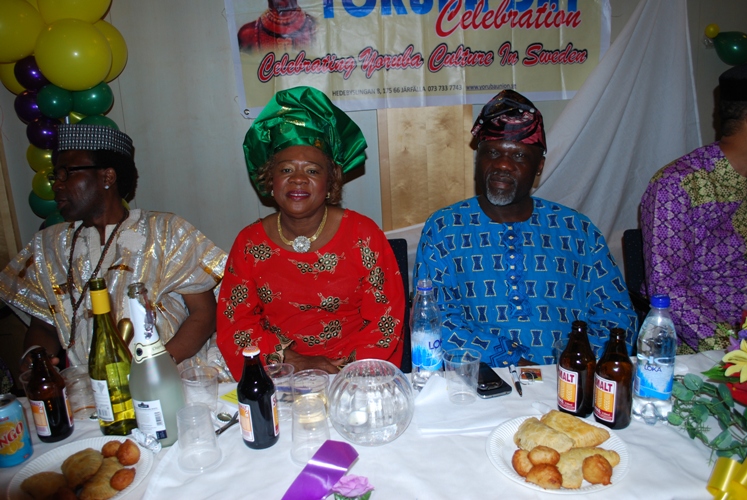
The Yoruba Union in Stockholm, Sweden successfully hosted its second annual Yoruba Day celebration on Saturday the 10th of May 2014.

This celebration of Yoruba culture and tradition has been lauded by several guests and participants as an improvement of the maiden edition which took place on the 11th of May 2013.

The first annual Yoruba Day was reported here in the village square at this link:

[http://www.nigeriavillagesquare.com/articles/photo-news-yoruba-union-in-stockholm-celebrates-yoruba-day.html]

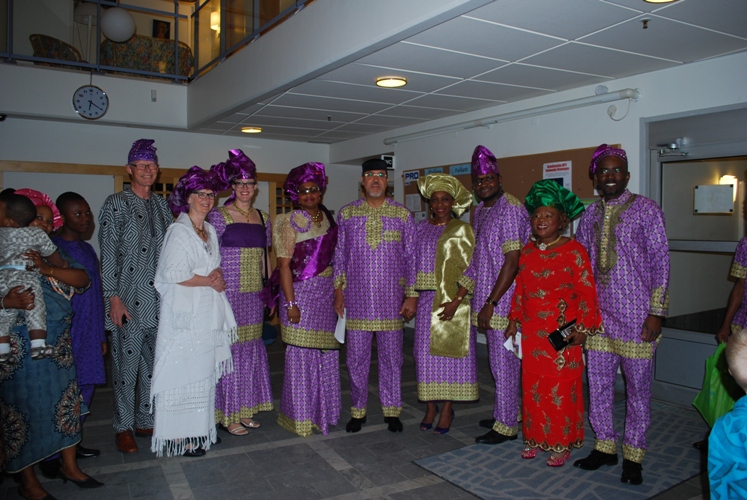
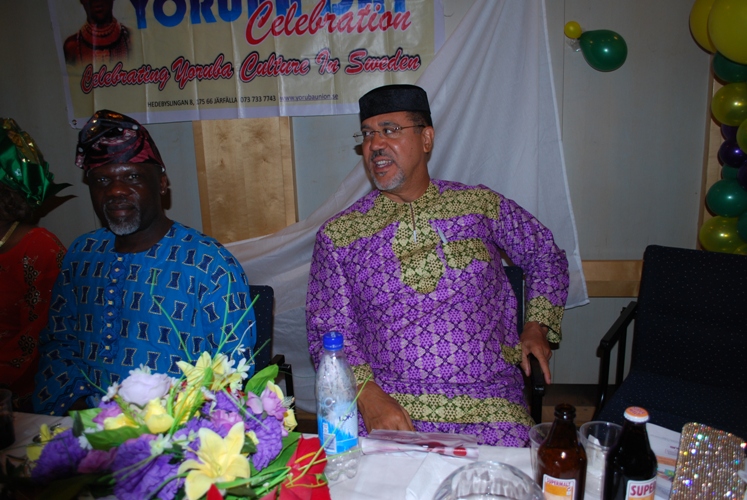
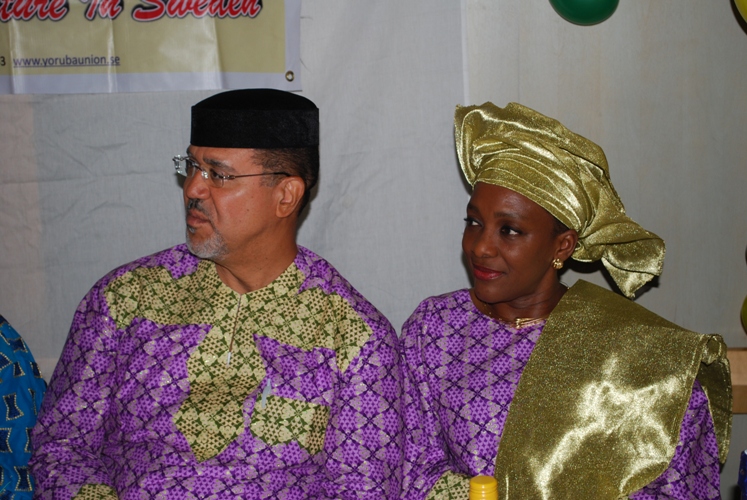
Just like the maiden edition the special guest of honour was the Nigerian Ambassador to Sweden, Norway, Denmark, Finland and Iceland, Amb. Benedict Onochie Amobi. His wife, Her Excellency Mrs. Sheila Amobi was also in attendance.

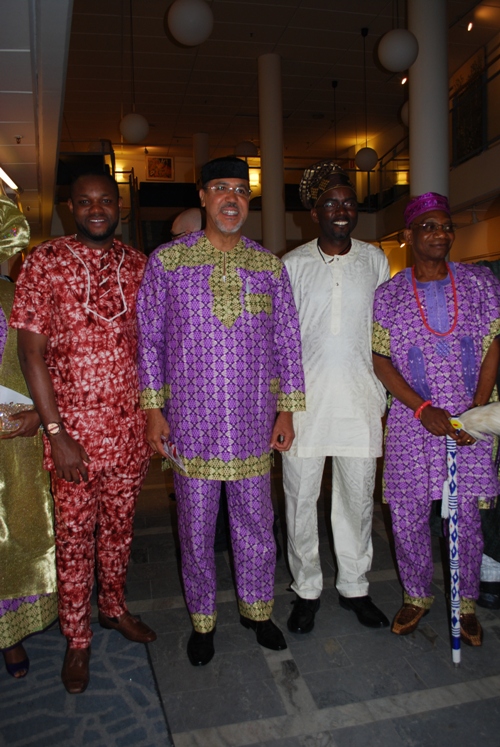
Among other dignitaries were Sola Mansur Amao, Engineer Olatunde Aluko, Prince Jeffrey Ajani, Mrs. Clara Rogo, Mr. John Rogo, Princess Adetoun Lasebikan, Mrs. Susan Amao, and Mrs. Egbo of the Nigerian Embassy, Stockholm. Mr. Dominic Emene the president of the Nigerian Union in Stockholm was also in attendance.

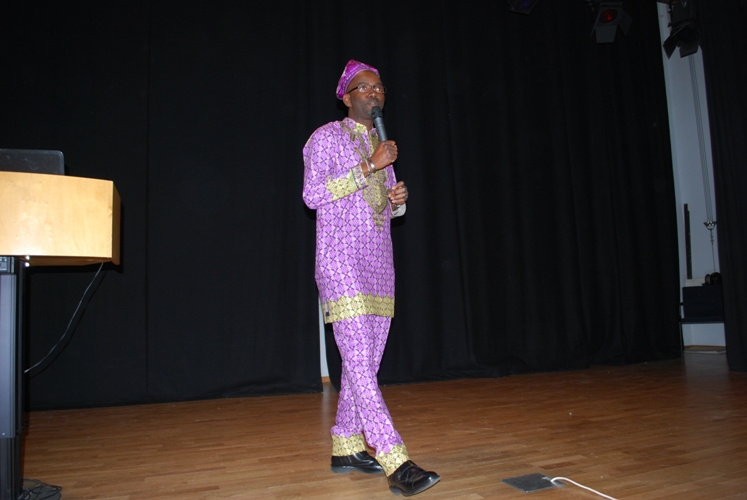
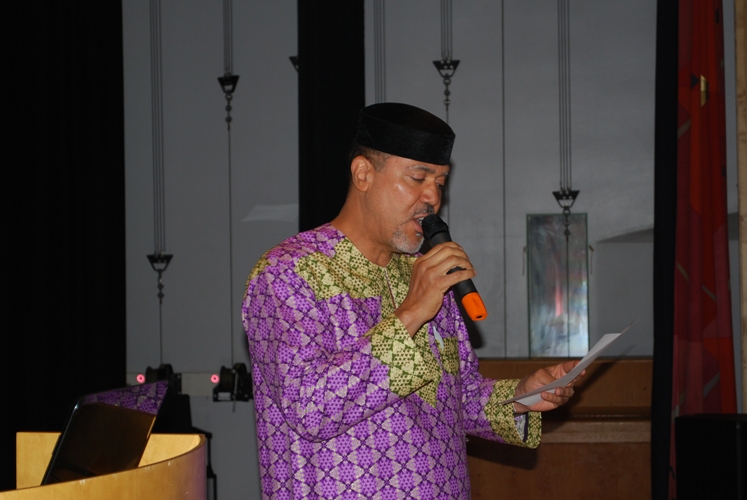
Adeola Aderounmu giving the welcome address

Adeola Aderounmu giving the welcome address

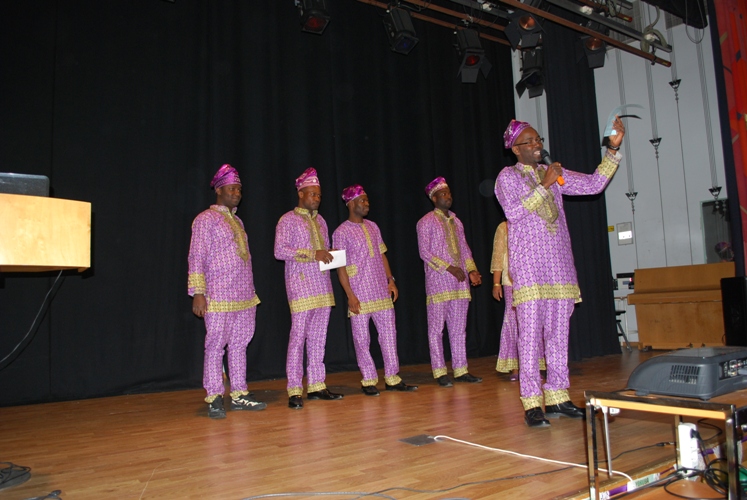
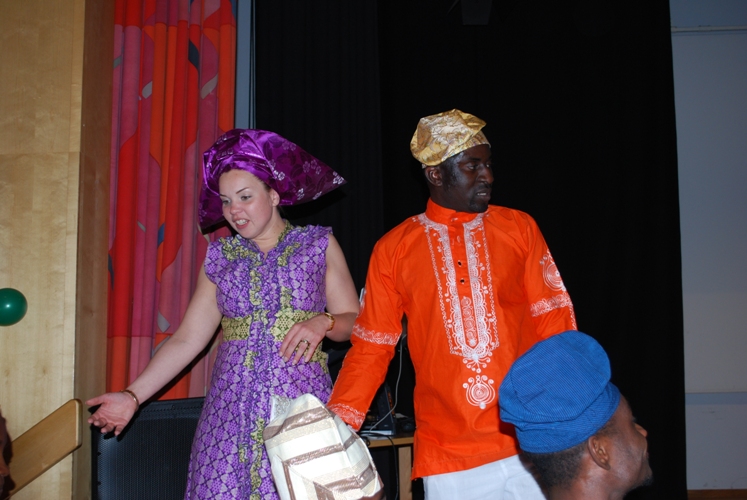
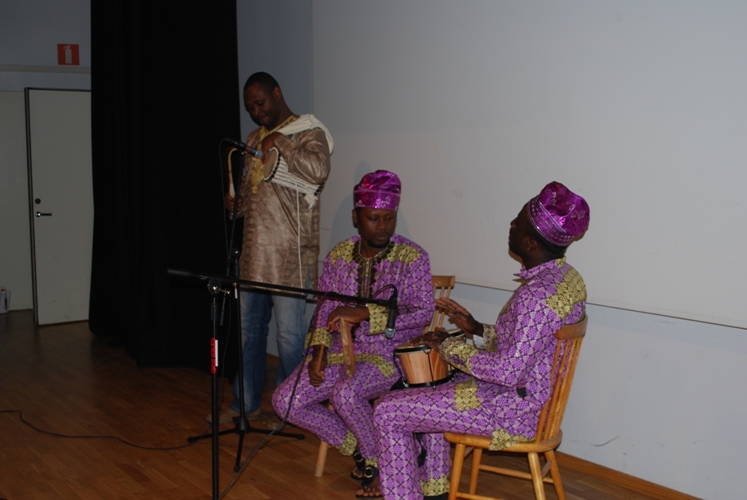
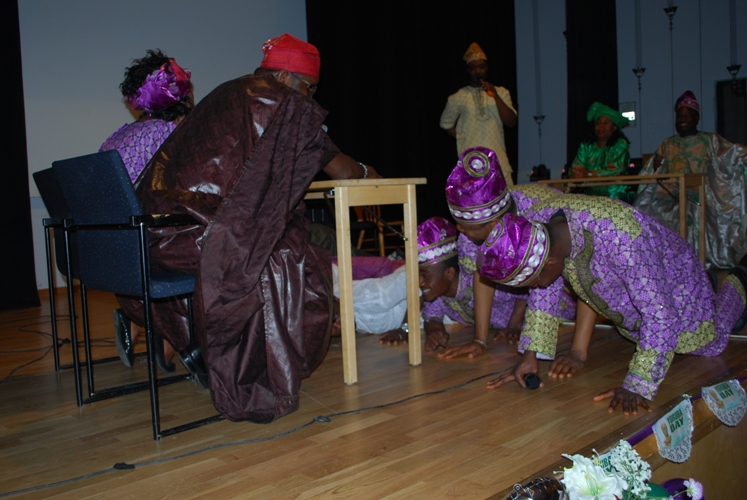
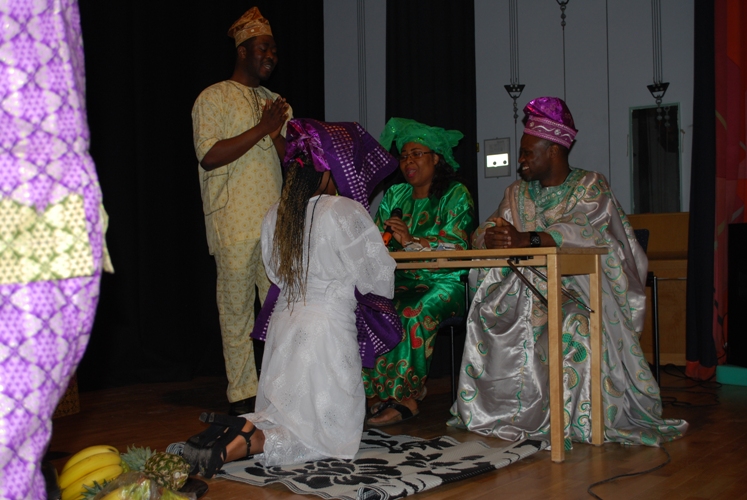
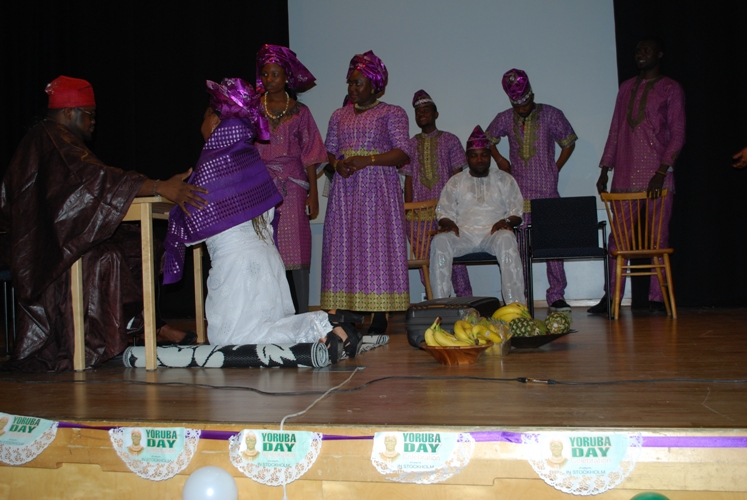
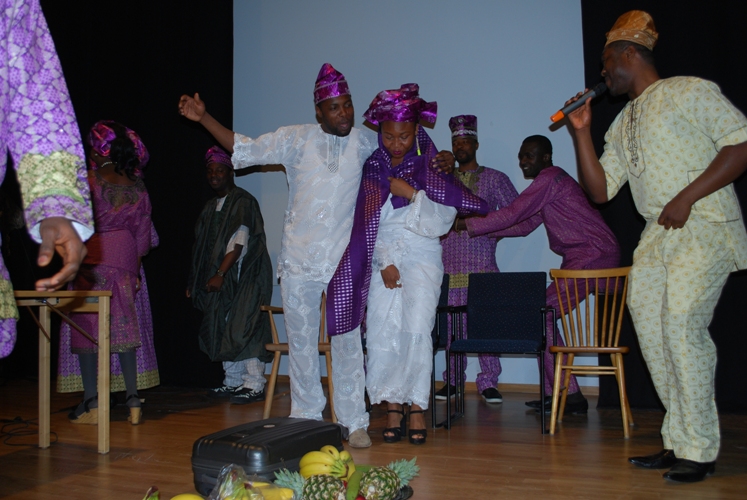
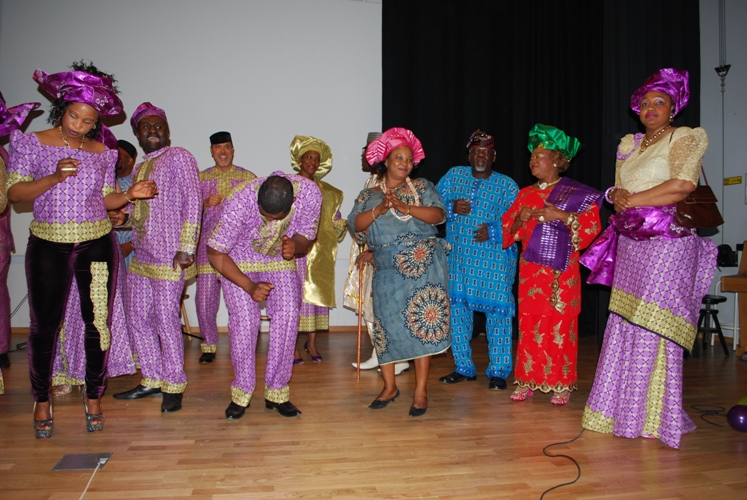
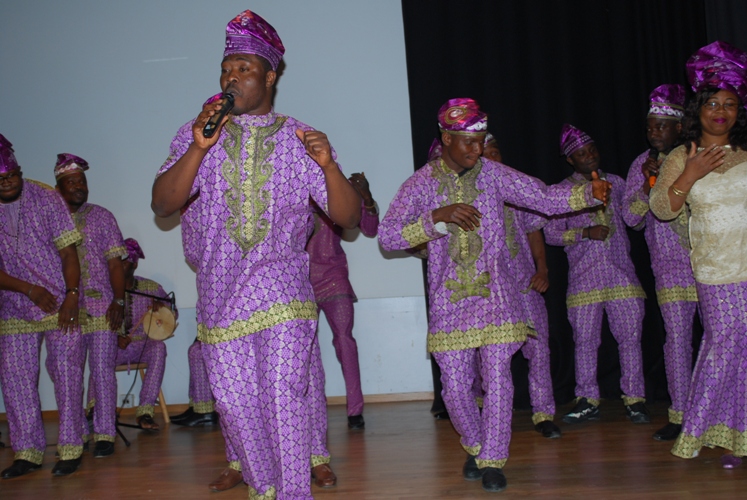
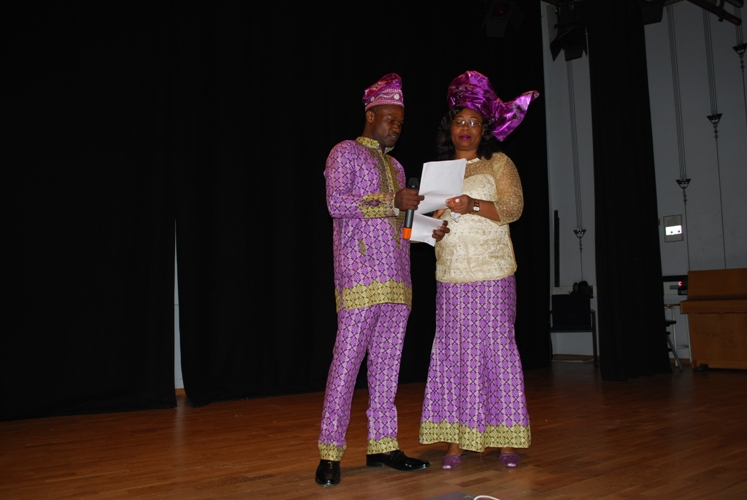
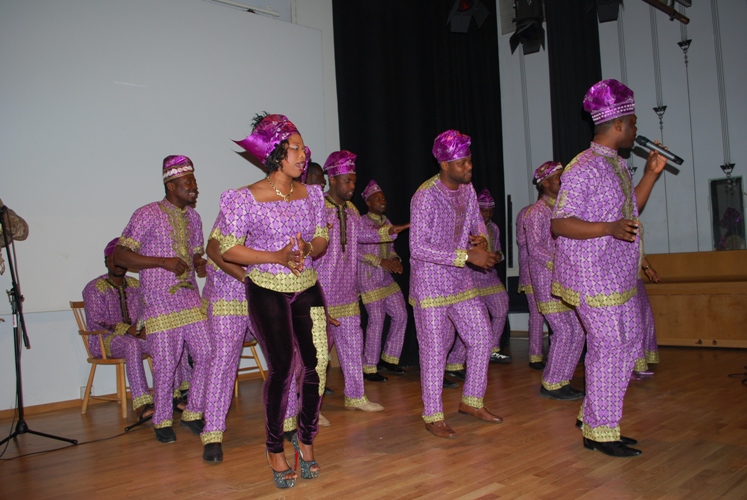
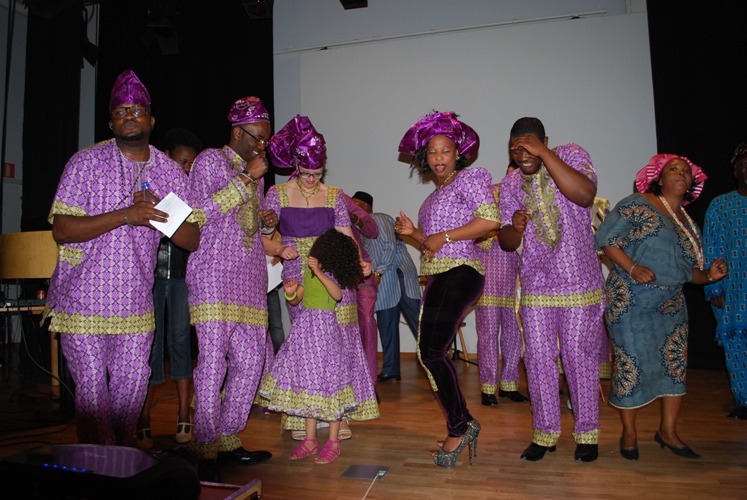
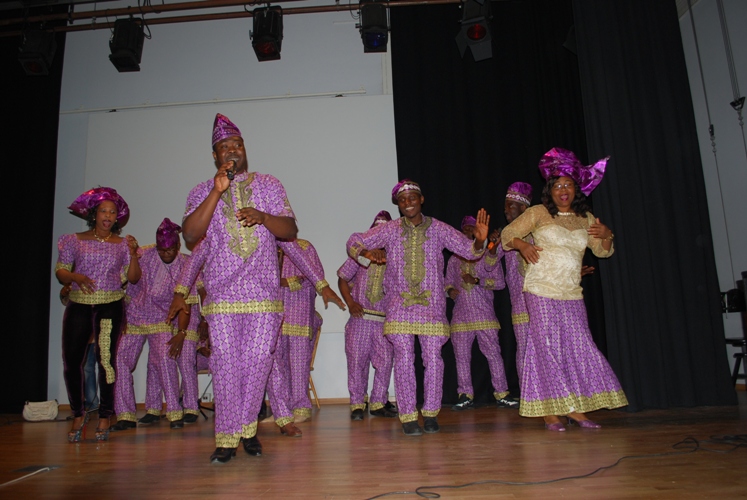
During the celebration, the members of the Yoruba Union had 2 sessions of Yoruba Cultural dances and a short drama on traditional marriage in Yorubaland was the last event of a very eventful evening.

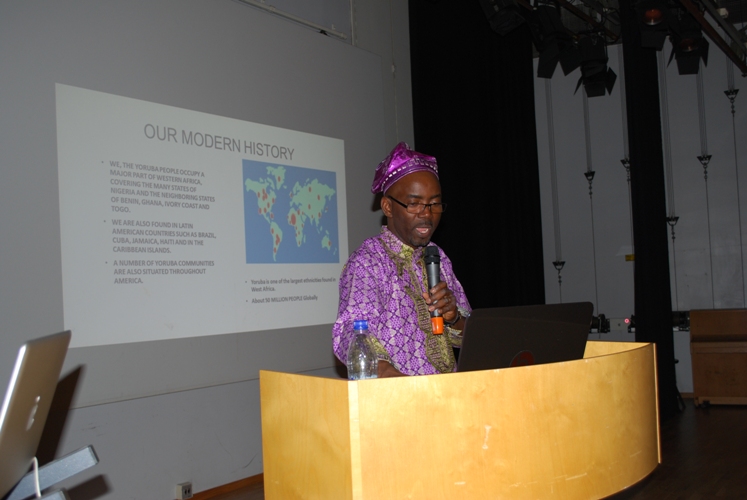
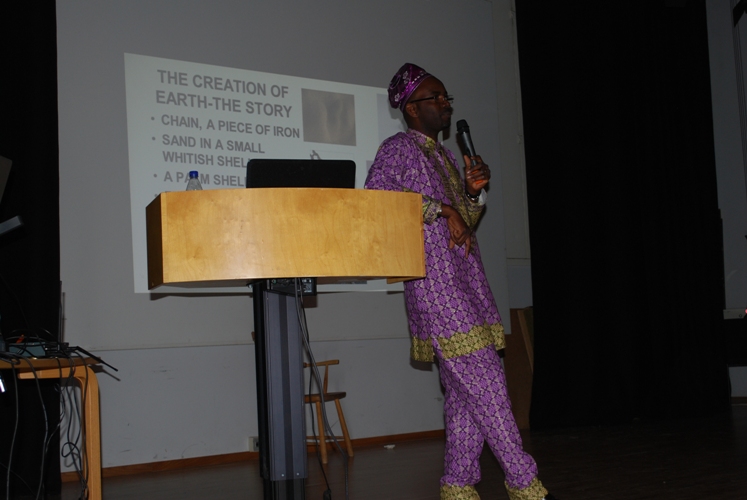
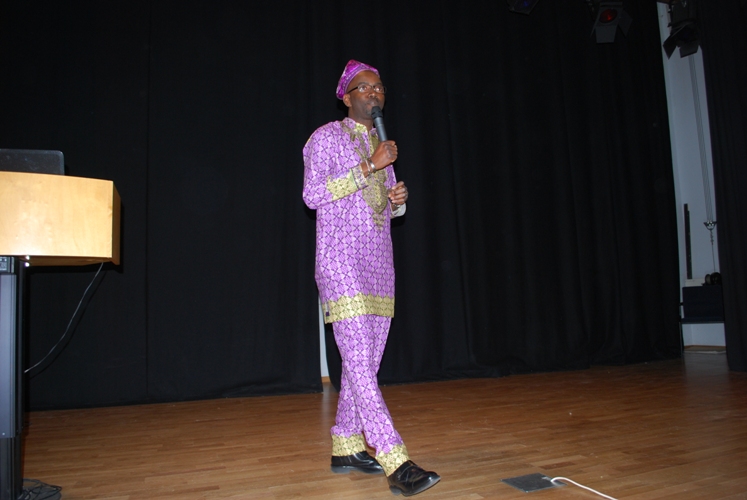
The president of the Yoruba Union in Stockholm, Adeola Aderounmu gave the welcome address and also had a 15-minute lecture titled: Ile-Ife, Our Ancestral and Spiritual Home.

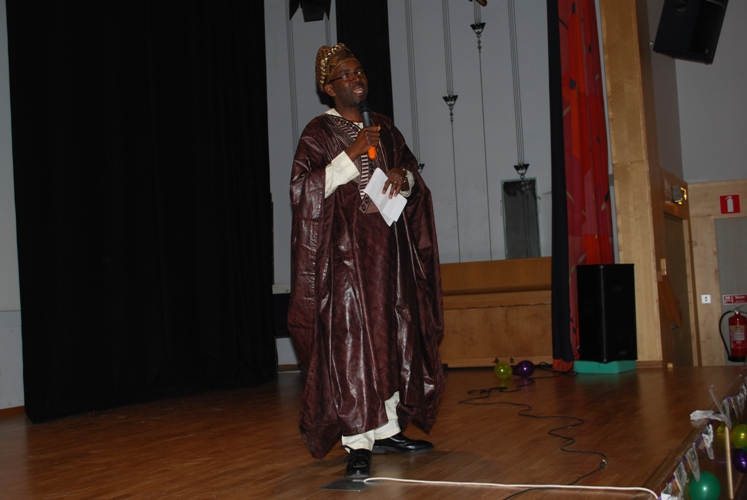
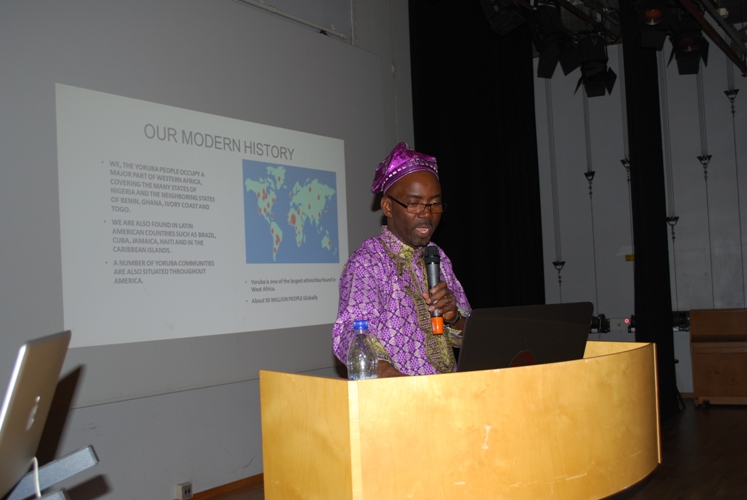
Adeola presenting the lecture on Obatala, Oduduwa, Creation and Modern Yoruba History

Adeola presenting the lecture on Obatala, Oduduwa, Creation and Modern Yoruba History


In the presentation, he highlighted the position of Ile-Ife as the origin on all Yorubas worldwide. He also gave a brief account of creation through the hands of Oduduwa and Obatala.

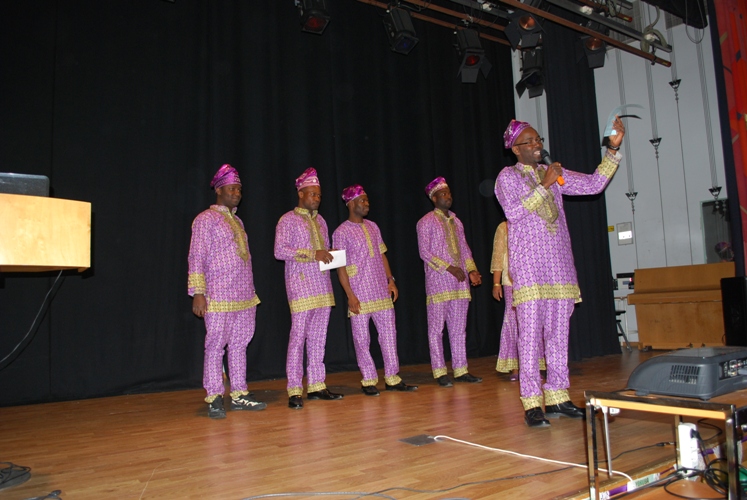
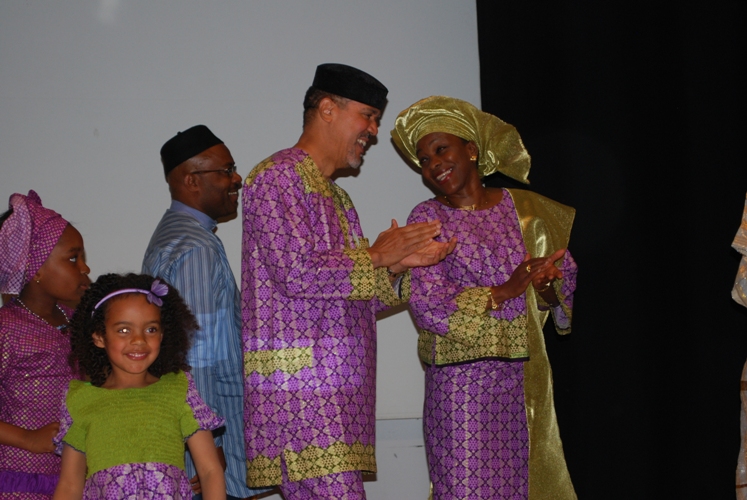
Adeola introducing the members of the executives of YORUBA UNION Stockholm, Sweden

Adeola introducing the members of the executives of YORUBA UNION Stockholm, Sweden

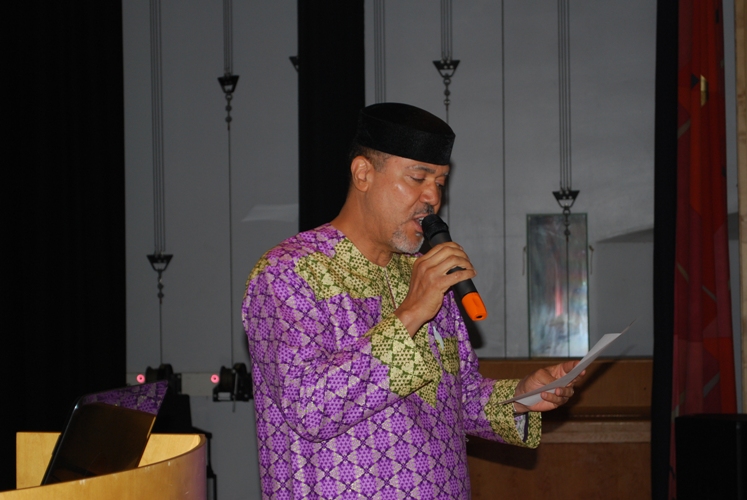
During his own speech Ambassador Amobi congratulated the Yoruba Union for sustaining the Yoruba Day celebration and for the progress that has been made since the previous edition. He also mentioned the immense role played by the Yoruba Union in Stockholm during the IFE Dynasty and Ancient Art Exhibition at the Modern Museum in Stockholm.

Amb. Benedict Amobi giving a speech at the Yoruba Day celebration in Stockholm, May 10 2014

Amb. Benedict Amobi giving a speech at the Yoruba Day celebration in Stockholm, May 10 2014

Ambassador Amobi condemned the rise of terrorism in Northern parts of Nigeria and Abuja. He mentioned that the government is working to stem the rise of Boko Haram. He also condemned the kidnap of school girls from Chibokdignitaries

cs charly adagbon

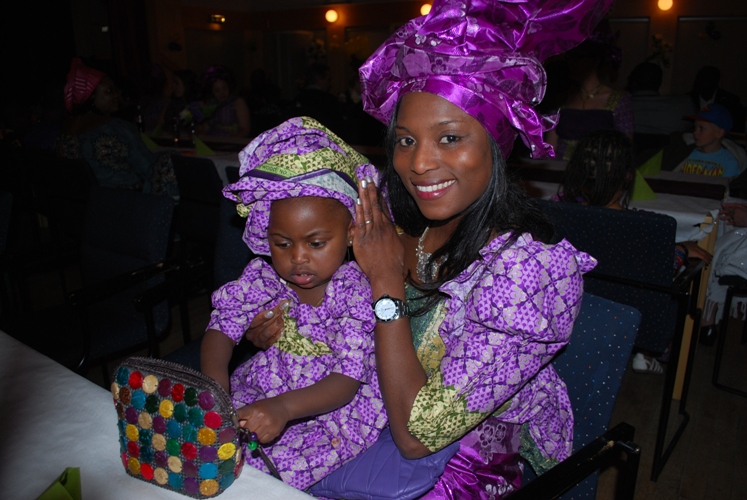
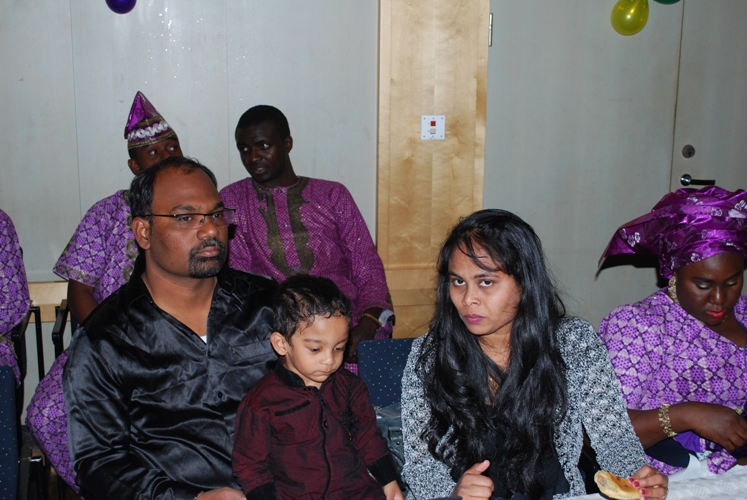
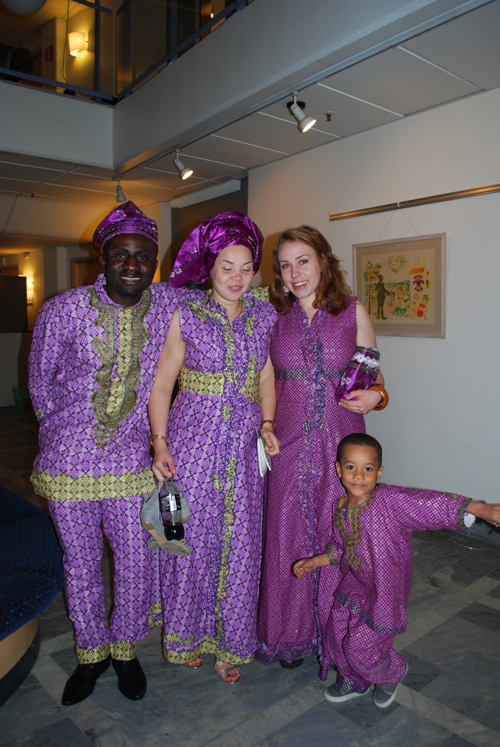
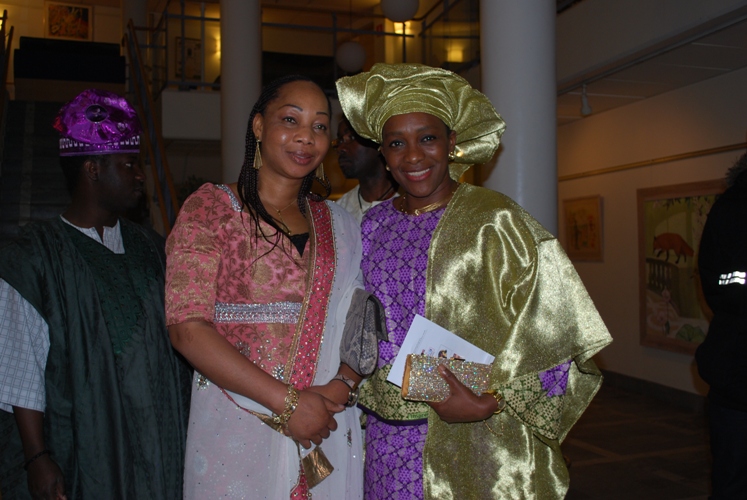
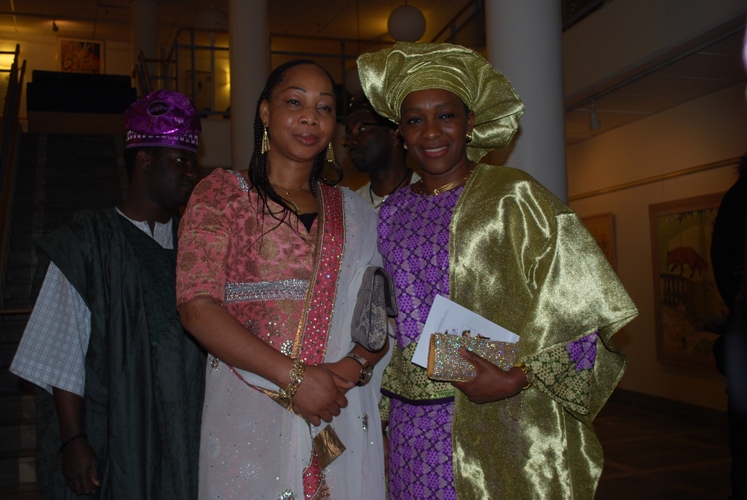
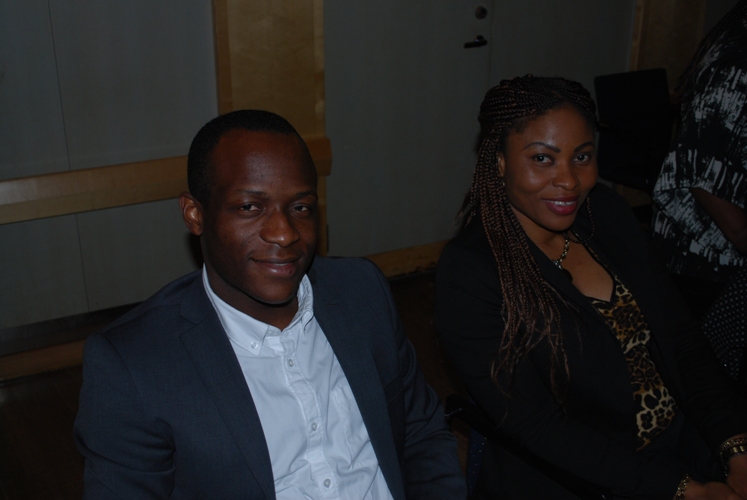
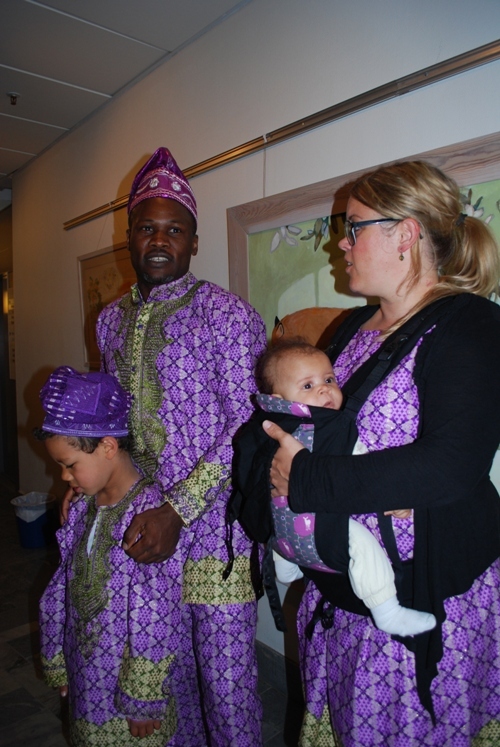
Below are some of the pictures showing the successful hosting of the Second Annual Yoruba Day by members of the Yoruba Union in Stockholm, Sweden.

Happy Viewing:

article_yusuf n gabu

article_Yoruba Union members and the amb_wife

article_women busi

article_starting

article_speech

article_princess Lasebikan others

article_pressy talking

article_president and female dignitaries

article_Omo Yoruba

article_Olatunde Aluko and Prince

article_mum n child

article_Mrs Osobu

article_Mr n Mrs Amobi

article_Mr. and Mrs. Rogo

article_Mr. Amao and Princess Lasebikan

article_joke

article_ibk

article_fashion parade

article_fashion p Ibrahim

article_fashion p ayoola

article_drummers

article_drama 4

article_drama 3

article_drama 2

article_drama 1

article_dominic

article_dignitaries

article_debo n sherif

article_debo n anne

article_david fashion p

article_dance dance

article_dance

article_cultural dance

article_cs7

article_cs6

article_cs3

article_CS2

article_cross section 1

article_cd 2

article_buffeet

article_ayoola family

article_amd wife and mrs Amao_better

article_amb wife n mrs Amao

article_amb speech

article_amb n wife leaving stage

article_amb n others

article_adeola presentation

ARTICLE_Adeola lecture

article_adegoke

article_abiola lydia mcs

article_abiola family

article_ fashion p, AY

article number 1 banner

Article last

article John  Rogo and Amb

article fashion parade_adeola applauding

article cs 5

article cd3

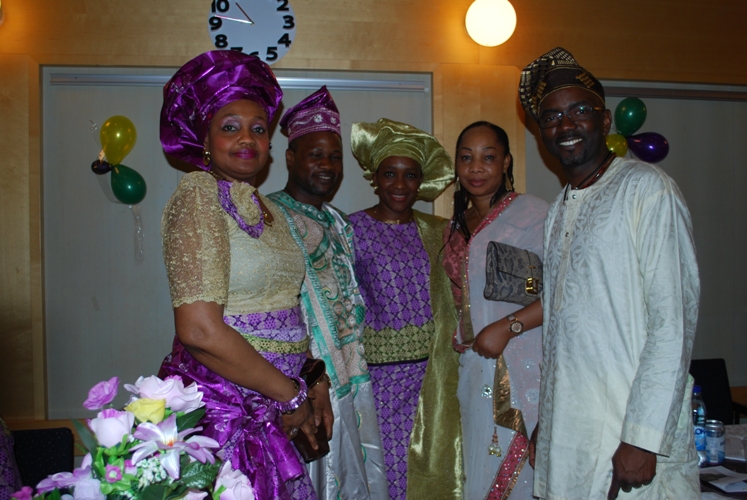
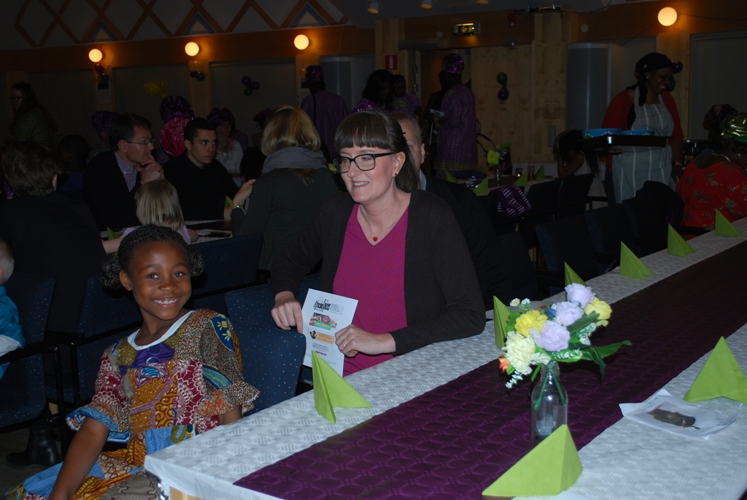
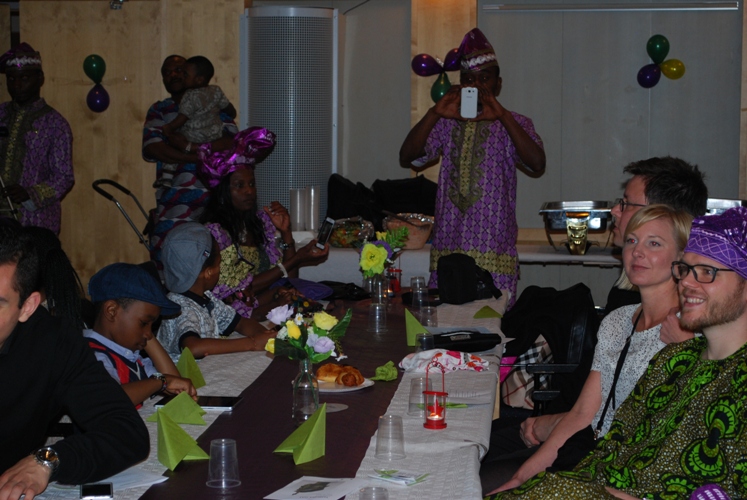
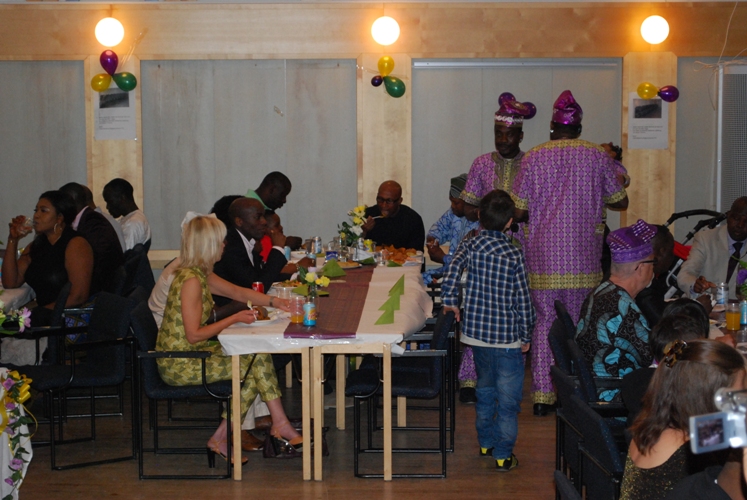
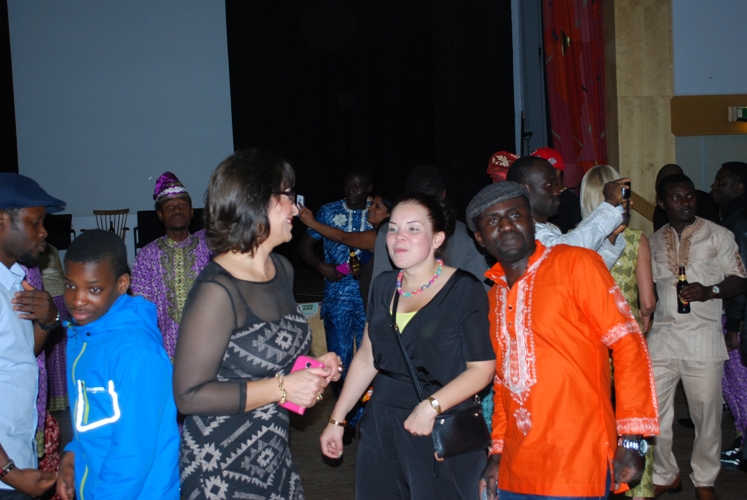
During the Yoruba Day celebration there was plenty to eat and drink as the buffet covered several of the Yoruba traditional dishes. The atmosphere was brilliant and ignited by dance, merry and happiness.

For more pictures/images visit our facebook page, https://www.facebook.com/groups/yorubaunion/

Our website, http://www.yorubaunion.se

Mail us, info@yorubaunion.se

Videos on Yoruba Union STOCKHOLM Channel on YouTube, https://www.youtube.com/user/YORUBAUNION

Leasing Nigeria? No, Thanks!

By Adeola Aderounmu

To understand the background to the title of this essay, you’ll probably have to go back to the days before you joined facebook and find the article that I wrote in 2007 titled: Shall We Lease Nigeria For A Ten Year Period? It’s available on the Nigeria Village Square website.

Leasing Nigeria

We argued back and forth why we should not get to the point where Nigeria will be handed over to the imperialists or colonialists.

But 7 years after the article was written, in the second week of May 2014, Nigeria was partially handed over to the US, Britain, France and China, at least in the area of National Security. It happened voluntarily. The cost on Nigeria’s already sapped resources will be inestimable. The strings that will be attached will strengthen the reign of the imperialists and neo-colonialists.

All of this madness could have been avoided if the federal government of Nigeria is wise and just. Agreed the problem of insecurity dates back to the pre-Jonathan area, still what Nigerians have experienced in terms of “leadership” (what I prefer to call rulership) since the ascension of Goodluck Jonathan is simply rubbish. When a ruler tries to separate stealing from corruption, then hope is not just dim, but also lost.

I also read through one of my stories in the village square titled: 1999-2015 Pdp Years May The Worst Years Of Our Lives” and I reflected upon it against the backdrop of the rise in terrorism and the extreme polarisation of Nigeria along North-South divide and Christian-Muslim alienation.

In the essay I gave useful recommendations on what Jonathan can do in 4 years to revamp Nigeria or set it on the course of rejuvenation. Invariably a corrupt Jonathan who has surrounded himself with liars and corrupt people made no sound efforts to move Nigerians out of the poverty zone. In fact, the man who had no shoes as a young boy can no longer identify with the poor. How time changes!

Since 2011 Jonathan could have avoided distraction and focus on governance. He could have tried to chase a quarter of the promises he made on his campaign trail in 2010. Rather than choose nobility, Goodluck rode on high horses and supervised the raping of Nigeria. He commends the rape of Nigeria by all his ministers who have been alleged to be corrupt. Today Goodluck Jonathan is not a man of little credibility; he is actually a man of zero credibility.

The rise of the insurgencies in Northern Nigeria has been traced to the political parties in Nigeria over and over again. Many unconfirmed stories are also talking about the influence of foreign governments. But the allegations against the ruling party (just the way the Niger Delta militants were used in the 2003 electoral season) still stand to be disprove. The mix of the allegations with the eventual evolution of the extremist group into an uncontrollable monster finally exposed the incompetency of not only Goodluck Jonathan but also the entire machinery of governance in Nigeria at all levels.

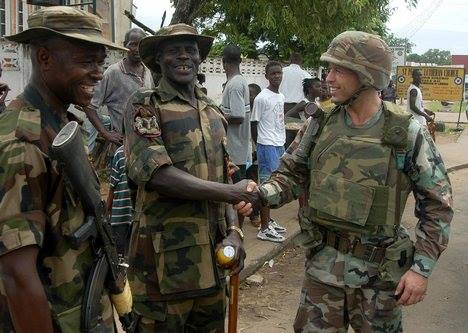
So, we got to the point we have been afraid of. The Nigerian army that quelled wars in Liberia, Sierra Leone and Mali could not end the insurgencies in Northern Nigeria. The Nigerian government that helped disrupt the reign of Apartheid in South Africa suddenly became helpless at home.

The breakdown of command from Aso rock to the forests and mountains in Borno state leaves one in search of the true history of Boko Haram. The role of the snitches in the Nigerian Army deserved to be investigated. This breakdown leaves more questions than answers in all the cases of evil, murder, arson, kidnapp, assasination and general absence of law and order in the face of emergency rule in Northern Nigeria and Abuja.

Nigeria has gone too far promoting ineptitude and sycophancy. The system of governance is wrong and deserved a change. Unfortunately the change is not in the making by the bunch of jokers currently enjoying “holidays at great cost” under the pretence of a so called “staged national conference”. Those parasites should be sent home.

It’s really difficult to ask the Nigerian legislators who are also massively corrupt to start a process that will re-engineer and restructure the geographical distributions in Nigeria. But the request must pass. Nigeria cannot rely on foreign intervention because of terrorism in Nigeria which now poses as a great threat to national security. It is time to revert back to regional government.

The regions should be strengthened at the same time that the corrupt center is dismantled or stripped of most of its powers. Mr. Jonathan confirmed that using 50% of his powers will make him a dictator. That sort of system is too useless to sustain. He is already worse than a dictator by the way.

One obvious fact facing Nigeria in the face is the lack of unity and the near impossibility of one dude ordering people around from Abuja. Indeed there are states and local governments in Nigeria but they are all too dependent on the federal unitary system. This is a massive handicap in government. That chain needs to be broken and the old regions need to be restored or reconstructed. This reconstruction may be wisely done as not to play into the hands of the international community that seeks to weaken the regional power of Nigeria.

If powers are not concentrated in Abuja, Boko Haram would not be heading there. If the North-Eastern region runs its own government, it will resist and fight back insurgencies with all its might. There might not be any insurgency at all because the people will realise that they have to choose reliable people during every election and they will look forward to peaceful changes when they have faced disappointments. There is a lot of silence from Northern Nigeria. If they run their own government all the silent people would render their voices. But when necessary the federal forces can always help the regions to regain stability.

The Nigerian government is delaying reforms. The Nigerian government and the politicians in particular are acting out of selfishness and they cannot imagine a life without corruption. They cannot imagine a life when the people would have freedom. The evolution of Boko Haram is changing the course of history in Nigeria while the lack of action continues to heighten the probability of a violent disorder and eventual breakup.

Many have argued that a peaceful process of re-organising Nigeria politically is far better than the revolution that looms with the rise of Boko Haram. The history of foreign interventions in Afghanistan, Iraq and other places came with sour tastes. It is always better to make peaceful resolutions than to engage in violent-induced changes that can consume anything or anyone.

History is a great teacher and to ignore the lessons of a bad history always allows it (a bad history) to repeat itself with devastating consequences.

aderounmu@gmail.com
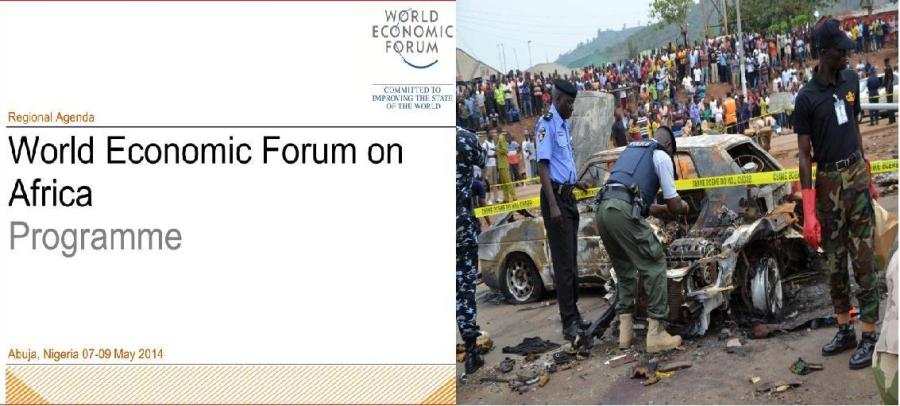
[Photo Taken From Nigeria Watch]

The Ignorance Of Jonathan On Poverty And The World Economic Forum

By Adeola Aderounmu

If the forum goes ahead as planned, there will be tight security all around Abuja while the conference last. The security will be heavy and water-tight at the Sheraton Abuja Hotel, Transcorp Hiton Abuja and the Abuja International Conference Centre.

Somehow this conference in Abuja will showcase the low cognitive mentalities of some African rulers. The government of Nigeria will ensure the security and safety of foreigners. It is the same government that has not been able to protect her own citizens and is yet to issue any official statement on the circumstances surrounding the missing school students in Northern Nigeria.

WEF_Adeola

Who abducted the girls? How many of them were abducted? Who are the gangsters responsible for this human trafficking? What efforts are being made to curtail or prevent a re-occurrence of mass kidnap of children, men and women? Why was it possible to carry our double terror attacks at the same spot at such a short interval of time? The answers to these questions lie with the commander-in-chief of the armed forces, men of the armed forces and the investigative arm of the security agencies, not with some “money-siphoning committee”. Silly!

The other angle to the economic forum came as a bang on the 1st of May 2014. The ruler of Nigeria revealed himself as one who has no sense of economics and growth measurements. What benefits is Nigeria getting from the WEF when poverty is measured by the number of people appearing on Forbes list of rich people or by the number of people who flew private jets to Kenya? Jonathan does not get it; his level of reasoning is so kindergarten and appalling. Now we know how Nigeria’s economic has overtaken that of South Africa-it is by private jets and Forbes report.

Poor Nigerians! They are in a permanent mess! With his line of reasoning, like a mad king, there is no way out. All those comments about Aliko Dangote, private jets and giving money to a Nigeria shows that Nigerians have thrown away their hope of a better future with the type of rulers they get at all levels of government. The relegation of intellectuals and the elevation of agberos and touts across all strata of governance in the affairs of Nigeria are revealing very devastating consequences.

When some people argue about not blaming the ruler of a country for the lack of security in the country then I don’t know who is going to accept the blame or responsibilities. Somebody must take responsibilities for the security breakdown in Nigeria and that person whom the bulk stops at his table is the ruler of the country.

It was not the South Korean PM who tilted the ship that capsized yet he took the blame and the responsibilities and stepped aside instead of finding blame or passing it around. So, I am sorry the security problem in Nigeria is for the government to solve irrespective of whether the government knows the sponsors or not. Innocent people are dying everyday! Children and women are kidnapped and used as slaves and sex objects.

Let me hasten my essay, Boko Haram successfully bombed a car park area in Abuja twice in a period of less than one month. The group vowed that it would remain in Abuja to unleash more terror attacks. Nigerians are asking for the arrest and prosecution of the sponsors of Boko Haram because Mr. Jonathan has mentioned several times that he knows the sponsors.

What investigations have been done by the police and the other security agencies? When will the arrest or interrogation of suspected Boko Haram terrorists begin? Is the judiciary independent enough to run these cases if this government gets the “liver” to start this show? Are the skeletons in Mr. Jonathan’s cupboard the hindrances to the end of terror in Nigeria? Who or what is he afraid of?

Who are those in his government that he said are “Boko Haram” members? Why is the Nigerian Army playing a double role in this whole deadly drama? People are asking the Nigerian army “if you can lead and win in Liberia and Sierra Leone, why is it impossible to lead in ordinary Northern Nigeria? Who controls the Nigerian Army today? What is in their way? Why are they being killed and slaughtered by Boko Haram so easily?

The WEF is ill-timed. Nigerians are asking about missing students and several murders and senseless killings by Boko Haram terrorists. Nigerians are asking for protection, they won’t get it! Nigerians do not have security for their lives and property. The luxury of security will be given to foreigners and coincidentally to Boko Haram terrorists who said they are already in Abuja. Are they lodged at the various expensive hotels in Abuja?

If this World Economic Forum conference is rolled away from Nigeria, the consequences and embarrassment (if this government ever get embarrassed) might help to start finding answers to the several unanswered questions that now include the global #bringbackourgirls campaign.

Who knows? The implications might be heavy enough to wedge stricter security measures to keep all Nigerians (and foreigners) safe while not ignoring the effects of the appropriate use of the rule of law as short term palliatives.

On the long term, it would be of historical and educational significances to look at the circumstances that led to the rise and success of Boko Haram in Northern Nigeria especially the role of underdevelopment, ignorance, poor education and outright failure of governance in the region notwithstanding the several years of hold on power by the selfish rulers from the Northern Nigeria. The lessons learnt can be useful for the future generations. Two post-independence generations of Nigerians are already wasted! Tragic!

aderounmu@gmail.com
[photo, world economic forum and AFP photo]

The Boys From Festac
By Adeola Aderounmu

When Bimbo Fatokun came to Sweden in 2002 for a football trial at Djurgården the first question he asked me when we met was “Omotayo, which club are you playing for”? I told him I came to Sweden to continue my academic studies. It was not all of my dreams that came true.
Over the years I’d pondered on what happened to some of us, the boys from Festac.

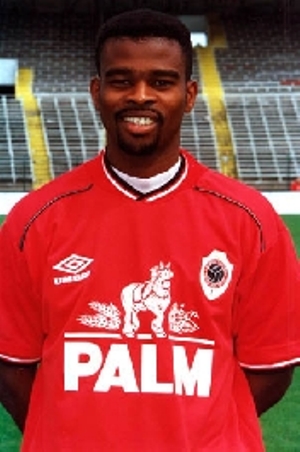
Bimbo left Nigeria back in the 90s to ply his trade abroad. He is very talented, athletic, quick and skilful. He is one of the best strikers/forward I’d ever known in my life. He played for Antwerp for several years and remained settled in Belgium with his wife and children. He didn’t reach the fullest of his potentials but he did his best. We had hoped that Bimbo would play for Nigeria one day but it did not happen. I had a short discussion with him about this in 2002 and I respect his views and will keep them off the web.

Bimbo Fatokun

Bimbo Fatokun

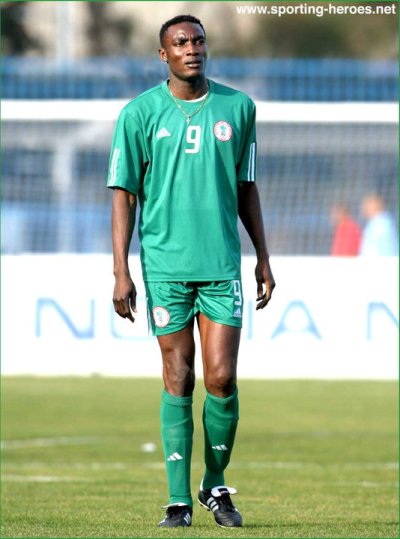
There are quite a number of boys from Festac who reached the national teams of Nigeria (at various levels). Sunday Oliseh, Samuel Ayorinde and Victor Agali are notable examples. I think the Ipayes also have links to Festac Town. Wasiu Ipaye on 401 Road was one of my closest pals before I left Festac Town. A very humble guy, he is. I heard that some younger generation of footballers from Festac Town have represented Nigeria too in recent years. I wouldn’t know them personally.

Agali

Agali

You won’t read about all the boys from Festac in a single essay and some people will probably get upset with me when they find out that their names are missing in this short story about the boys from Festac Town. Yes, it is a bias history. I write only about some of the boys who played with me and a bit after me.

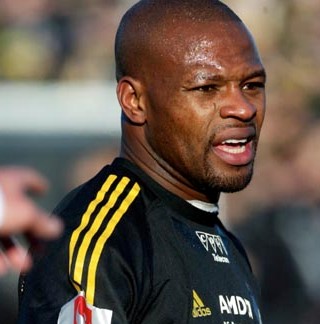
Samuel Ayorinde

Samuel Ayorinde

George Ekeh is the eldest of 3 brothers from Festac Town who are football talents. I remembered the first time I saw George playing football as a boy. He was under the age of 10 at that time. I marvelled at how such a small boy could have so much skills and confidence on the ball.

George Ekeh

George Ekeh

As a young teenage striker, George can hold and guide the ball with extreme mastery. I admire his skills. George probably did not hit the apex of his talents on the big scene but he went on to play in many countries around the world. I like him very much. He’s settled in Sweden.

Emmanuel Ekeh followed in his brother’s steps and he’s the one that still has more time on his hand to proof what he can do with his boots and skills. I watched a few of his clips on YouTube. He has such a pace and he’s got good vision to make precise passes.

Emmanuel Ekeh

Emmanuel Ekeh

Kingsley Ekeh is a well known player in both Portugal and Cyprus. Famously called King he shone like a millions stars during his playing career. He quit in 2012 and became a scout for his former team.

Life can bring many twists. When I watched or played together with George sometimes, I never saw Kingsley on the football field. In fact, all my years in Festac Town, I didn’t see Kingsley kick a ball. He was always talking on the sidelines. To be honest, Kingsley can provoke anybody back in the days and you can’t win over him in an argument. I actually thought it was a joke when I heard that he was a professional footballer. I do hope to see Kingsley soon. When I do, my first question to him will be “come, which time you start to play ball sef”?

Kingsley Ekeh

Kingsley Ekeh

Azubuike Oliseh probably enjoyed the influence of his brother Sunday Oliseh in gaining international prominence. I have to be honest. This guy trained hard to ensure that he carved a name for himself. However, not everybody will agree with my last submission because despite playing for big teams in Europe, it was obvious he didn’t have the skills and fluidity of Sunny his brother.

Azubuike Oliseh

Azubuike Oliseh

The youngest Oliseh that I know, Egutu Oliseh still plies his trade as well. We never played together. I saw him grow up and I saw him at the Sunday services many times along with the rest of the family.

Egutu Oliseh

Egutu Oliseh

To complete this short story about the boys from Festac, I called up Femi Oladele in the middle of it. Femi is an encyclopaedia of Nigerian football. He grew up in Festac and studied Veterinary Medicine at ABU. But today he holds a Phd in sport administration from a German university.

As a result of his passion for football, he abandoned a PhD program along medical line in Sweden. I have convinced Femi to join me in writing the second part of this story. I have to forgive Femi though, he still doesn’t acknowledge my skills and I’m shocked he didn’t see any of my big games in Festac, Ebute Metta, Yaba Tech, Unilag, Mile 2 and in Ibadan.

Bassey of 23 Road did not turn professional. The story of Bassey will be told differently depending on the speaker and how well they know Bassey. In Festac in those days you cannot separate Bassey and George Ekeh. I always find them near mama Ibeji’s shop, chilling and talking for long hours. They are always together in the evening to discuss how they played/trained during the day and they talk a lot about the future. They had the same dream. There was definitely a link between Bassey, George and the Olisehs. I am not in the position to elaborate. I was at the University of Lagos when many water passed under the bridge.

In any case, historically, I was probably one of the first groups of people who played football with Bassey in Festac Town. His family moved into an apartment behind ours. Hardly had they put their belongings in place than Bassey came down to find me and 2 boys playing football. Bassey joined me and we played against the other 2 brothers Dada and Oyinye.

I could say we played for about 1 hour and I almost did not touch the ball again. At that time, we didn’t know his name was Bassey. He was simply called “Ba”. Ba was running round the field with the ball practically fastened to his feet. He was short and very quick. I said to myself, “another footballer has arrived”. Bassey went on to be a household name in Festac football. I learnt he played for some clubs in Nigeria. From afar, I could see that he did not reach his full potentials.

Ubaka is a very close pal of Nigerian International Victor Agali, as I learnt. Obviously, I don’t have my eyes on all our potentials. I missed Agali to the extent that when people talked about him, I’m like….how come I didn’t know him? Well, I don’t think he knows me either!

I remembered playing against Ubaka’s team in one tournament on 71 Road/24 Road. He was a disciplined defender and very well respected as a young player. But when I’d played against him, it had been easy to beat his team silly. With all due respect, I was a fine striker and for being such a quiet striker, I had extremely good qualities and a ball sense that is extraordinary. I did my share of damage to many lines of defence and teams.

Another boy who’s really very close to George and Bassey is Emeka Okpor Anthony. I think he’s career was punctuated by a series of injuries right there in Nigeria. I learnt in particular that he had a recurrent shoulder problem. A great talent and a clever defender, Okpor is a graduate and he also has a coaching qualification from NIS. He is nurturing young talents and looking ahead to becoming a great coach and motivator.

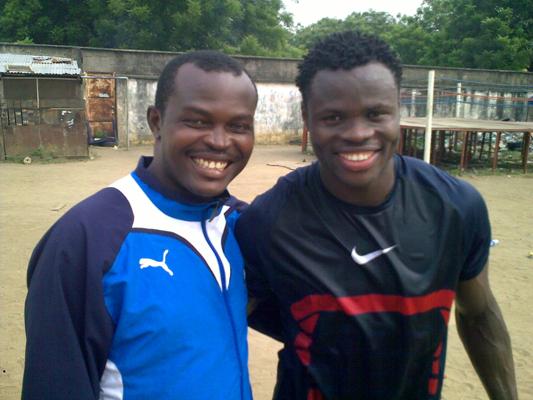
Emeka Okpor and his friend Taiye Taiwo

Emeka Okpor and his friend Taiye Taiwo

There’s abundant joy when you help other people to reach their dreams even if yours suffered a setback. Setbacks are not meant to be permanent hindrances to happiness and contentment in life.

In Festac Town when I was growing up, Ebere was the most composed player on any football field. Ebere continued to tell us that his father preferred his education to his football career. He had dribbling skills that reminds you of a combination of both Maradona and Okocha. He topped those qualities with his eyes for goals. Whilst Bimbo was quick- actually one of the best sprinters in 100m in Lagos State in those days, Ebere was calm but they were both strong and they find the back of the nets in different ways. We have talents in Festac Town.

We had Dapo of 5th Avenue D1 close. He was a player in a world of his own. He combined well with Ebere during their school days at Mile 2 Boys. At that time, Amuwo Odofin Boys Secondary School was a force to reckon with in the Junior Principal Cup. It was Ebere and Dapo who wrecked the defence line-ups across Lagos State.

I remembered playing one-on-one against Dapo one day on my way from school. They had a small park in front of their block of flats then. Today the park is no more. FHA stupidly sold the park and people built houses on them. Anyway, it was like “he tortured me when he had the ball, and I tortured him when I had the ball”. The rule was clear, “don’t lose the ball”. When I read Eden Hazard’s interview and how he became clever at dribbling by playing in the garden with his brother, I remembered what I went through playing alone with Dapo.

One of my best friends through the years Modestus Okechukwu Okafor played for many years in the German Amateur league. He finally settled there and we even spoke over the telephone less than one week ago. Oke as he’s fondly called was the one who tried to tell me more about Victor Agali. He’s still not able to understand how I missed the Agali’s story. Apparently, Oke lived on 22 Road when he was a little boy.

Okechukwu Okafor, Adeola Aderounmu and Samuel Ayorinde

Okechukwu Okafor, Adeola Aderounmu and Samuel Ayorinde

By the way I first met Oke by accident. I was on my way home from school one day. I stopped at a park near CCC, X Close on 5th avenue. I started to play football with the boys whom I met there. Then Okechukwu who went to a primary school on another side of town was also on his way home. He stopped too and joined us. Those days after school, our other occupation was football.

Later on by some stroke of fate Oke and I attended the same secondary school. Then I remembered him immediately. He has a built that is hard to miss. Still, Oke moved from 22 Road to 5th Avenue end that is near to 23 Raod. Since then, we remained very close friends and played on our “stone filed” everyday!

Chinneye Okolo, I almost forgot. What a left footer! He played with sense. Many of us back then didn’t just kick the ball. We were intelligent boys. We did well at school and we transferred that cleverness to the football field. I remembered my school mates like Wasiu Ikharia (a biochemist), Sanya Okanrende (a cardiologist). I mean these are finest amongst footballers!

Afam and Nenye Okolo

Afam and Nenye Okolo

We had Kingsley Nzete who suffered a broken leg and we knew at that time that he’s not going further as a footballer. He got back on his feet again and started playing in between the goal posts. I salute his courage. We have another Bassey on 5th Avenue. I know his eldest brother lived and played in a foreign country but I never followed up on Bassey himself. Another fine player we still have in Asia is Gabriel Obadin.

We had Michael Fatokun, Solomon and Felix Uboh. Afam Okolo, and the Osuji’s of 401 road. If you want to write about the talents in the Osuji Family, you’ll need a whole edition of a sport magazine. The elder Uboh is Kennedy Uboh. He also went to the higher institutions. If he had been discovered, his football career could have earned him a place in Real Madrid’s line up. He was that good.

What about my friend Abideen, my cousin Tilewa Majekodunmi. There is Abega, a boy who loves football with all of his heart. I know Bauna on 721 Road and I remember many boys from the 402 end. We were players on the field!

This story will be incomplete without an analysis of how some of the boys from Festac failed to reach their fullest potentials and how many dreams were punctuated. We lost many boys along the way under different circumstances, many of them relating to health issues. Emotions have been high many times of how we grew up and the dreams we had.

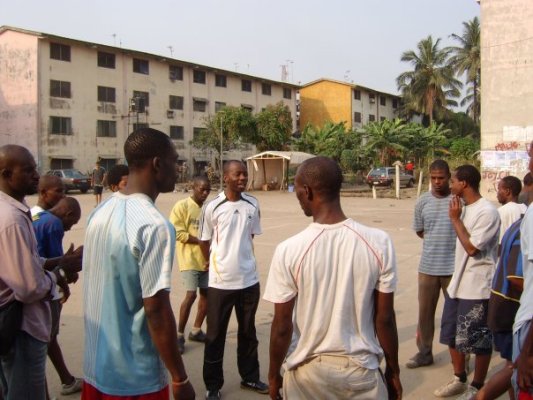
me and some boys on our stone field in 2006

me and some boys on our stone field in 2006

In the meantime as we continue to ponder on what could have happened to the boys who did not reach their full potentials or whose dreams were punctuated, we should be glad for the representations at the national and international levels.

We should be glad for the Olisehs, the Ipayes, the Ayorindes, the Agalis, and the Kingsley Ekehs, they did their best to put Festac Town on the map in the most positive ways. The Amunekes have very strong links to Festac Town and also to many of the boys mentioned in this essay. At some point Emmanuel Amuneke was living on 5th Avenue.

I am glad for Kinglsley Ekeh who reached his full potentials playing in Portugal and Cyprus. I am happy for Bimbo Fatokun, that he found the reasons to continue with his life in Belgium after a playing career punctuated by a few disappointments and unfulfilled promises.

I remembered how my team mates in the Oyo State NYSC in 1995/96 urged me to pursue that line. Niyi-our oyinbo from UI, Jato, Uche and the rest of the pack trusted me on the right flank and in the 6 yard box of our opponents. I hope they are glad for me that I decided to keep my pen and papers.

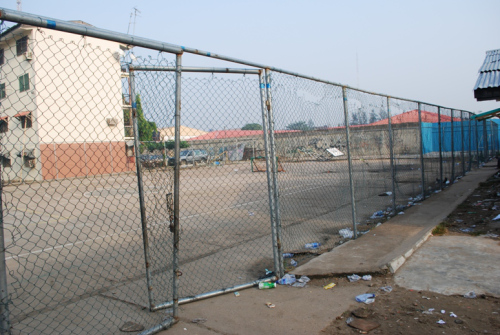
Today in Festac Town, there is scarcity of football talents. This is relative depending on who the observer is. When we moved to Festac in those days, there were football fields, playgrounds and parks in every corner. I wrote extensively about this here in the Village square (The Rise and Fall Of Festac Town, parts 1 and 2).

All the playgrounds are gone. There are no more football fields. I think only one major field was spared. FHA sold all our playgrounds. They sold all our parks. These are unforgivable acts.

In place of sports, football in particular, our youths have turned to crime and drugs. Festac became notorious globally as the town of 419ers. I also wrote about that in my story titled Festac Town and Its 419 reputation. There were many reasons why things took a turn for the worse in Festac and in Nigeria as a whole.

There is a need for Nigeria to return football to its glorious days. Today we all hail the EPL and in fact we worship the EPL and other European leagues in what appears like a permanent colonial mentality. Nigerian league can be made attractive again through good planning and administration.

The aim should be, “if our talents don’t go abroad, they should be able to live successfully playing football in Nigeria”. One way or the other the Nigerian intelligence needs to surface on the football scene. The market is huge. What are the problems?

Nigeria is very rich as a country and sport facilities should be at every corner of town. Our football stadia should be many, different sizes and world class standard. The training pitches should litter every community.

There are so many things wrong with Nigeria. It is sad that despite their love for the game of football, Nigerians allowed the sport to suffer as well.

I know that for many young talents, the dreams died. I think about many of my friends on the stone field: Suraju, Abbey and many more. How did I forget about Medo Obanya until now? Medo is one of the greatest talents to have emerged from Festac Town. His dribbling and goal scoring skills are extraordinary. His football career simply melted away right in front of our eyes. Who do we blame?

Even Nwike, Medo’s younger brother was a wonder boy on the ball. I didn’t forget Osaze and Richard Omoregie. It’s going to be an unending essay if I write about everybody that I know. Kelechi, all the best in the south of Sweden!

stone field in 2010

stone field in 2010

I’ve spoken to Femi Oladele and he should be the main contributor to write about the implications of what happened to the boys from Festac. I hope he will use his expertise in sport administration and his life experiences to write about how Nigeria can discover, develop and invest in her talents in football. There are many “boys from Festac” scattered around Nigeria. In this country, many talents have been wasted and dreams have been dumped. Some lives were actually shattered due to unfulfilled dreams.

What happened to the boys from Festac Town can be likened to a sliding door. There are many implications to this expression. When the door slides, it separated us. The sliding door also meant that while some hinged their hopes only on football, some of us looked at our options.

I can say a word for the young people coming up. Keep your heads up, live healthy and keep all of your dreams alive. Don’€™t put your eggs in the same basket and don’t count them before they are hatched..!

aderounmu@gmail.com